At a glance
- South Australia’s growing tunnelling program is increasing spoil-handling demands, with the River Torrens to Darlington (T2D) Project expected to generate more than four million cubic metres of spoil.
- Wet and conditioned TBM spoil can cling to equipment surfaces, making consistent material release more difficult.
- OKUSLIDE® helps reduce hang-up and carryback while supporting discharge at lower tipping angles.
- It can also help reduce wear across suitable truck bodies, chutes and hoppers while supporting smoother spoil movement.
South Australia is entering a major tunnelling phase, with the $15.4 billion River Torrens to Darlington (T2D) Project now underway. [1] Tunnelling on the Southern Tunnels, scheduled to begin in the second half of 2026, is expected to place significant demands on your fleet if you’re managing spoil haulage on these projects.
Large-scale tunnelling generates substantial volumes of spoil that must be processed, transported and managed. The T2D Project alone is expected to produce more than four million cubic metres of excavated material. [2] Cohesive, wet or abrasive spoil can increase hang-up, raise tipping angles and accelerate equipment wear.
Liner selection is one of the clearest ways you can address this. OKUSLIDE® is a UHMWPE liner system produced under strict quality control in Germany and supported by Australian engineers and distributors around the country. Its low-friction, abrasion-resistant surface helps material release more easily, supports lower tipping angles and reduces wear on suitable spoil-handling equipment.
The following sections look at how OKUSLIDE® supports material release, spoil haulage, safer tipping and wear reduction across tunnelling operations.
Helps Wet and Conditioned Tunnel Spoil Release More Cleanly
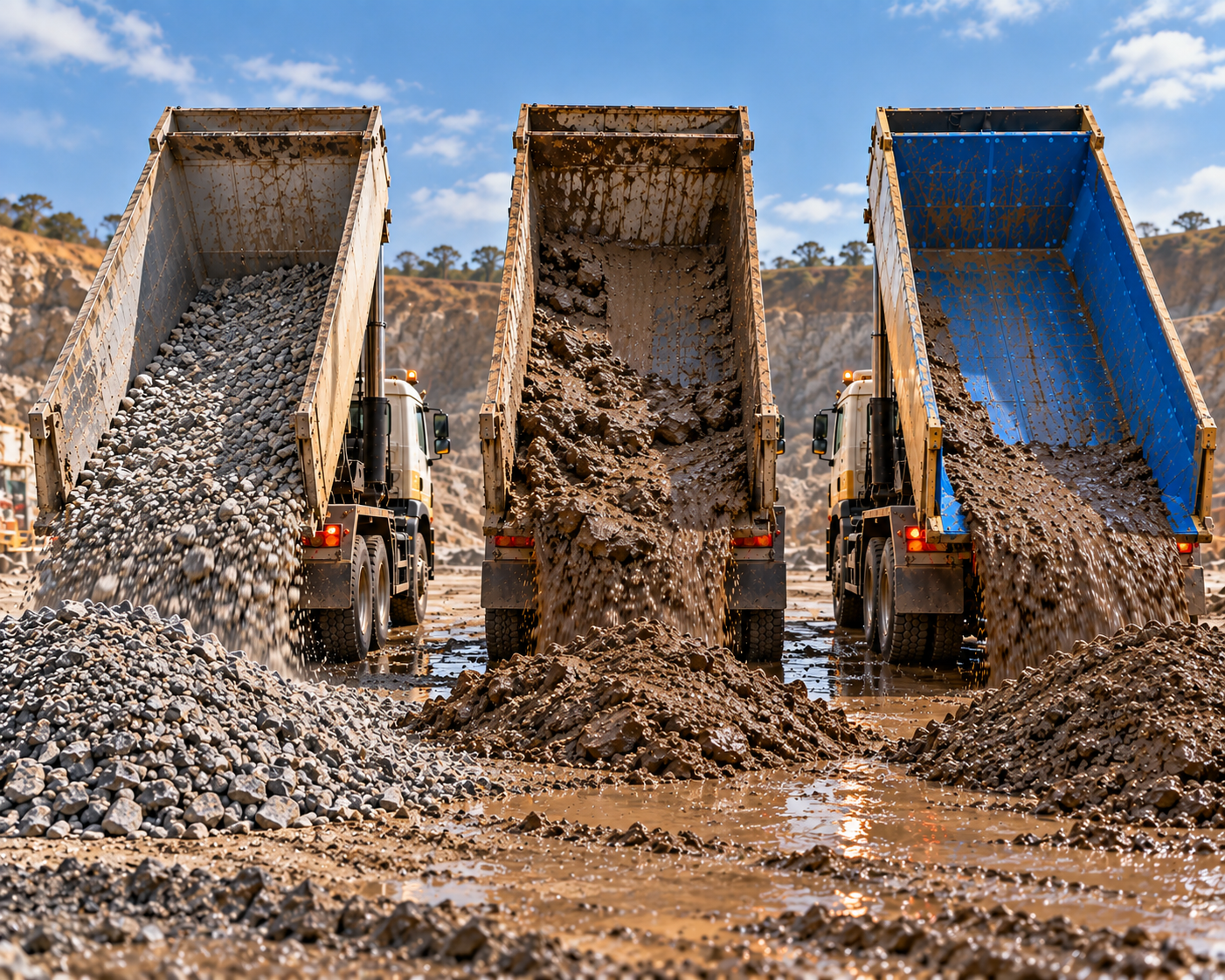
TBM spoil often contains moisture, fines and conditioning agents that make it behave more cohesively than dry excavated material. As a result, it is more likely to cling to the surfaces of buckets, trays and hoppers during handling.
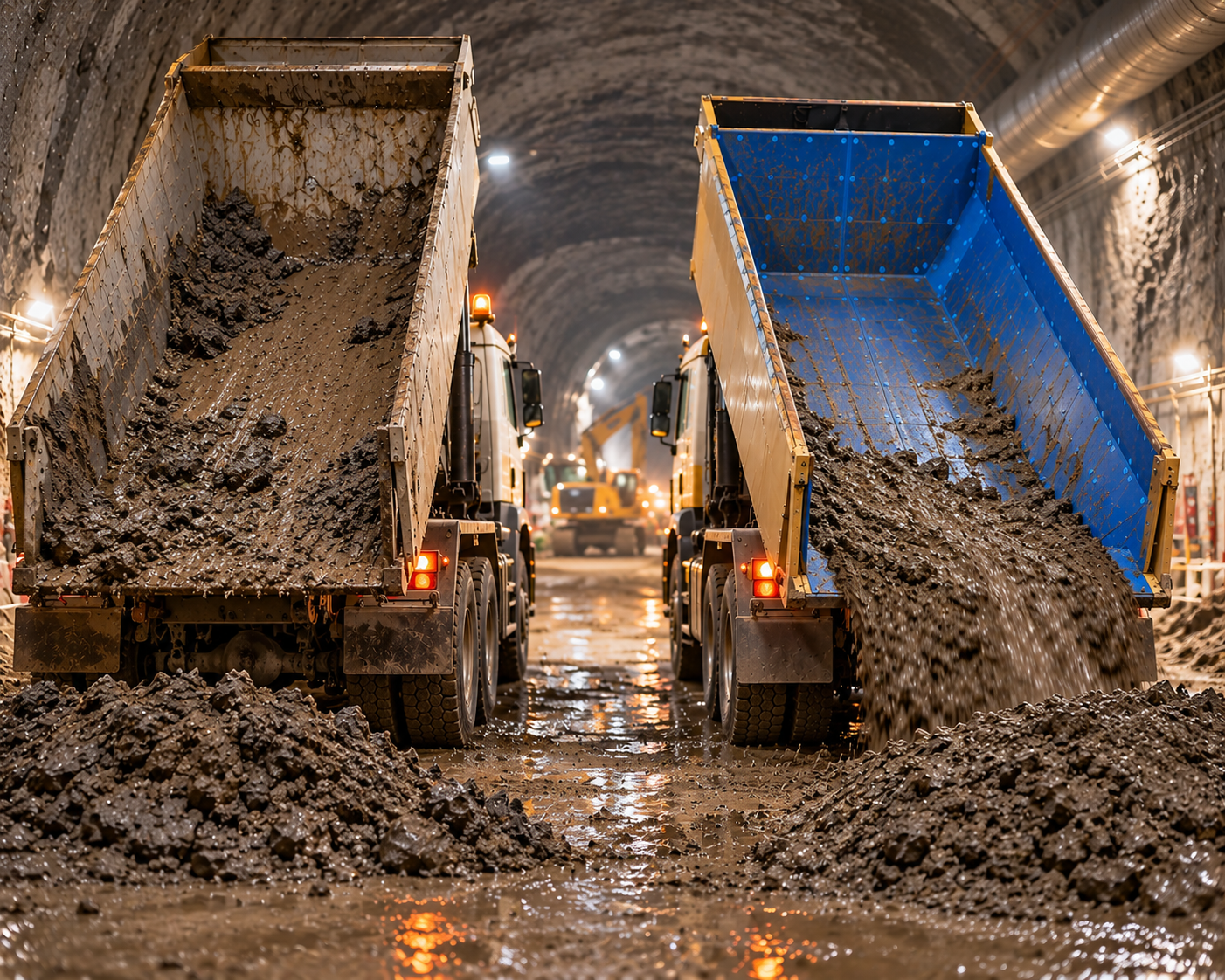
OKUSLIDE® uses selected additives to lower the coefficient of friction, creating a low-friction surface that helps sticky or cohesive spoil move rather than remain hung up against equipment.
Reliable material release supports the spoil-handling process by reducing the amount of material retained in your trucks and other handling equipment. As South Australian tunnelling projects generate greater volumes of excavated material, reducing material hang-up at this first point of contact helps keep the wider tunnel spoil management process moving as intended.
Read More: Why Standard Dump Truck Trays Fail on Tunnelling Sites with Conditioned Spoil
Improves Spoil Haulage Efficiency by Reducing Carryback
When cohesive spoil does not fully release during unloading, material left in the tray becomes carryback. This takes up capacity that would otherwise be available for the next load.
Because OKUSLIDE® promotes more complete spoil discharge, less material remains in your truck body after tipping. This can reduce delays associated with retained material before your truck begins its next haul cycle.
Across the high volume of truck movements involved in tunnel spoil haulage, consistent carryback reduction supports steadier turnaround and better use of the available fleet. On a project generating several million cubic metres of spoil, even small improvements in discharge consistency can add up across thousands of haul cycles.
Supports Safer Spoil Discharge at Lower Tipping Angles
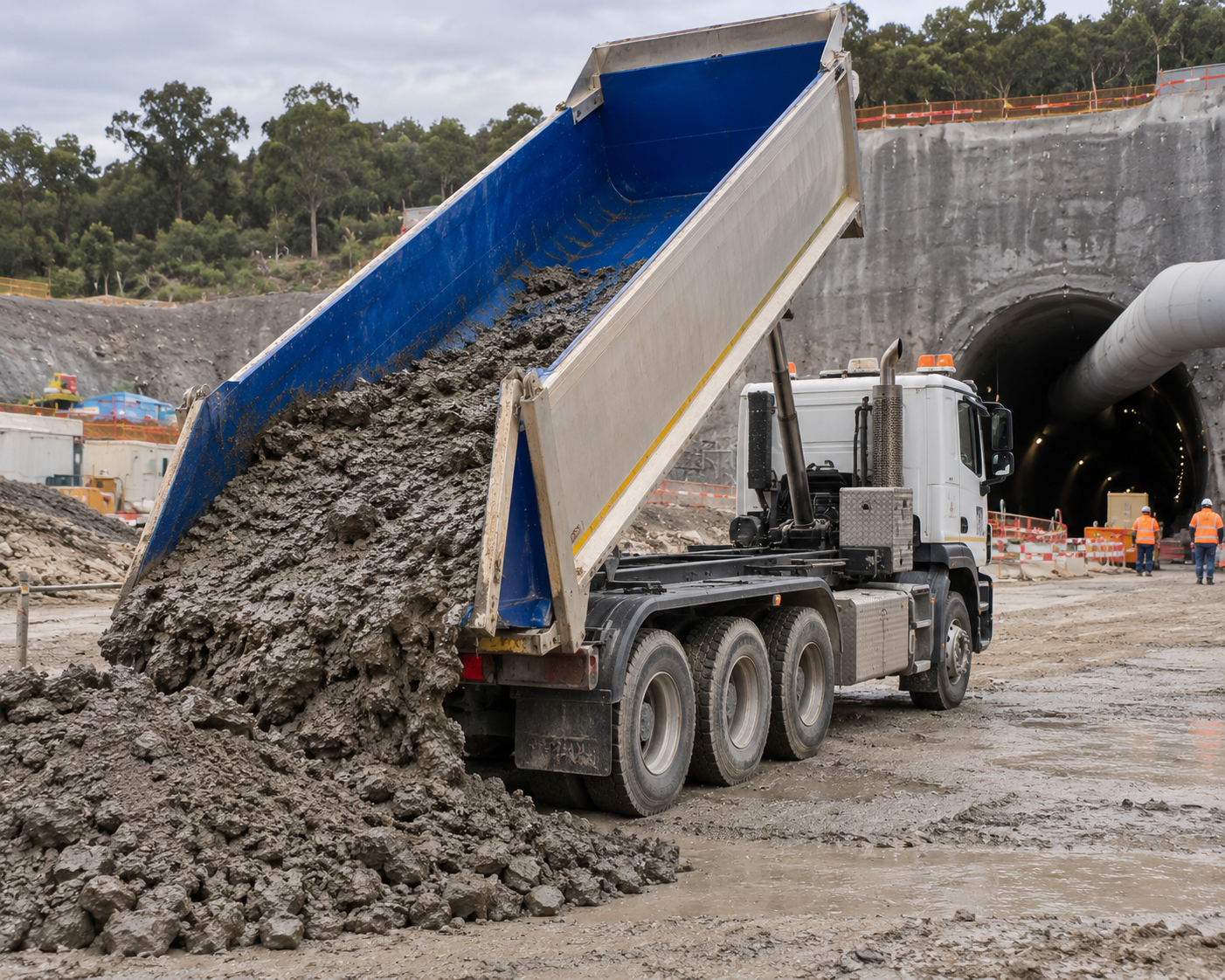
TBM spoil may be mixed with foam, bentonite or other conditioning agents during excavation. While these additives help manage the tunnelling process, they can make the spoil more cohesive and harder to discharge from a truck body. Sticky TBM spoil can force the body to rise to a steeper, less stable tipping angle before the load starts to move, leaving more material elevated for longer.
OKUSLIDE® reduces friction between the spoil and the liner surface, helping material begin moving earlier in the tipping cycle and supporting discharge at a lower body angle.
A lower body and retained load during discharge helps maintain a lower centre of gravity, reducing rollover risk while tipping and supporting more controlled unloading. This matters on active tunnelling sites where haul trucks operate at high frequency alongside other plant and personnel.
Reduces Wear Across High-Cycle Spoil Haulage Fleets
Flow is not the only challenge tunnel spoil creates for a truck body. Repeated contact with abrasive spoil can gradually wear the steel or aluminium surface, with the effects accumulating across the large number of cycles required on major tunnelling projects. OKUSLIDE® forms a protective layer between the spoil and the parent material, helping reduce wear on truck bodies.
Over a multi-year project such as T2D, reducing this wear can help limit premature tray repairs and associated downtime. You can also assess liner performance over time to understand how effectively it is protecting high-use truck bodies across your fleet.
Keeps Spoil Moving Through Chutes, Hoppers and Transfer Points
Tunnel spoil may pass through chutes, hoppers and bins, along with other handling equipment, as it moves from excavation to haulage. Cohesive or high-moisture material can build up or restrict flow at these fixed transfer points just as it can in a truck body. OKUSLIDE® can be applied to suitable bulk-material handling surfaces to reduce wall friction and lower the tendency for wet or fine spoil to catch or accumulate.
Consistent movement through these transfer points helps reduce bottlenecks between excavation, spoil processing and haulage. As part of a broader tunnel spoil management approach, this helps carry the performance gains from your truck body through to the equipment feeding it. It supports the broader material-handling chain as tunnelling activity continues to scale.
South Australia’s growing tunnelling activity, led by projects such as T2D, is placing greater demands on spoil haulage and material-handling equipment across the state. Effective spoil management depends on clean material release, minimal carryback, controlled tipping angles and equipment durability across thousands of repeated cycles.
OKUSLIDE® can support each of these areas, from spoil release in truck bodies to fixed transfer equipment feeding your haul fleet, helping you maintain efficient material handling as South Australia’s tunnelling program expands.
If you are managing spoil haulage or transfer equipment on a tunnelling project, the OKUSLIDE® UHMWPE liner delivers low-friction release, lower tipping angles and reduced wear. Contact our team to discuss the right setup for your fleet and application.
FAQs
Can OKUSLIDE® be retrofitted to existing spoil haulage equipment?
Yes. OKUSLIDE® can be fitted to suitable existing truck bodies and other spoil-handling equipment, including worn bodies. You should select the liner setup and fixing method based on the equipment condition, parent material, geometry, and access.
How can tunnelling projects reduce material bridging in spoil hoppers?
You can reduce material bridging by addressing factors such as cohesive or moisture-rich spoil, restrictive hopper geometry and high wall friction. A low-friction liner such as OKUSLIDE® can help material move more freely and reduce build-up at hopper surfaces.
Can the same OKUSLIDE® liner thickness be used across trucks, buckets and hoppers?
No. Match liner thickness to your equipment, load type, impact profile and wear conditions. OKUSLIDE® is available in 6 mm and 12 mm coils, while sheet formats range from 6 mm up to 40 mm for applications requiring greater thickness.
Why do lower tipping angles matter when unloading sticky tunnel spoil?
Lower tipping angles help keep the truck body and retained load closer to the ground, reducing the rise in centre of gravity and rollover risk during discharge. By reducing friction, OKUSLIDE® can help sticky spoil begin moving earlier and support safer unloading at lower tipping angles.
Sources & Citations:
[1] River Torrens to Darlington (T2D) Project: https://dit.sa.gov.au/infrastructure/projects/river-torrens-to-darlington
[2] The T2D Project alone is expected to produce more than four million cubic metres of excavated material: https://dit.sa.gov.au/__data/assets/pdf_file/0010/1337554/T2D-Project-Assessment-Report-2024-02.pdf