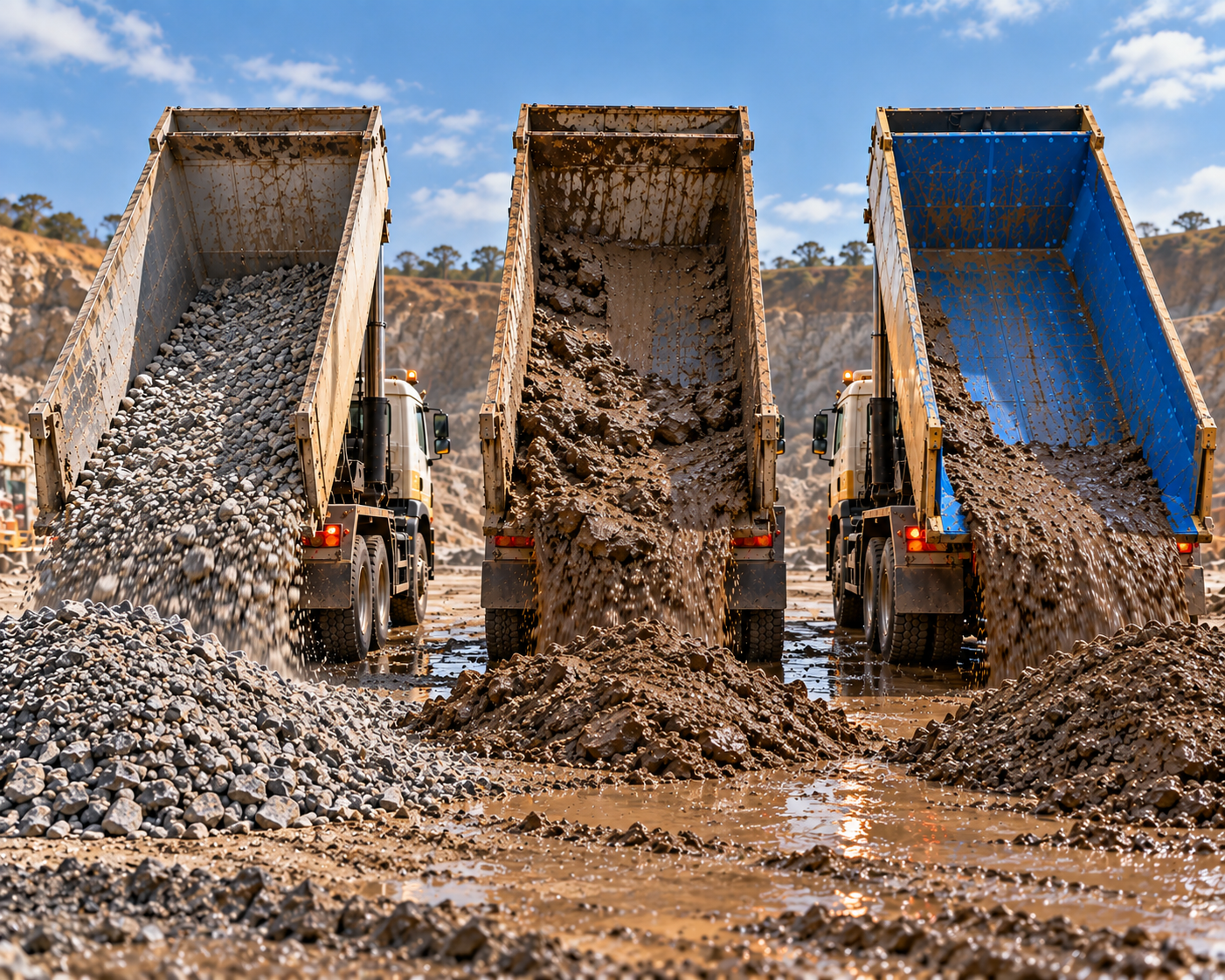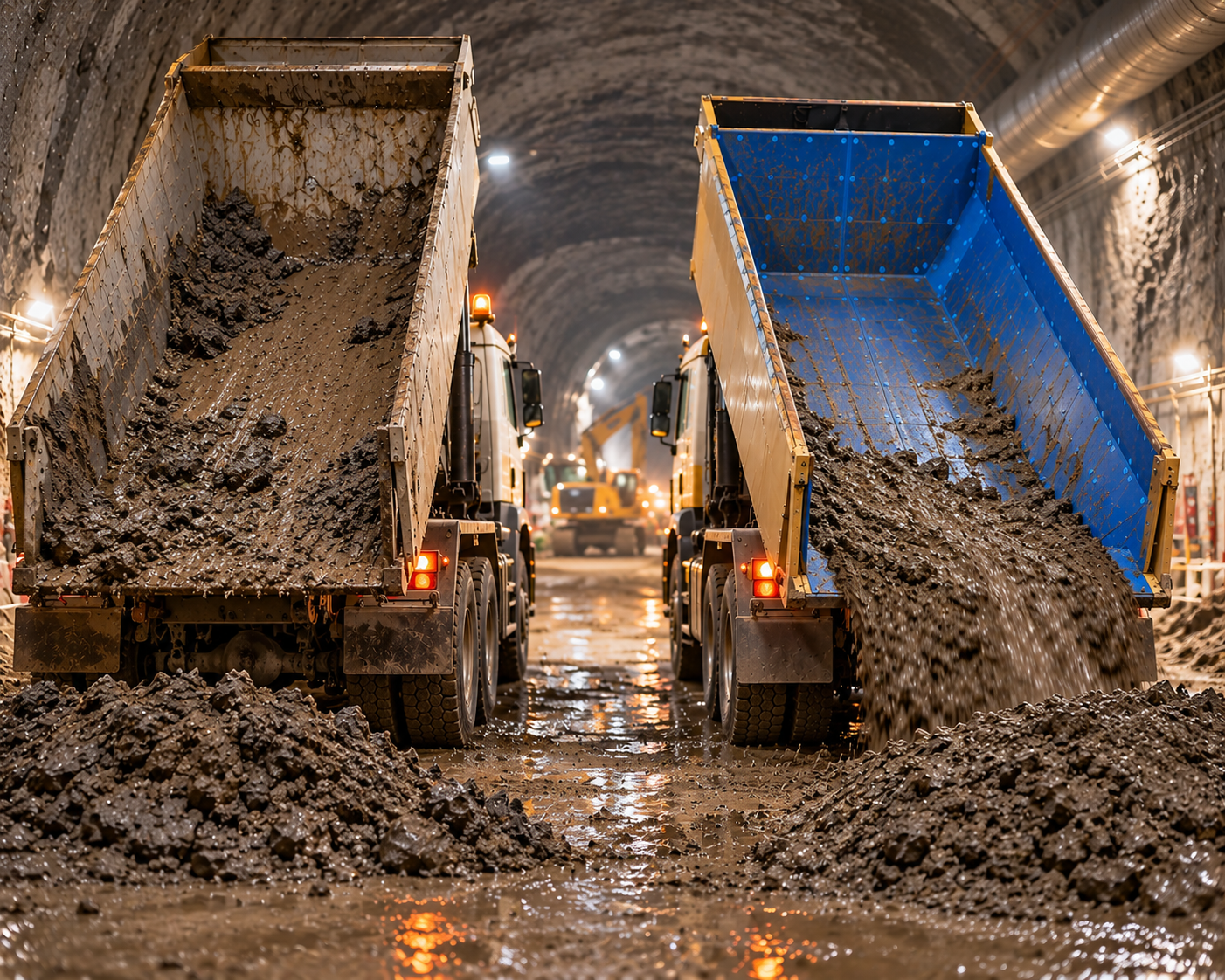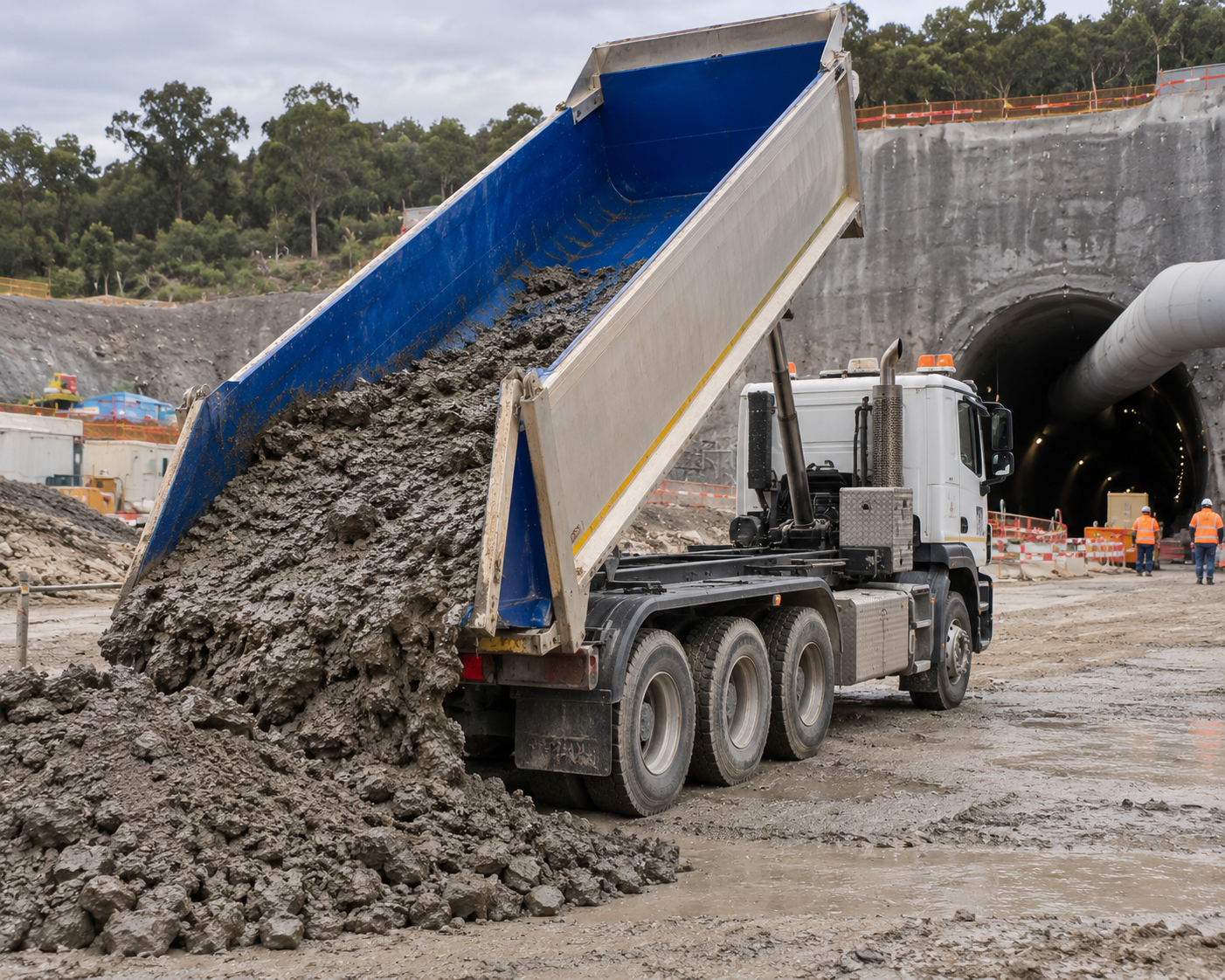
At a glance
- Tunnel spoil can cause ongoing abrasion and impact wear across truck bodies.
- OKUSLIDE® helps shield the parent body from repeated wear while transporting abrasive rock and spoil from tunnelling projects.
- Its low-friction surface supports cleaner discharge with less hang-up and carryback.
- Correct liner selection can help reduce repairs, downtime and maintenance pressure.
Tunnel projects place significant demands on your fleet, with spoil repeatedly loaded, hauled and discharged. Wet fines, clay, sand, gravel and harder rock fragments can expose truck bodies to ongoing abrasion and impact wear.
As spoil moves across and strikes the truck body, wear accumulates over repeated cycles, leading to tray repairs and maintenance downtime. Worn surfaces can also increase resistance during discharge, making cohesive spoil more likely to hang up or remain in the body after tipping.
Addressing this wear at its source requires a liner capable of withstanding both abrasion and impact. OKUSLIDE® is an abrasion-resistant, low-friction UHMWPE liner system that creates a protective surface between the spoil and the metal parent body.
Made in Germany and backed by Australian engineering and distribution, OKUSLIDE® combines wear resistance, impact tolerance and low friction. These properties work together to help lower wear and maintenance costs in tunnel spoil transport.
Abrasion Resistance Protects the Parent Truck Body
Tunnel spoil haulage subjects truck floors and sidewalls to ongoing sliding and scraping contact. Sand, fines, crushed material and rock move across these surfaces during transport and discharge. Over an extended haulage program, this abrasion can lead to patching, repairs to your tray and rising maintenance costs.
OKUSLIDE® provides an abrasion-resistant wear surface between the spoil and the steel or aluminium parent body, becoming the primary surface exposed to wear rather than the body itself.
Laboratory abrasion testing show OKUSLIDE® outwears steel by 2x and aluminium by more than 5x, illustrating the liner’s relative wear performance. By taking this abrasive wear instead of the parent body, the liner can help reduce the frequency and extent of repairs to your truck body and the downtime that comes with them.
Impact Resistance Protects High-Contact Loading Areas
Loading can create some of the most concentrated wear on a truck body. Coarse or angular fragments dropped from a loader or excavator bucket strike the floor and other high-contact areas repeatedly, often at the same points each cycle. Over time, this cumulative impact can gouge and degrade the parent body in these areas.
OKUSLIDE® provides an impact-tolerant layer over the high-contact zones, helping absorb repeated strikes rather than transferring the force directly to the parent material. This can reduce localised gouging and surface deterioration, helping limit your repair work and workshop time. By reducing impact-related truck body wear, the liner can help lower your ongoing maintenance requirements and associated costs.
Low Friction Supports Cleaner Tunnel Spoil Release
Tunnel spoil is frequently wet, cohesive or moisture-rich, particularly where earth pressure balance TBMs use foam or polymer conditioning to manage face pressure. When conditioned spoil is transferred into your haulage trucks, part of the load may remain on the floor and sidewalls after tipping. Your crew may then need additional clean-out before the truck returns to service. Across repeated loads, these clean-out requirements can add time to your haulage cycle.
OKUSLIDE® uses additives that reduce the coefficient of friction between the spoil and the liner surface, helping wet and cohesive spoil release more readily during discharge. Cleaner release reduces material hang-up and carryback that would otherwise require additional clean-out. This can reduce recurring clean-out interruptions and support more consistent cycles across your fleet.
Application-Specific Liner Selection Helps Avoid Premature Wear
Tunnel spoil conditions differ significantly between projects, shaped by geology, particle size, abrasiveness, excavation method and haul frequency. A specification suited to one project’s spoil profile is not necessarily suitable for another. A configuration treated as universally appropriate can leave your truck body liner under-specified for the wear and impact conditions it actually faces.
When selecting the correct dump truck liner configuration, you should account for the parent material, spoil characteristics and expected abrasion and impact conditions for your project. Liner thickness and format matched to your actual haulage duty help avoid the added maintenance expenditure caused by premature liner wear or replacement.
Weldable Joints Help Maintain Continuous Liner Protection
Continuous liner coverage is important for protecting underlying truck bodies. Where joins lack a proper seal, gaps between panels can leave narrow strips of the parent body exposed to the same spoil the rest of the liner is protecting against. Over repeated haulage cycles, these exposed seams can become localised wear points that eventually require repair.
OKUSLIDE® is weldable, so your team can use compatible weld wire to seal joints between liner sections, maintaining continuous coverage across the truck body rather than leaving exposed gaps. It has also undergone laboratory testing of welded seams and joints, which supports its use as an integrated liner system rather than a series of separate panels.
By sealing these gaps, welded joints can help reduce localised exposure and premature wear around joined sections. This keeps your repairs aligned with planned liner replacement rather than unplanned seam failures.
Repeated tunnel spoil haulage places your truck bodies under sustained abrasive and impact wear. If unmanaged, this can mean recurring repairs, downtime and rising maintenance costs. OKUSLIDE® helps address this at its source, combining abrasion resistance, impact tolerance, low friction and application-specific configuration to reduce the wear that drives these costs.
When matched to the right spoil profile and truck body, OKUSLIDE® can support your haulage operation with fewer avoidable repairs and less maintenance-related downtime.
If repeated tunnel spoil haulage is increasing body wear and repair requirements in your fleet, an OKUSLIDE® liner configuration can be matched to the spoil characteristics, truck body and your operating conditions. Get in touch with our team today.
FAQs
Which parts of a dump truck body should be inspected most closely during tunnel spoil haulage?
You should focus your inspection on the floor, lower sidewalls and other high-contact areas where spoil repeatedly strikes or slides across the body, along with any existing worn, repaired or roughened sections showing progressive abrasion or localised deterioration.
Is retrofitting OKUSLIDE® to an existing truck body possible?
Yes. Where the existing body is suitable, our team can fit OKUSLIDE® over a worn skin to create a new wear surface, helping reduce further wear to the parent material and extend the useful life of your truck body.
Can OKUSLIDE® also be used in tunnel-site chutes, hoppers and bins?
Yes. OKUSLIDE® is suitable for chutes, hoppers and bins where abrasive or cohesive tunnel spoil can cause wear, build-up or material-flow issues. The liner configuration should account for your equipment design and operating conditions.
Can reducing material hang-up also improve tipping safety during tunnel spoil discharge?
Yes. Less hang-up can help tunnel spoil begin moving at a lower tipping angle, keeping the centre of gravity lower during discharge and reducing rollover risk while tipping. See how this works in our blog on reducing rollover risk with better tipping angle control.