At a glance
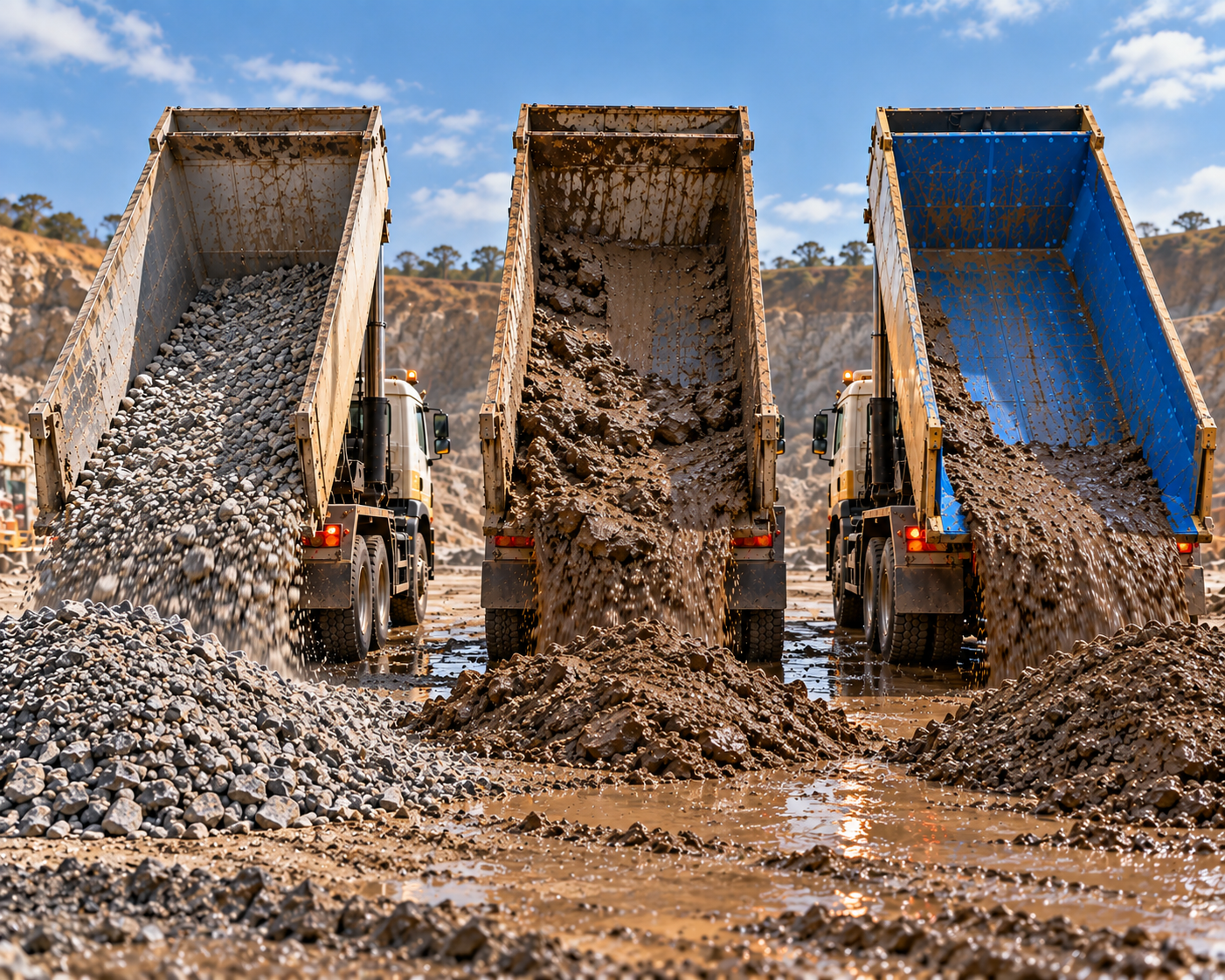
- Ordinary fill generally separates and flows towards the tailgate as the tray rises.
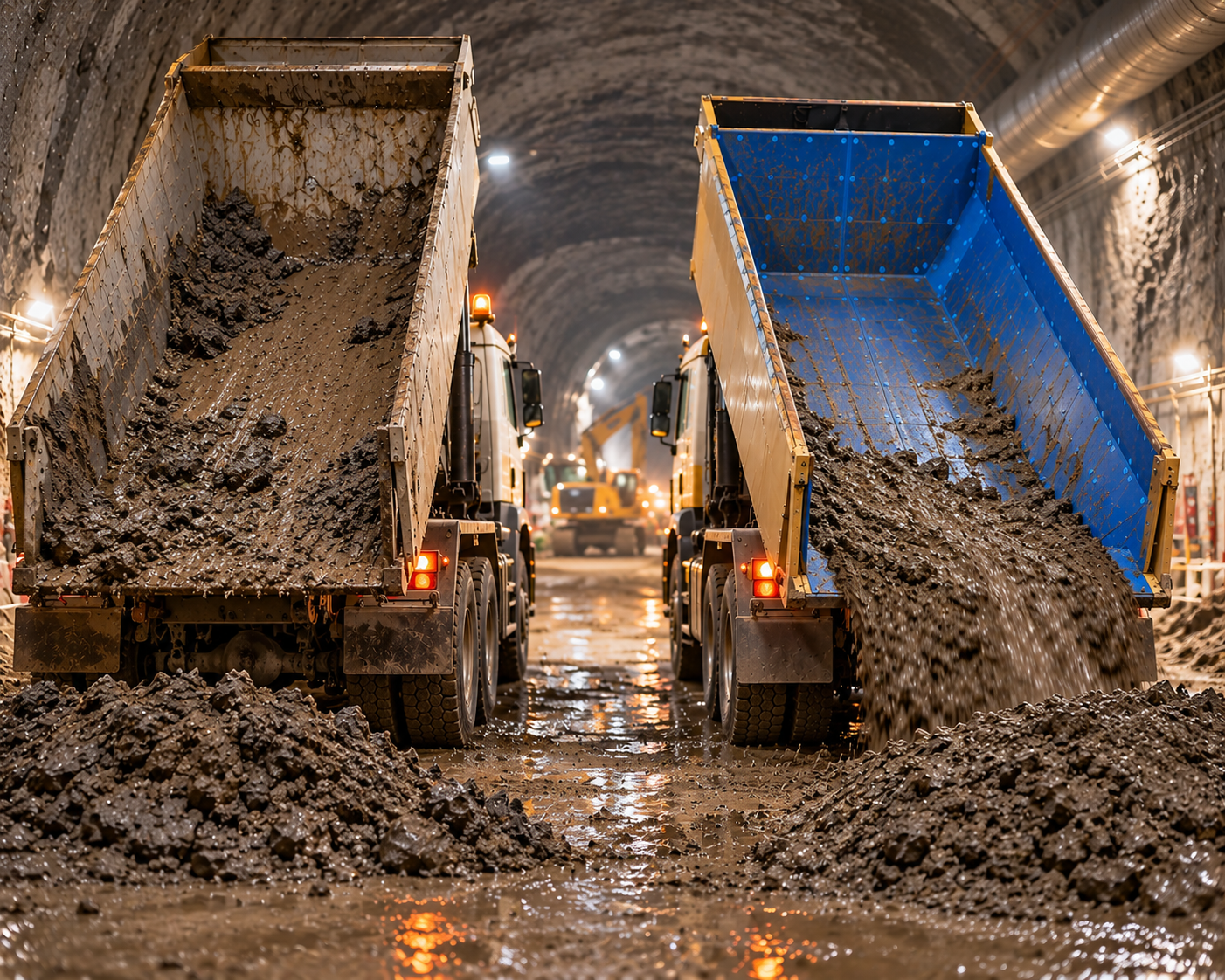
- Conditioned tunnelling spoil behaves differently because its moisture, fines and conditioning agents can make it more cohesive.
- This cohesive material can smear, compact and remain against standard steel or aluminium tray surfaces.
- The resulting hang-up and carryback can delay discharge, increase tipping angles and make unloading less predictable.
- OKUSLIDE® helps address these issues by creating a lower-friction surface that supports cleaner release and reduces wear on the parent body.
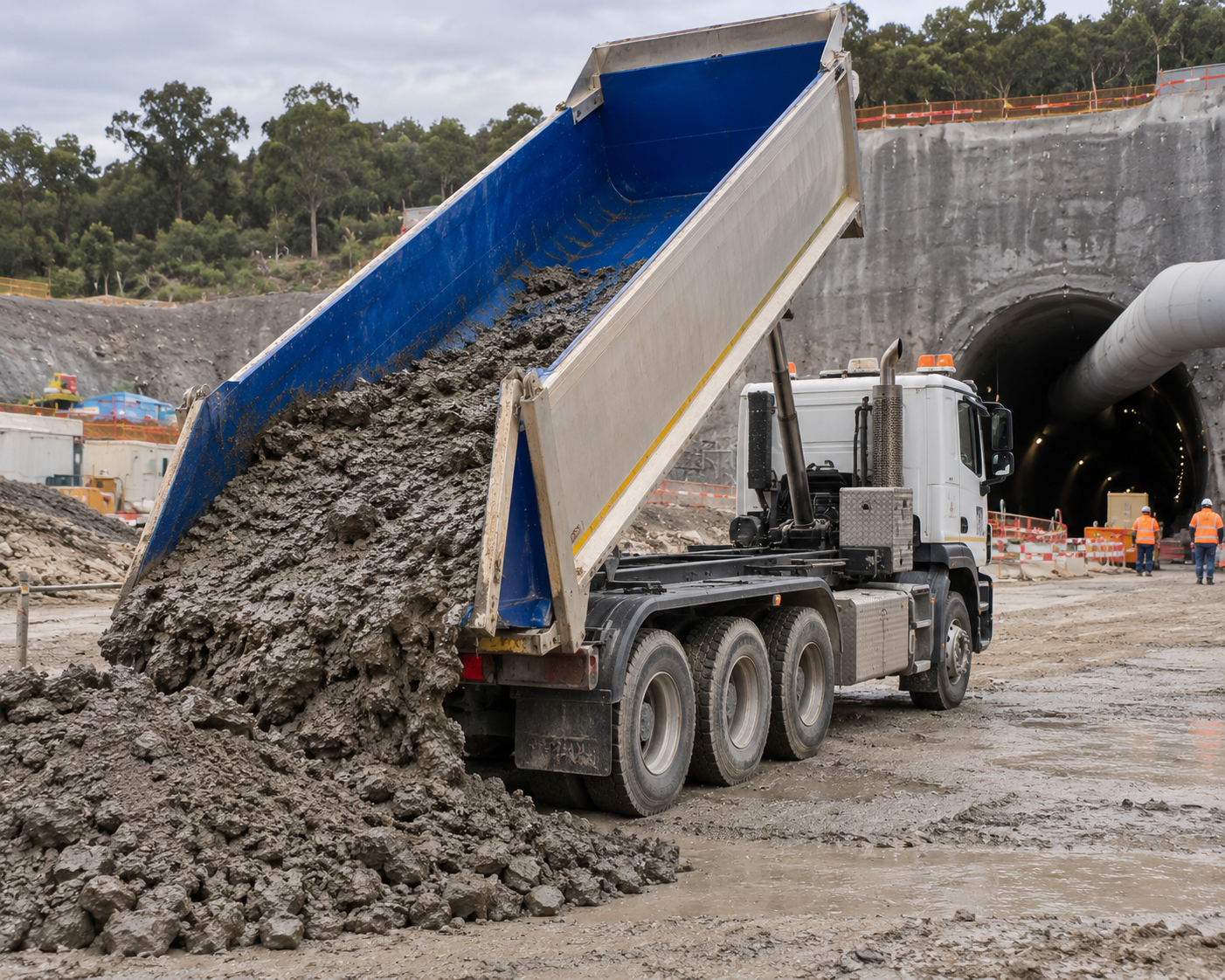
Tunnelling projects rely on dump trucks to move excavated material away from the tunnel face and through the broader spoil-handling process. However, trucks that perform reliably with ordinary fill can discharge more slowly and less predictably when carrying conditioned tunnelling spoil.
The difference is not simply the amount of material in the tray. Conditioned spoil can have a very different consistency due to its moisture content, fine particles and the conditioning process used during excavation. This can change how the load moves, settles and releases from a standard steel or aluminium truck body.
The following sections break down how conditioned spoil differs from ordinary fill, why it exposes weaknesses in standard trays and how OKUSLIDE® changes the tray-to-spoil interface.
How Conditioned Spoil Behaves Differently from Ordinary Fill
Ordinary excavation fill, such as dry soil, gravel, crushed rock or aggregate, generally behaves as a loose, granular material. As the dump truck tray rises, the particles can separate and move under gravity towards the tailgate. Moisture and compaction can still affect discharge, but the load usually breaks apart and flows in a relatively predictable way.
Conditioned tunnelling spoil behaves differently because excavation alters its properties. In Tunnel Boring Machine (TBM) operations, crews may introduce water, foam, polymers or other conditioning agents to help the material move through the machine, screw conveyor and spoil-handling system. When combined with clay, fines and groundwater already present in the ground, these additives can make the spoil more cohesive and moisture-rich.
Instead of separating into individual particles, the material may hold together like wet clay, paste or a compacted mass. It can remain stationary as the tray rises because gravity must overcome both the cohesion within the load and the friction between the spoil and the tray surface.
This cohesive consistency also allows the spoil to smear across the floor and sidewalls and compact into corners, seams and worn areas. Retained layers can then create additional resistance for later loads, making clean discharge progressively harder.
The problem is not always consistent from one trip to the next. Changes in geology, groundwater, fines content and conditioning dosage can alter how each load behaves. One load may release without difficulty, while the next remains in the tray longer or moves suddenly. This variability places greater demands on a dump truck tray designed to handle loose, granular material rather than cohesive, moisture-rich spoil.
Why Standard Dump Truck Trays Struggle With Conditioned Spoil
Manufacturers build steel and aluminium dump truck trays to carry heavy loads and withstand repeated impact, but they don’t necessarily design the internal surfaces for low-friction release. Seams, ribs, repairs and roughened areas can interrupt the movement of cohesive spoil and create points where retained material begins to accumulate.
Once material begins collecting in these areas, it can create a base that later loads build up on. Over time, sand, rock fragments and abrasive fines can roughen the tray surface, increasing resistance between the spoil and the metal.
This leads to material hang-up and carryback after tipping. Retained spoil reduces the usable capacity available for the next load. You may need to hold your tray raised for longer, repeat the tipping cycle, reposition the truck or allow additional time for clean-out. Across a full shift, these delays can compound over every truck and load.
Delayed release also affects unloading stability. The tray may need to rise further before the load begins to move, raising the vehicle’s centre of gravity. If the spoil releases suddenly as a large mass, unloading becomes less predictable and the risk of rollover while tipping can increase, particularly on uneven discharge areas. Addressing these problems, therefore, requires more than a structurally sound tray. A surface that reduces resistance between the conditioned spoil and the truck body is just as essential.
How OKUSLIDE® Improves the Tray-to-Spoil Interface
UHMWPE liners, such as OKUSLIDE®, change the surface that conditioned spoil contacts during loading and discharge. Their low-friction, non-stick properties address three separate issues: when the load begins moving, how much material remains behind and how the tray is affected by repeated abrasion.
- Lower friction helps conditioned spoil move earlier: UHMWPE liners are manufactured with selected low-friction additives. When used as a dump truck bed liner, they create a lower-friction interface between the conditioned spoil and the truck body. This can help the load start moving earlier as the tray rises, reducing the required angle before discharge begins.
- Cleaner release reduces carryback and cycle delays: The non-stick liner surface helps moisture-rich spoil release more cleanly, rather than smearing across the floor or collecting in corners and seams. Less retained material preserves more usable tray capacity and reduces the need for repeated tipping, repositioning or additional clean-out. Application-specific dump truck body liners can therefore support more consistent unloading across repeated cycles.
- A protective barrier helps reduce wear on the parent body: OKUSLIDE® creates a protective barrier between abrasive spoil and the steel or aluminium body, helping reduce wear from sand, fines and rock fragments moving across the surface. It also limits rough metal surfaces from developing, which would otherwise create extra resistance during discharge.
Conditioned tunnelling spoil creates a different unloading challenge from ordinary excavation fill. Its cohesive and variable consistency can expose the limitations of standard steel and aluminium trays, particularly when retained material, surface wear and delayed release begin to affect repeated haul cycles.
Improving discharge, therefore, depends on matching the tray surface to the material being carried. OKUSLIDE® provides a low-friction liner option that can help reduce hang-up, carryback and direct wear when conditioned spoil causes recurring unloading problems.
Contact us today to discuss your spoil characteristics, truck body condition and current discharge issues. Our team can help you assess a liner setup suited to your tray geometry, operating environment and tunnelling application.
FAQs
Does every tunnelling project produce conditioned spoil?
Not necessarily. Whether spoil is conditioned depends on the tunnelling method, ground conditions and excavation requirements. For example, Tunnel Boring Machine (TBM) projects commonly use conditioning agents to improve material handling, while spoil from other excavation methods may behave more like ordinary fill.
What factors should I consider when selecting a dump truck body liner?
Consider material durability, friction properties, wear resistance, installation quality and long-term cost impact. A low-friction, abrasion-resistant liner improves material flow, reduces carryback and lowers maintenance and fuel costs. For more details, refer to our blog on selecting a truck body liner.
Can a low-friction liner be fitted to an existing dump truck tray?
In many cases, yes. A liner can often be installed on an existing truck body, provided the tray is structurally suitable. You should have the body condition, wear profile, geometry and application assessed to determine the most appropriate liner format and installation method. OKUSLIDE®’s network of expert installers across Australia can ensure proper fitment.
What factors affect dump truck liner installation cost?
Dump truck liner installation cost depends on the truck body’s size, geometry and condition, along with the liner thickness, panel layout, fastening method and seam requirements. Worn surfaces, internal ribs, curved sections or restricted access can increase preparation and fitting time, so you should have the truck and application assessed before pricing.