At a glance
- Conditioned tunnel spoil can cling to steel surfaces, slowing discharge across repeated haul cycles.
- Carryback takes up space in the truck body, reducing capacity available for the next load.
- Poor material release can require higher tipping angles and make discharge less controlled.
- Steel wear can increase repair downtime, while OKUSLIDE® supports cleaner release and wear reduction.
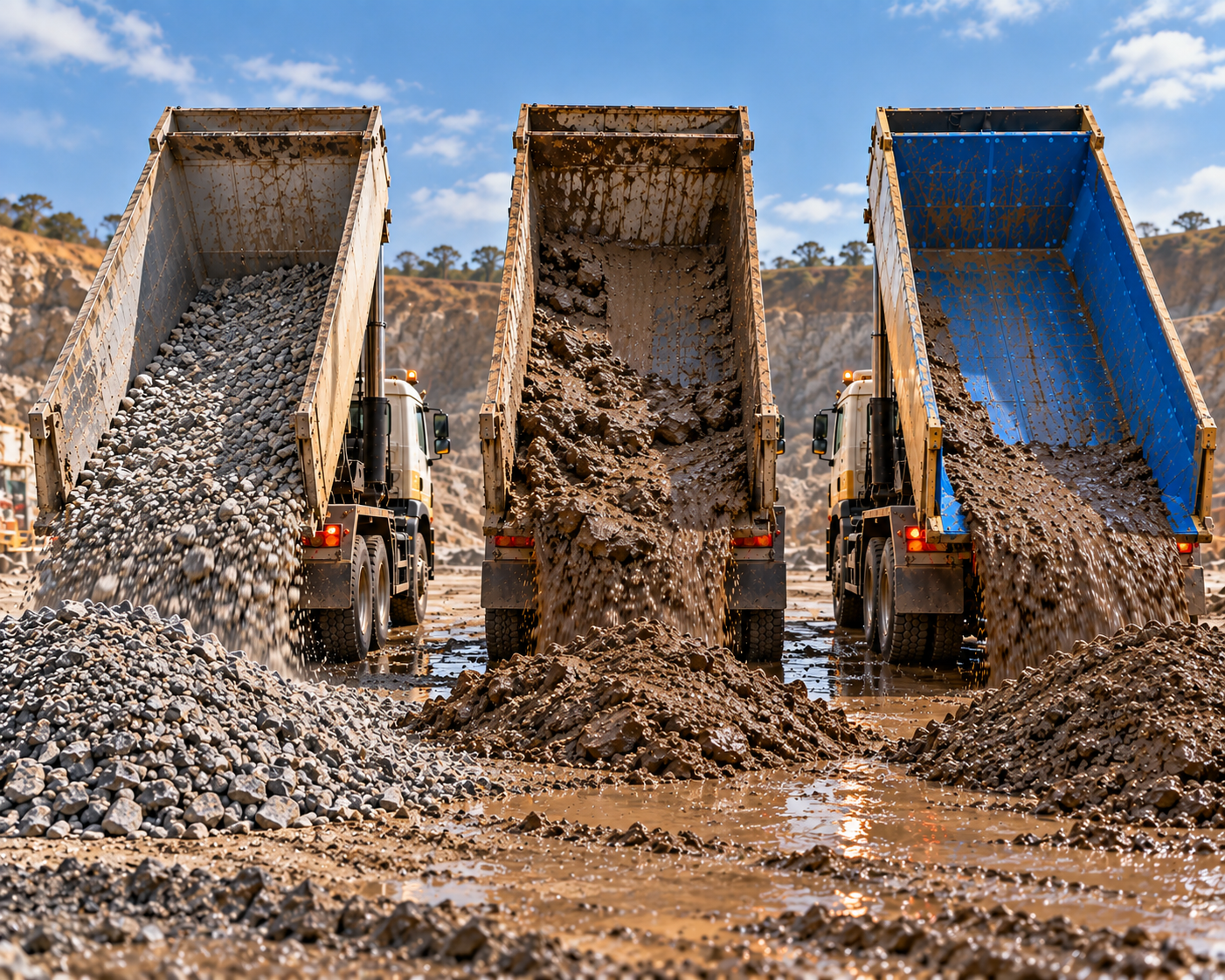
Large-scale tunnelling projects in South Australia are placing growing demands on spoil haulage, and your fleet has to manage conditioned material across repeated haul cycles. Moisture, fines and conditioning agents can make this spoil cohesive and reluctant to release, creating material-release challenges for standard steel truck bodies.
Steel offers strength and durability, but strength alone does not guarantee clean discharge. Without a low-friction liner, cohesive spoil can adhere to steel floors and walls. Even small delays compound quickly once repeated across your entire fleet and shift.
Here’s where those hidden costs show up: slower discharge and carryback, higher tipping angles, wear and repair downtime, often well before a steel liner reaches the end of its service life.
Slow Material Release Adds Time to Every Haul Cycle
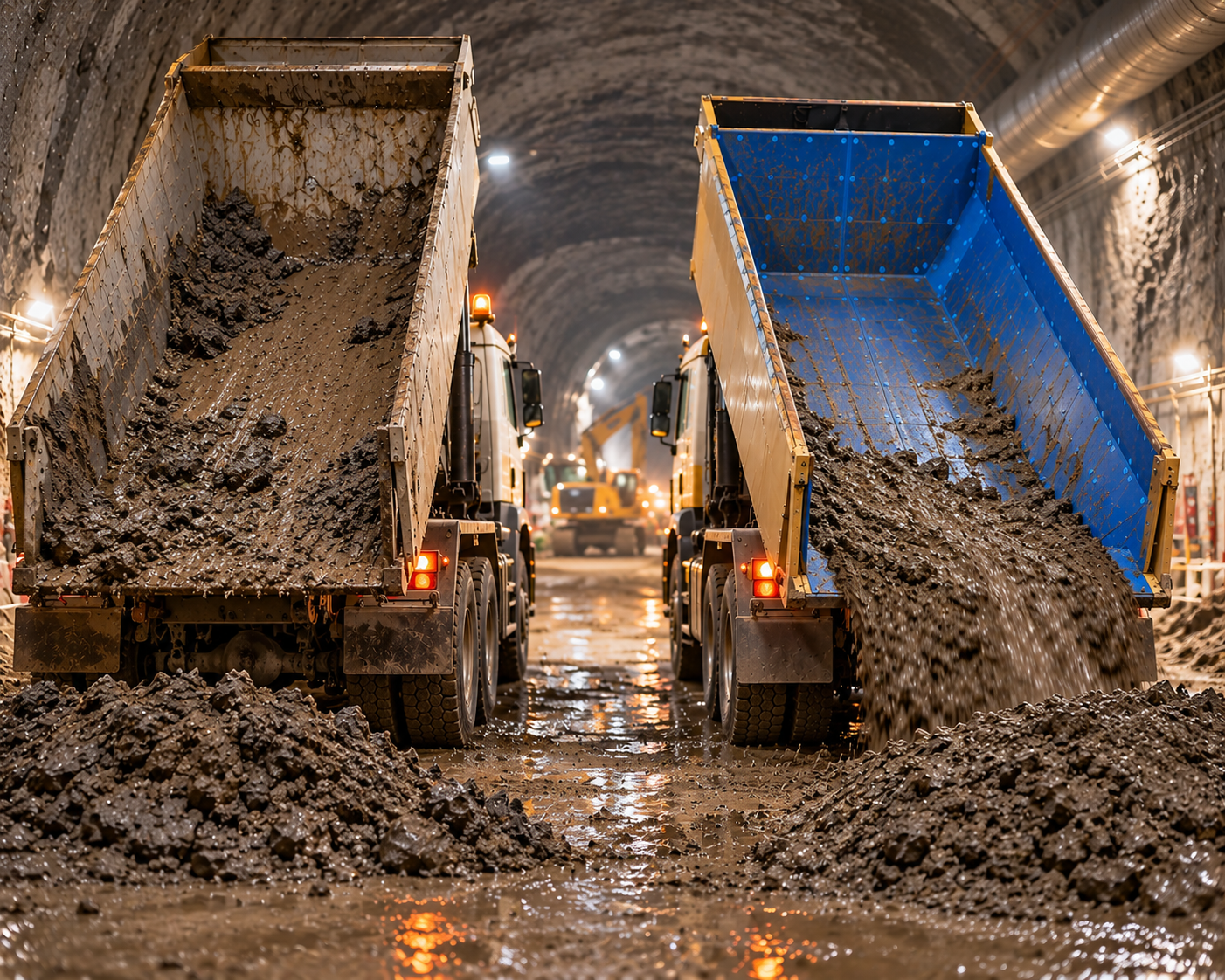
Cohesive tunnel spoil can resist movement against a standard steel truck body surface. This tendency to cling rather than release cleanly can persist across an entire load cycle. Instead of discharging as soon as the body begins to rise, spoil can hold against steel floors and sidewalls, delaying the point at which the material begins to move. This type of material hang-up is easy to overlook, since the delay on a single load may appear minor.
Trucks can then remain in the unloading area longer, either while the body continues to rise or while retained material gradually releases. Repeated across dozens of trucks and shifts in your tunnel spoil haulage, that lost time becomes a measurable operational cost.
Carryback Leaves Less Room for the Next Load
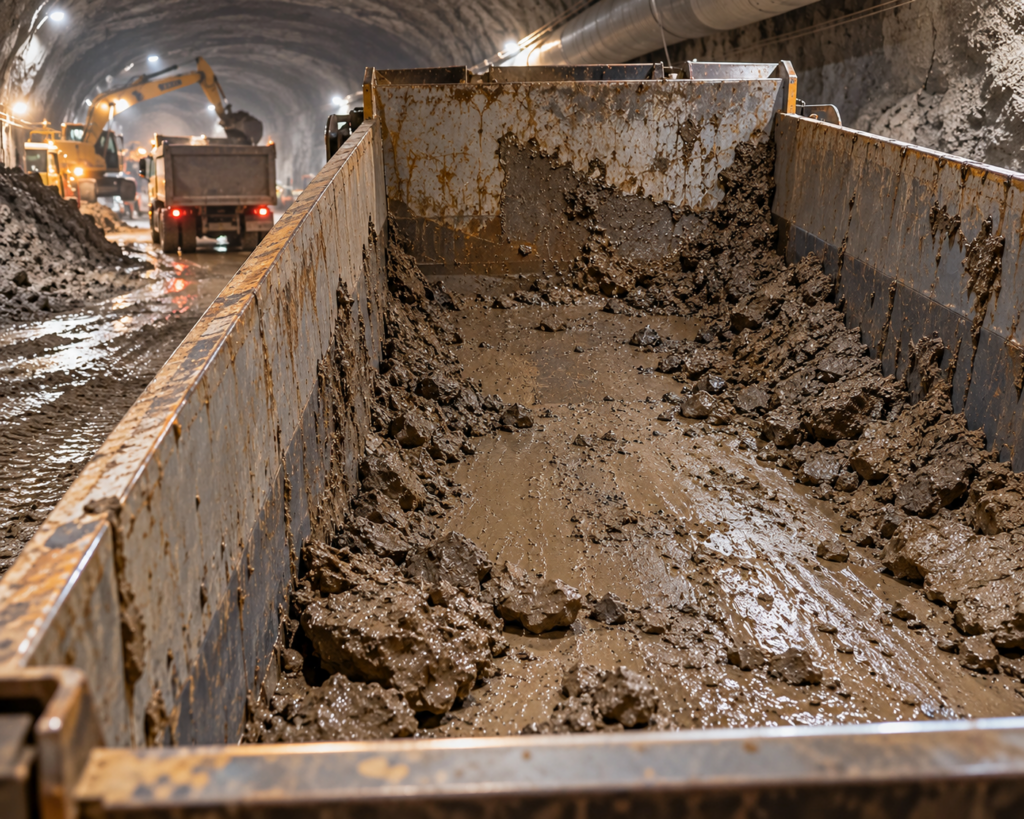
When spoil does not fully leave the body during discharge, the resulting carryback stays on board for the return trip, occupying space that would otherwise be available for the next load.
A small amount of carryback on a single trip may have a limited operational effect. Repeated across a full shift, it can steadily reduce the total volume of spoil your fleet actually moves.
Difficult Material Release Can Require Higher Tipping Angles
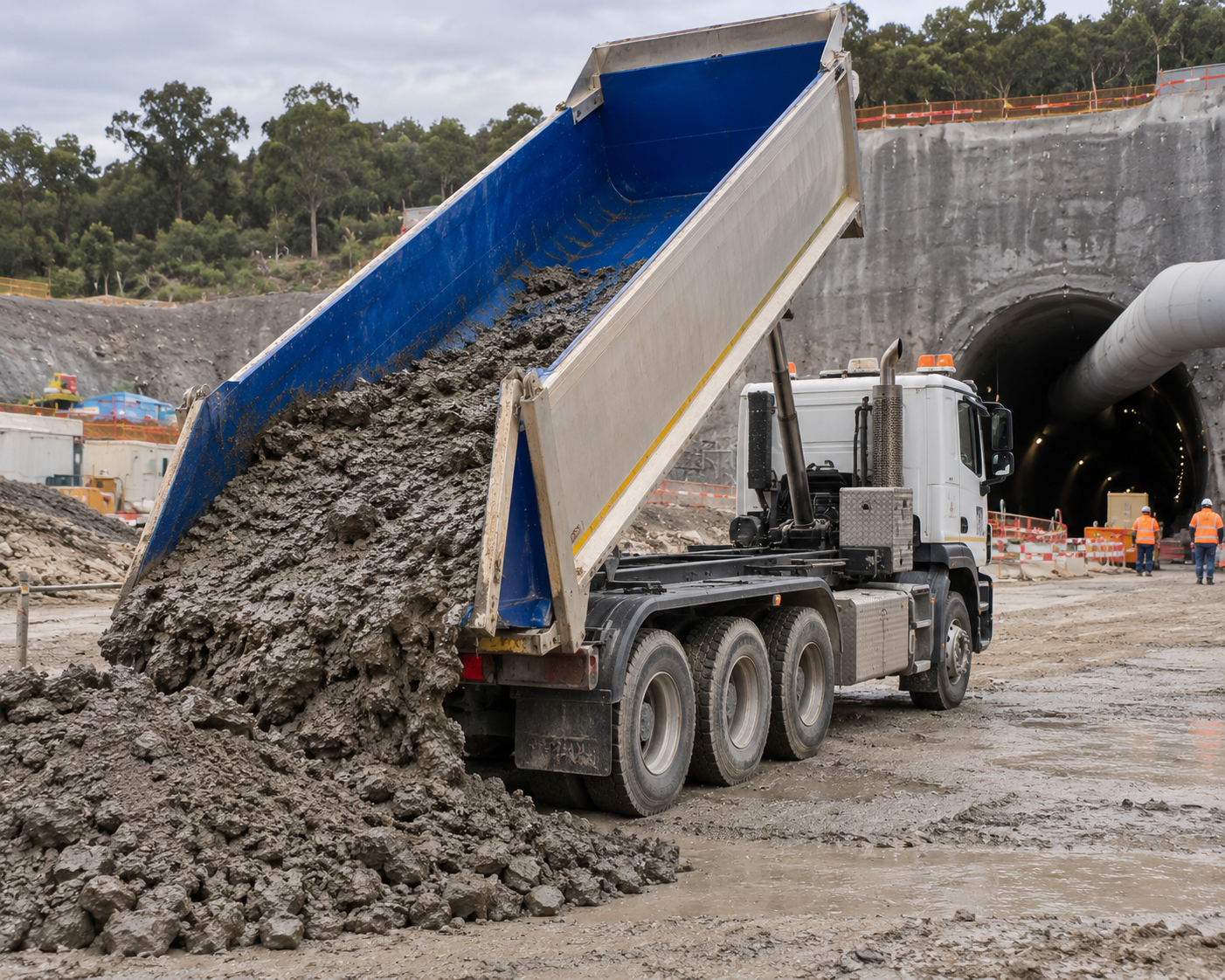
Poor material release affects more than unloading time. When cohesive tunnel spoil continues to hold against a steel surface, the truck body may need to rise further before the load begins to move, increasing the angle required to achieve discharge.
As the body continues to rise, several operational concerns become more significant:
- More of the retained load remains elevated for a greater share of the tipping cycle.
- The truck spends a greater portion of the discharge process at a steeper body angle.
- If spoil releases suddenly or unevenly, the unloading process can become less controlled.
These conditions matter because elevating the body and retained load raises the centre of gravity during discharge. Where difficult spoil is discharged repeatedly, the ability to achieve earlier, more consistent material release can therefore influence both unloading control and tipping risk.
Abrasive Tunnel Spoil Progressively Changes the Steel Surface
Repeated contact with sand, rock fragments and abrasive fines can progressively wear high-contact areas of a steel liner. Over time, this may result in surface roughening, localised thinning and dents, while subsequent repairs can further alter the original surface profile.
These changes can affect more than the remaining service life of the steel. An increasingly irregular surface may create additional resistance to material flow, particularly where cohesive spoil collects around worn or repaired areas, contributing to less consistent discharge performance over the course of a tunnelling project.
In laboratory abrasion testing, OKUSLIDE® has been tested to outwear steel by 2x. The same low-friction, abrasion-resistant surface is built to withstand the fines and rock fragments that wear away unprotected steel in high-cycle tunnel haulage.
Manufactured in Germany, OKUSLIDE® is backed in Australia by local engineers and distributors who can advise on liner selection for tunnelling fleets.
Repairs and Relining Add Costs Beyond the Replacement Material
As wear progresses, steel liners may require welding, patching or relining to restore the surface and maintain reliable operation. In high-cycle tunnelling applications, these maintenance requirements can become more frequent as abrasive spoil continues to affect the liner over time.
The cost of these interventions extends beyond replacement materials and labour. Repair activity can also remove trucks from service, reducing the haulage capacity available to your fleet. Across a long tunnelling project, the combined effect of maintenance expenditure and downtime can make the initial purchase price of a steel liner an incomplete measure of its total operating cost.
Steel liners in tunnelling applications carry costs that go well beyond the sticker price. Together, poor spoil release and progressive wear place a ceiling on how much a steel liner can deliver before maintenance and lost capacity start eating into the return on the fleet. Over repeated haul cycles, these operational and maintenance impacts add up, and they’re worth weighing against the liner’s upfront price.
OKUSLIDE® provides a different approach by combining low-friction material release with abrasion resistance. Its UHMWPE liner surface can help cohesive tunnel spoil release earlier and more consistently, reducing hang-up, carryback and the need for higher tipping angles while protecting the parent body from repeated abrasive contact. Where suitable, these benefits can reduce operating and maintenance costs associated with steel surfaces over a tunnelling project.
Contact our team to assess the right liner format and thickness for your tunnelling haulage application.
FAQs
Does a steel truck body always need to be completely replaced before fitting a UHMWPE liner?
No. You may be able to fit OKUSLIDE® over the worn skin of a structurally suitable existing truck body, depending on its condition, parent material, geometry and fixing requirements. The final setup should be assessed for the individual vehicle rather than assuming complete replacement is required.
Can OKUSLIDE® be used elsewhere in the tunnel spoil handling system?
It can. Where technically suitable, OKUSLIDE® can also be used in hoppers, chutes, bins, excavator buckets and other bulk material handling equipment to help reduce hang-up, improve material release and manage wear.
How can OKUSLIDE® support high-volume tunnel spoil operations?
OKUSLIDE® can support high-volume tunnel spoil haulage by helping reduce material hang-up, carryback, higher tipping angles and wear across repeated loading and unloading cycles. These benefits are particularly relevant across major South Australian tunnelling projects, where large spoil volumes place sustained demands on haulage fleets.