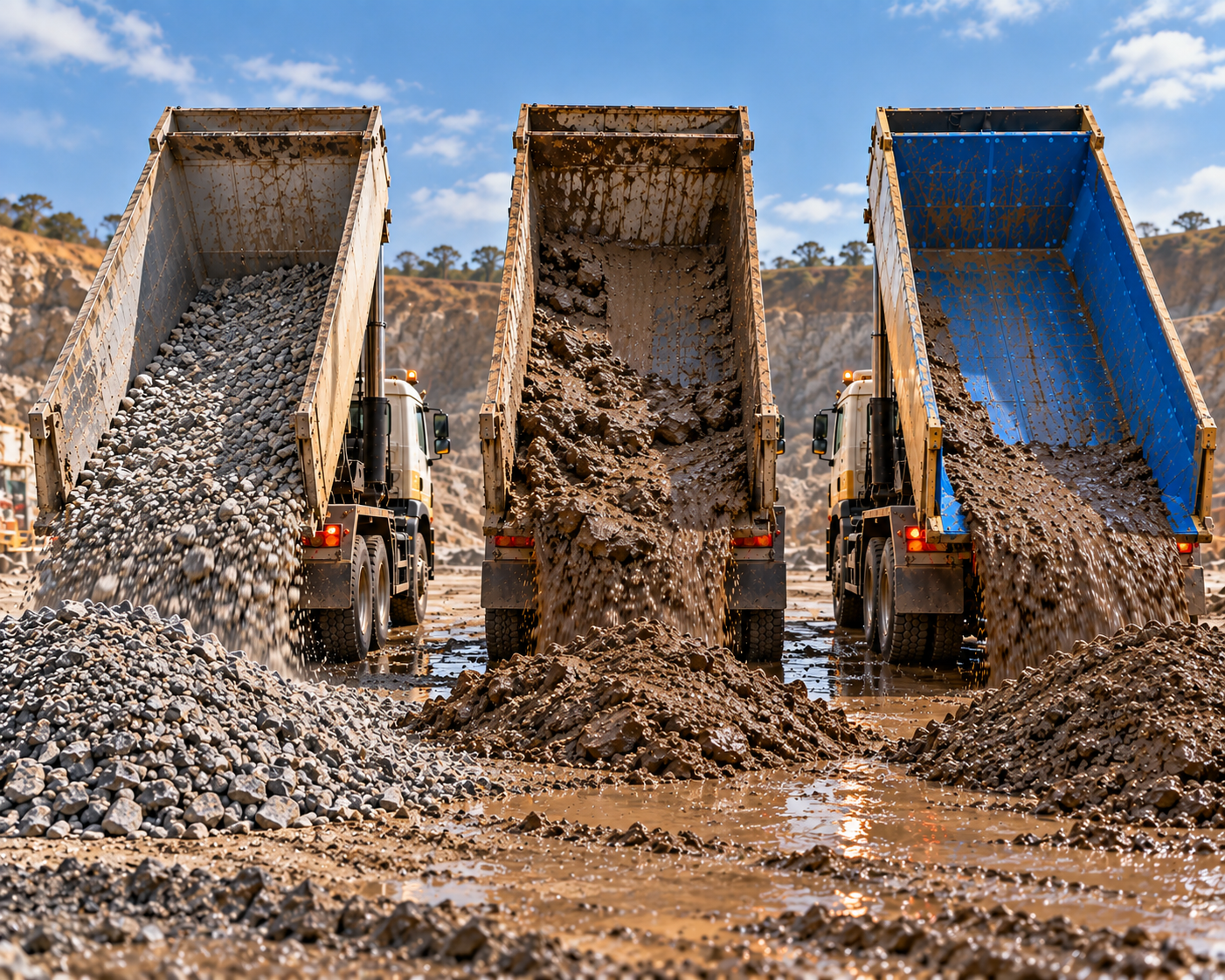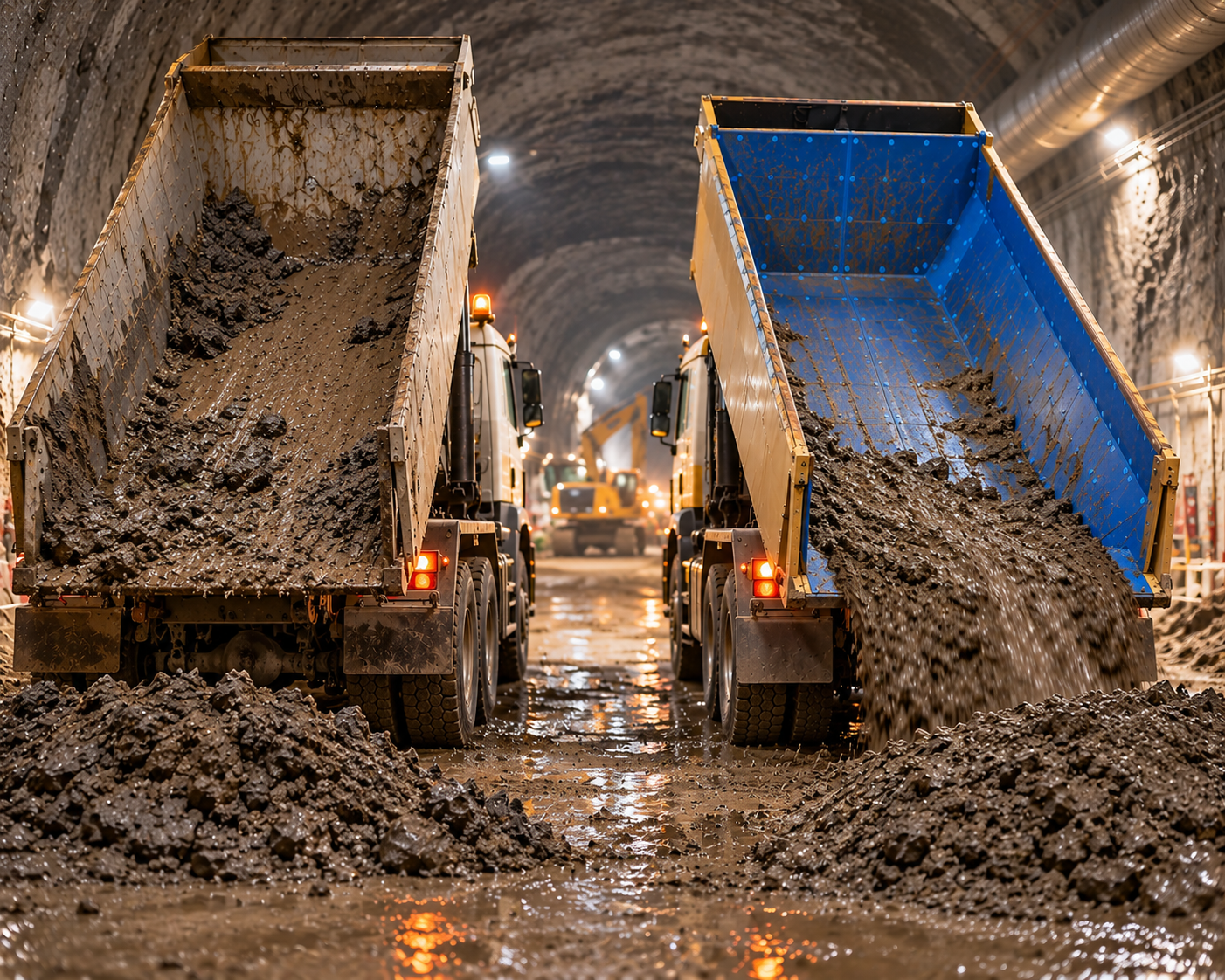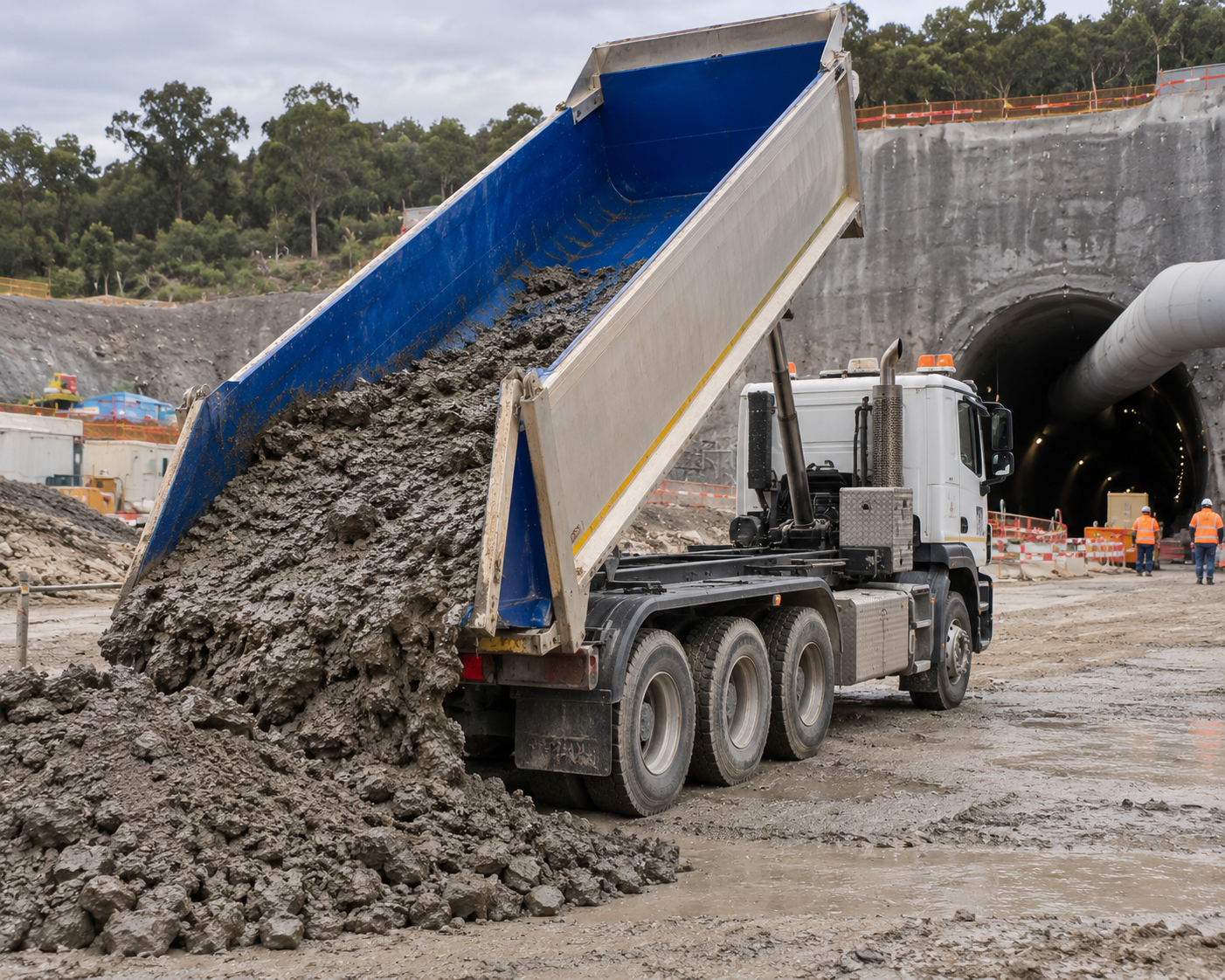
At a glance:
- Flow aids are systems that improve discharge in equipment by reducing issues such as sticking, bridging and carryback.
- Common flow aids include vibrators, air cannons, aeration devices and mechanical agitators that use vibration, air pressure or mechanical disturbance to release compacted material.
- OKUSLIDE® UHMWPE liners improve discharge by creating a low-friction surface that allows bulk materials to slide more easily during unloading.
- While many flow aids respond to blockages after they form, liner systems address the underlying cause by preventing material from sticking to steel surfaces.
Material flow challenges are common in industries such as mining, construction, agriculture, waste transport and quarrying. Loads can stick to internal surfaces, form blockages or release unevenly, slowing down unloading and disrupting cycle times.
These problems increase the need for manual clearing, add strain to equipment and reduce overall operational efficiency. Over time, repeated sticking and inconsistent flow can also accelerate internal wear in truck bodies, bins and chutes.
To address these challenges, you may be considering different flow-aid systems. Some rely on vibration or air pressure to dislodge material, while others focus on improving internal surface conditions to support smoother, more consistent discharge.
This article explores common flow aids used in bulk material handling and compares them with OKUSLIDE® UHMWPE liner systems, which address material flow at the surface interface.
What Are Flow Aids?
Flow aids are systems designed to improve the discharge of bulk materials from equipment such as hoppers, silos, chutes and truck bodies. Their purpose is to maintain consistent material flow and reduce problems caused by sticking, compaction and uneven discharge.
Flow aids achieve this in different ways. Some apply external force to break blockages, while others improve the internal surface conditions that influence friction and adhesion.
Common flow-aid technologies include vibration systems, compressed air devices, mechanical agitators and low-friction liner surfaces. Understanding how these systems function helps you evaluate which approach is best suited to your operation.
Below are common types of flow aids:
- Vibrators (Electric or Pneumatic): Vibrators are externally mounted devices that generate controlled oscillations along equipment walls. The vibration helps loosen compacted material and encourages movement toward the discharge point. They are commonly used on silos, bins and hoppers. Because they rely on motors or pneumatic systems, they need a power source and routine maintenance to ensure consistent operation.
- Air Cannons (Air Blasters): Air cannons release short bursts of high-pressure compressed air into equipment walls or discharge zones. The sudden pressure creates shockwaves that break hardened build-up or bridging. They are typically installed in fixed processing plants, though they may be used in some specialised mobile applications. Because they operate in bursts, these systems are generally activated when blockages occur rather than providing continuous flow assistance.
- Aeration Devices (Aeration Pads or Fluidisers): Aeration systems introduce low-pressure airflow through porous pads installed along equipment walls. The airflow helps fluidise fine powders, so they behave more like liquids. They are most effective for dry, fine materials such as cement, lime or flour. Their effectiveness decreases with wet, cohesive or heavy bulk materials.
- Mechanical Agitators: Mechanical agitators use internal moving components, such as paddles, screws or rotating devices, to disturb material and maintain flow. Because these systems operate inside the equipment, they add mechanical complexity and introduce additional wear points that require ongoing maintenance.
- Low-Friction UHMWPE Liners: UHMWPE liners are installed directly onto internal steel surfaces. Instead of forcing material movement, they reduce wall friction and surface adhesion. This allows material to discharge more easily under gravity. Once installed, liners require no energy input and contain no moving parts.
Engineered Surface Solutions: How OKUSLIDE® Changes Flow Dynamics
OKUSLIDE® is a premium-grade UHMWPE liner system engineered for demanding bulk haulage environments. The system improves the internal surface conditions that influence how bulk materials behave during unloading.
The liners are installed directly onto the internal steel surfaces of truck bodies, bins and chutes. By modifying the contact surface between the material and the structure, they reduce friction and change how loads interact with the equipment during discharge.
Key performance characteristics include:
- Extremely low coefficient of friction, allowing materials to slide more easily along the liner surface and reducing sticking during unloading
- High abrasion resistance, helping the liner withstand continuous contact with aggregates, minerals and other abrasive materials
- Impact absorption under heavy loads, protecting both the liner and the underlying structure during loading
- Resistance to corrosion, helping shield internal steel surfaces from moisture and chemical exposure
Read More: Extend Truck Body Life With Abrasion-Resistant Liners
Rather than applying external force to break material loose, OKUSLIDE® works by preventing sticking at the surface interface. Reducing the friction between bulk material and the internal structure helps minimise carryback and allows loads to discharge more consistently under gravity.
Because liner thickness and coverage can be tailored to specific operating environments, OKUSLIDE® systems can be configured to suit different equipment types and material handling conditions.
What Are the Differences Between OKUSLIDE® & Other Flow Aids?
Flow aids vary significantly in how they influence material discharge and equipment performance. The following sections compare OKUSLIDE® with other flow aids across several key operational factors.
Mechanism of Action: Force vs Friction
Many traditional flow aids rely on applying external force to disrupt material build-up. Vibrators, air cannons and agitators are designed to break blockages after they form by shaking, blasting or disturbing the material mass. While these methods can help release compacted material, they typically address the symptom rather than the conditions that caused the sticking.
OKUSLIDE® approaches the issue differently. By reducing wall friction at the material–steel interface, the liner prevents material from adhering to the surface in the first place. When adhesion is reduced, the likelihood of bridging, carryback and compaction decreases significantly. This friction-reduction approach allows bulk material to discharge naturally under gravity rather than requiring repeated mechanical intervention.
Moving Parts vs Static Surface Solution
Most force-based flow aids involve mechanical equipment such as motors, compressors, air lines or internal agitation components. These systems must be powered and monitored during operation, and their mechanical parts are subject to wear over time. Because they rely on moving components, they introduce additional failure points that may require servicing or replacement.
OKUSLIDE®, in contrast, functions as a static surface solution. The liners contain no motors, air systems or moving parts. Once installed, they operate passively by maintaining a low-friction discharge surface that supports material movement without additional mechanical input.
Maintenance Requirements
Mechanical flow aids require periodic inspection and maintenance to ensure continued operation. Components such as motors, valves, air systems or moving parts may require servicing or replacement over time. Maintenance activity can interrupt normal operations and may require specialised repair work.
UHMWPE liner systems provide a different maintenance profile. By covering the internal steel surfaces, liners protect the structure from abrasion and corrosion while reducing material adhesion. This can limit the need for repeated welding, patch repairs or structural maintenance within the equipment body.
Long-Term Operating Costs
The long-term cost of flow aids depends not only on installation but also on energy consumption, maintenance and downtime.
Mechanical systems typically require ongoing energy input to power motors or compressed air systems. Over time, replacement components and servicing can add to operational costs.
Liner systems such as OKUSLIDE® are installed as part of the equipment structure and require no ongoing power input. With fewer mechanical components to maintain and less internal wear on steel surfaces, they often provide a more predictable long-term cost profile.
Reliability Across Variable Bulk Materials
Bulk haulage operations frequently handle materials with varying properties. Moisture levels, particle-size distribution and compaction can vary from one load to the next.
Force-based flow aids depend on vibration or air pressure to disrupt blockages. Their effectiveness can vary depending on how the material responds to those forces.
Because UHMWPE liners reduce wall friction, they help maintain consistent performance across a wide range of materials, including wet, abrasive or mixed loads commonly encountered in transport environments.
So, Which Flow Aid Works Better?
Flow aids are designed to address material flow disruptions, but they do so through different mechanisms. Systems such as vibrators, air cannons and mechanical agitators apply external force to break blockages after they occur. While these approaches can assist in certain situations, they generally respond to symptoms rather than the underlying cause of material adhesion.
Liner systems such as OKUSLIDE® take a different approach by addressing the interaction between the material and the internal steel surface. By reducing wall friction at the contact interface, the liner helps limit adhesion and prevents material from sticking to the steel in the first place, allowing loads to discharge more consistently under gravity.
For many bulk haulage applications, particularly where loads vary in moisture, density and abrasiveness, this surface-based approach provides a more stable, low-maintenance way to support reliable material flow. As a result, engineered UHMWPE lining systems, such as OKUSLIDE®, are increasingly adopted by operators seeking predictable discharge performance and reduced operational intervention.
If material sticking, carryback or slow discharge is affecting your bulk handling operations, OKUSLIDE® UHMWPE liners offer a durable, low-friction solution designed for demanding haulage conditions.
Contact our team today to discuss how OKUSLIDE® liners can be specified and installed for your equipment.
FAQs
Are OKUSLIDE® UHMWPE liners suitable for agricultural materials?
Yes. OKUSLIDE® UHMWPE liners are commonly used in agricultural bulk handling applications such as grain, feed, fertiliser and other loose materials. The low-friction surface helps reduce sticking and carryback, allowing agricultural loads to discharge more smoothly while also protecting internal steel surfaces from abrasion and wear.
Can UHMWPE liners be installed in existing truck bodies or equipment?
Yes. UHMWPE liners can be installed in existing truck bodies, bins, hoppers and chutes. OKUSLIDE®’s network of expert installers across Australia ensures liners are cut and fitted to match the internal geometry of the equipment, improving discharge behaviour without requiring structural modifications or changes to tipping angles.
How long do UHMWPE liner systems typically last in heavy-duty environments?
Service life depends on factors such as material abrasiveness, load weight, tipping frequency and operating conditions. High-grade OKUSLIDE® UHMWPE liners are designed to withstand sustained abrasion and impact, helping protect internal steel surfaces and extend the operational life of equipment structures.