At a glance:
- Bulk material-handling challenges, such as poor discharge, impact damage, carry-back and excessive wear, occur across multiple industries.
- These issues are driven by how bulk materials interact with internal steel surfaces during loading, transport and discharge.
- OKUSLIDE® UHMWPE liners address these issues by providing a durable, low-friction protective layer that supports reliable discharge and reduces wear-related maintenance.
Across industries such as mining, construction, agriculture, excavation, recycling and bulk transport, operators face recurring material-handling problems that may appear different on the surface but share the same underlying causes. Loads fail to discharge cleanly, material builds up inside bodies, surface wear accelerates and manual intervention becomes part of routine operations.
While materials and operating conditions vary across industries, many of the performance challenges originate from how bulk materials interact with internal steel surfaces. Bulk materials behave similarly when the internal surfaces of bulk material handling equipment, including truck bodies, bins, hoppers and chutes, generate friction, promote material adhesion or degrade over time, regardless of industry.
This is why OKUSLIDE® UHMWPE liners are used across multiple sectors. Designed for use across harsh, high-wear environments, they address the root causes of poor discharge, excessive wear and impact damage at the source.
The sections below examine how these common problems appear across industries and how OKUSLIDE® liners are engineered to solve them.
Material Build-Up & Poor Flow Efficiency
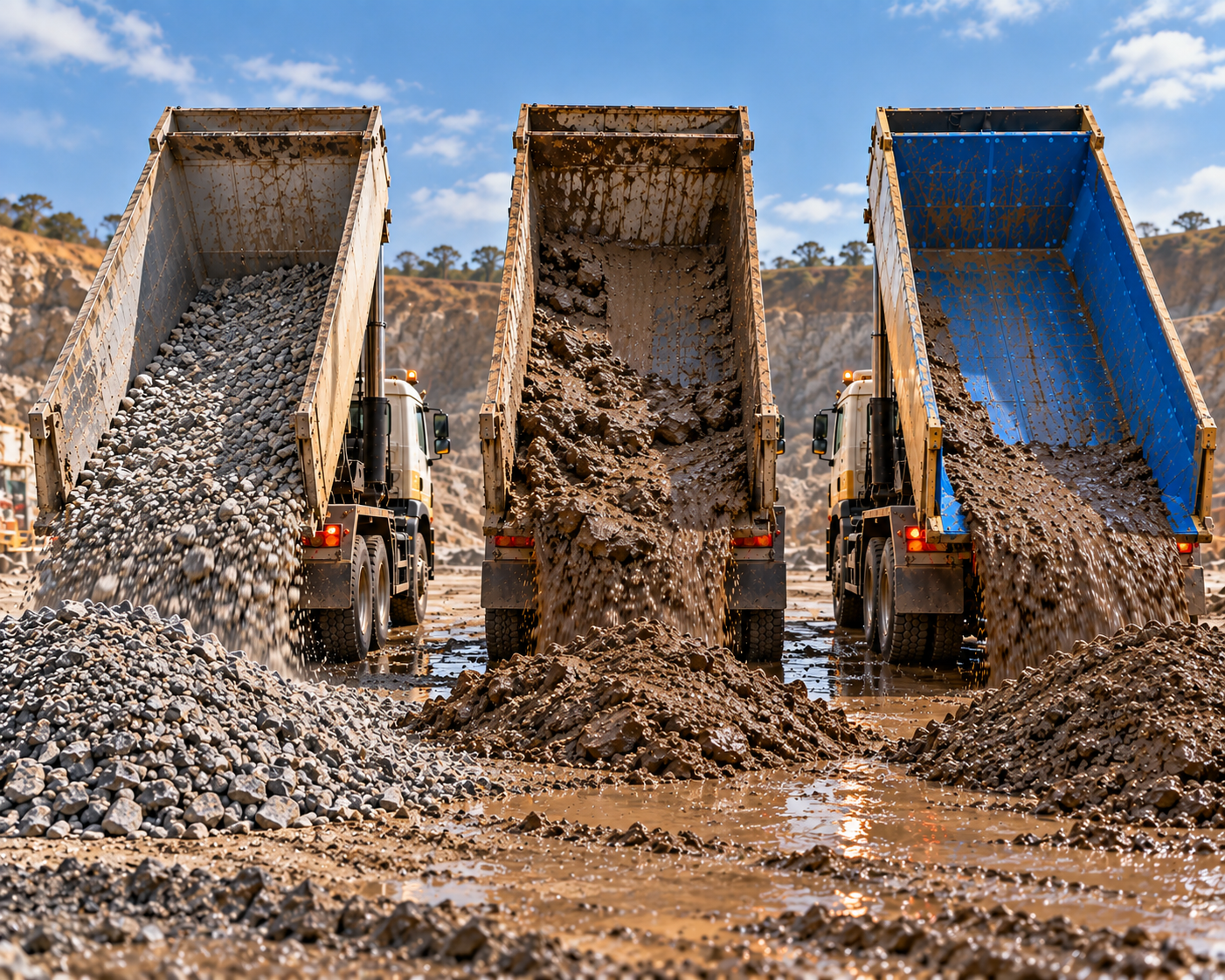
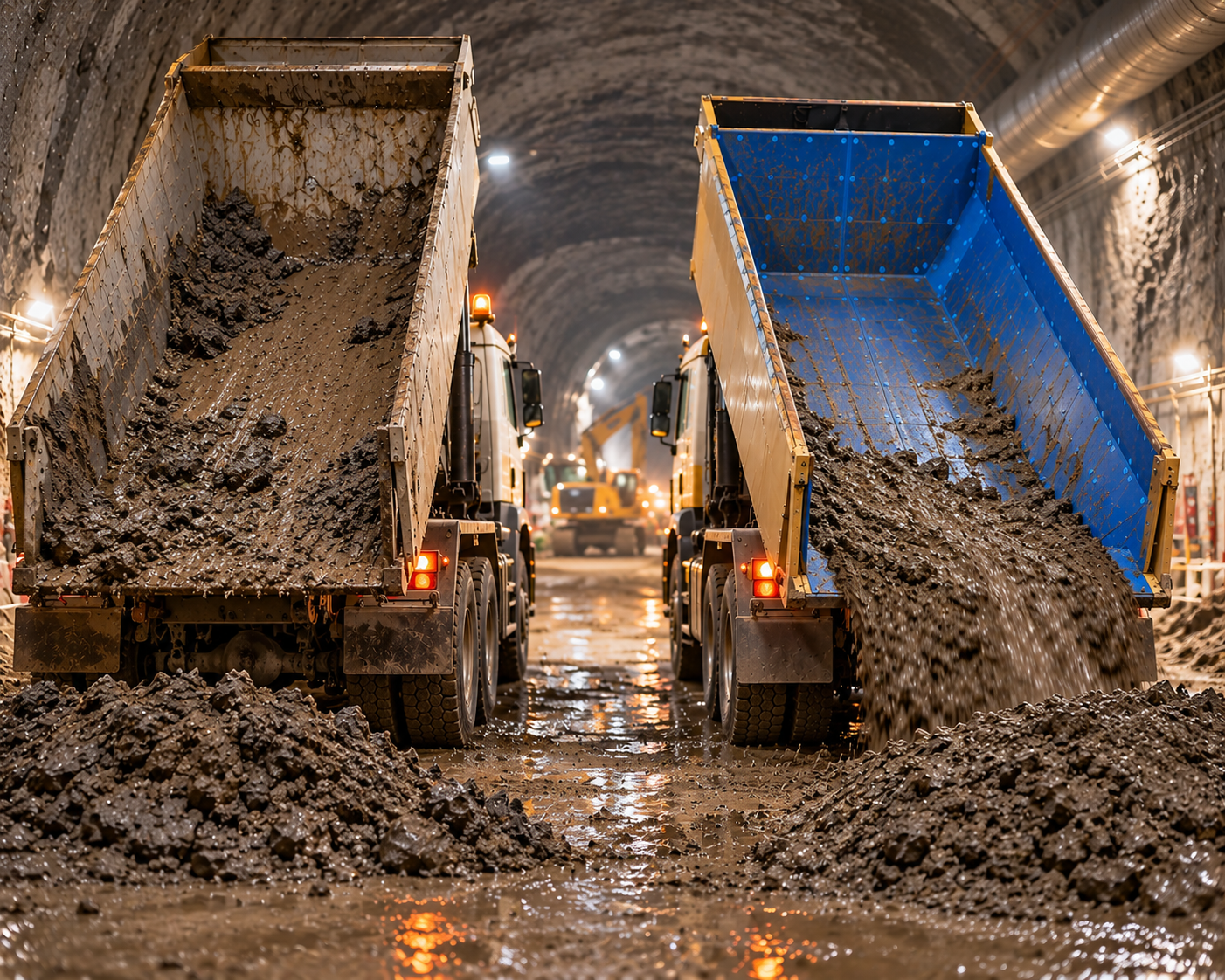
Material build-up and poor flow efficiency occur when bulk materials fail to slide freely along internal steel surfaces. This occurs when worn or rough surfaces increase friction, causing sticky, abrasive or damp materials to bridge or hang up during discharge.
When material does not discharge cleanly, operators often need to increase tipping angles or manually clear hang-ups to complete unloading. These compensating actions slow tipping cycles, increase downtime between loads and expose operators to increased operational risk.
This problem is common in mining operations, where ore, fines and slurry adhere to worn internal surfaces, especially in high-wear discharge zones. In agriculture, grain, fertiliser and feed are prone to bridging and sticking when moisture content or fines are present, leading to uneven discharge and residual loads.
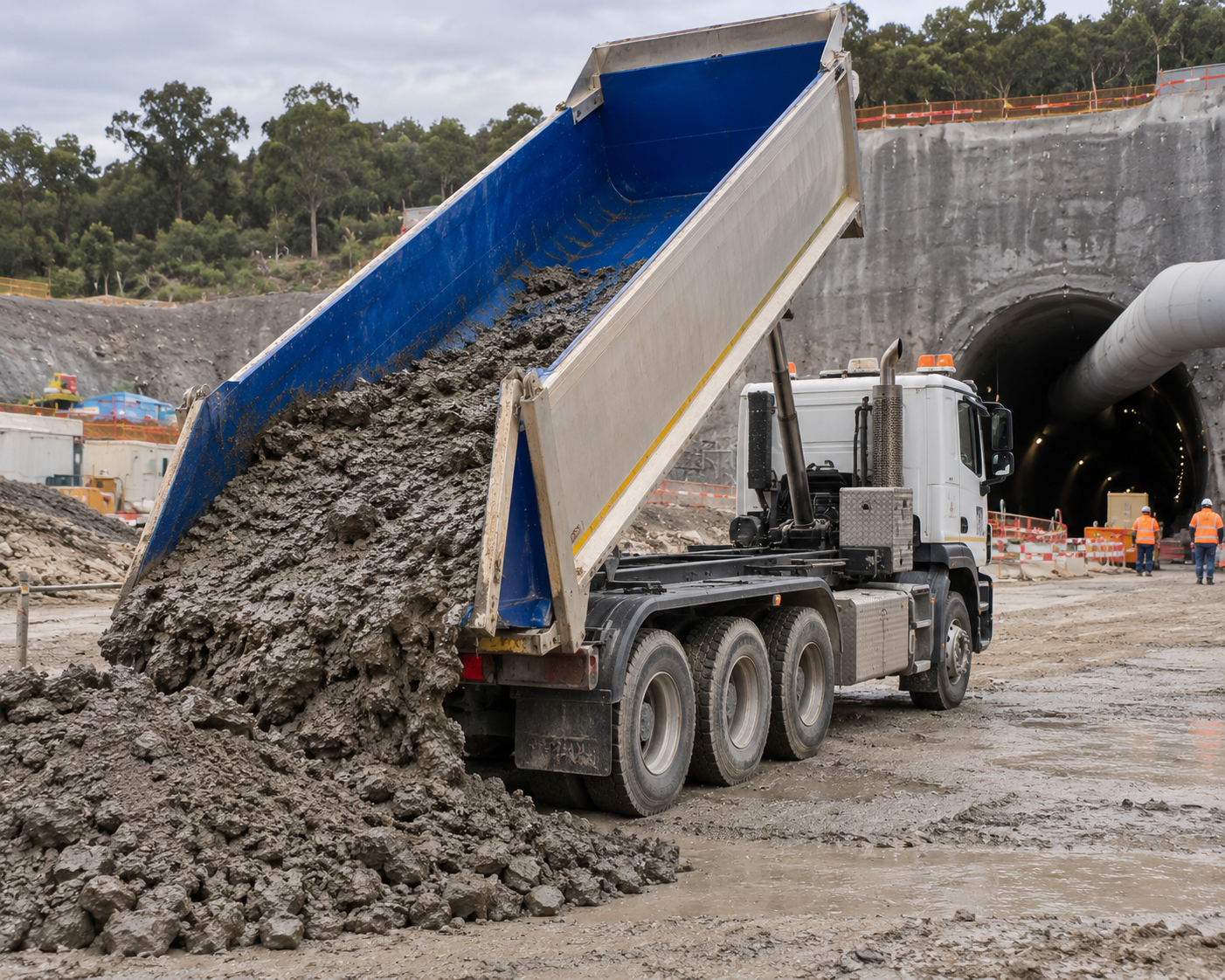
OKUSLIDE® UHMWPE liners, due to their low friction coefficient, have a smooth surface that reduces material adhesion and surface resistance, allowing material to slide out more consistently during discharge without requiring steeper tipping angles or manual intervention.
Carry-Back & Contamination
Internal surface friction, adhesion and wear can prevent the entire load from clearing cleanly during tipping, even after unloading appears complete.
Residual material carries over into the next cycle, reducing available payload, disrupting weight distribution and potentially increasing fuel consumption through additional trips. Incomplete discharge also increases the risk of cross-contamination. When a body does not empty fully, remnants from a previous load can mix with the next, compromising material quality and limiting flexibility when switching products.
This is particularly problematic in agriculture and bulk transport operations, where even small amounts of carry-over can affect compliance, usability or product quality.
In agriculture, damp grain, fertiliser and feed commonly settle in corners and along worn surfaces. Mining and bulk transport operations experience similar issues with fines and slurry coating steel bodies, while recycling and waste handling often involve mixed waste materials that remain trapped after discharge.
OKUSLIDE® liners reduce carry-back with their low-friction surface, allowing complete release during tipping. By minimising adhesion and resistance, the liners help bodies empty fully between loads, restoring payload efficiency and lowering the risk of cross-contamination.
Impact Damage from Repeated Loading
During loading, large rocks, broken concrete, demolition debris and dense spoil transfer concentrated force to body floors and walls, causing dents, deformation and stress cracking in steel structures.
Over time, this damage creates pockets and ledges where material collects during discharge, increasing friction that causes hang-ups. Once body surfaces become deformed, weight is no longer distributed evenly, so the steel around the damaged area is subjected to higher local loads, which accelerates fatigue and wear.
Impact damage is common in mining operations, where oversized material and high drop heights are unavoidable. Excavation and civil construction projects regularly handle broken rock, spoil and mixed material that strike body surfaces unevenly during loading. In road and infrastructure works, demolition material and recycled aggregates generate similar impact forces that progressively degrade steel bodies over repeated cycles.
OKUSLIDE® UHMWPE liners help manage impact damage by absorbing and distributing impact energy during loading. The material flexes slightly under load and maintains its surface integrity, protecting the parent steel and maintaining the liner’s smooth surface quality. This prevents impact-related defects from developing into long-term flow restrictions.
Read more: How Impact Resistance Protects Your Truck Body: Why UHMWPE are the Best Choice
Excessive Wear Leading to Frequent Maintenance & Downtime
Excessive wear develops over time as bulk materials are repeatedly loaded, transported and discharged. Heavy loading causes deformation and stress cracking, while ongoing movement of abrasive material slowly erodes internal steel surfaces.
As wear progresses, maintenance demands increase. Roughened and thinned steel promotes material build-up, uneven discharge and carry-over, which in turn, leads to more frequent cleaning, patching and structural repairs. What begins as routine wear gradually becomes a recurring maintenance burden.
Frequent maintenance has a direct impact on operations. Equipment must be taken out of service for repairs, inspections or clean-out, reducing availability and disrupting schedules. In many cases, equipment is removed from service not because it has failed structurally, but because the time and effort required to keep it operating reliably outweighs its operational value.
This pattern is common in mining and quarrying operations where trucks and bins are constantly exposed to hard rock and mineral fines, which quickly wear internal steel surfaces and drive frequent repair and patching. Road construction and infrastructure projects face similar challenges when moving sand, crushed rock and recycled materials, where repeated handling progressively degrades bulk-handling equipment.
OKUSLIDE® liners help reduce maintenance frequency and downtime by protecting internal steel surfaces from both impact damage and abrasive wear. As a durable, sacrificial layer, the liner absorbs loading forces and resists abrasion, thereby slowing surface degradation. By stabilising internal wear behaviour, OKUSLIDE® liners extend service intervals, reduce unplanned maintenance and keep equipment in operation for longer.
Read more: What Industries Benefit Most From OKUSLIDE® UHMWPE Liners
In heavy-duty material-handling operations, similar performance challenges tend to emerge regardless of industry. Whether handling ore, spoil, grain, aggregates or recycled material, performance issues such as poor discharge, impact damage, carry-back and excessive wear all originate from how bulk materials interact with internal steel surfaces.
By providing a durable, low-friction protective layer, OKUSLIDE® helps improve material flow, reduce surface degradation and limit maintenance and downtime in high-wear environments.
Choosing the right liner for your industry depends on understanding where wear, impact and flow problems occur within your equipment. Different applications place different demands on liners, from high-impact loading zones to areas exposed to continuous abrasion or material adhesion. Matching liner thickness, grade and placement to these operating conditions ensures consistent discharge performance, extended equipment life and reliable operation across demanding industrial settings.
Contact us today to discuss liner options suited to your equipment and operating environment.
FAQs
Are OKUSLIDE® liners suitable for different types of bulk materials?
Yes. OKUSLIDE® UHMWPE liners are used across a wide range of bulk materials, including ore, spoil, aggregates, grain, fertiliser and recycled materials. Their performance is based on how they manage surface friction, impact and abrasion rather than the specific material being handled.
Do all industries require the same liner configuration?
No. Different industries often require different liner configurations based on the materials they handle and the conditions under which they operate. In mining, thicker liners are used as they manage high-impact loading and abrasion from rock and mineral fines. In agriculture, liners are typically thinner as they address material adhesion, moisture-related build-up and the need for clean discharge when handling grain, fertiliser or feed.
Can OKUSLIDE® liners be installed without modifying existing equipment?
Yes. OKUSLIDE® liners are designed to fit within existing truck bodies, bins, hoppers and chutes, improving discharge behaviour and reducing wear without changing tipping angles or body geometry. OKUSLIDE®’s network of expert installers across Australia ensures a custom fit for maximum coverage across all kinds of equipment.