At a glance:
- Steel truck beds without protective liners are subject to repeated impacts and abrasion, leading to wear and internal fatigue.
- As this wear progresses, surface friction increases and materials begin to stick, leading to carry-back, incomplete discharge and rising maintenance demands.
- To address these issues, UHMWPE liners absorb and distribute impact while resisting abrasion, preventing surface damage and structural weakening.
- Their low-friction, non-stick surface allows materials to release cleanly, reducing carry-back, improving load efficiency and lowering maintenance over time.
Steel truck bed liners are widely used for their strength and ability to handle heavy loads. In demanding transport, construction and bulk-haulage operations, however, load performance is influenced by far more than just strength.
Continuous impact, material abrasion and repeated tipping cycles place ongoing stress on the liner surface. These conditions gradually alter how the material moves inside the truck body, affecting both discharge efficiency and structural integrity. These effects expose key limitations of steel liners. What begins as minor surface wear develops into friction, material sticking and increased maintenance demands.
This article explains why steel liners fail under heavy loads and how UHMWPE liners address these challenges at the operational level.
Why Steel Truck Bed Liners Break Down Under Heavy Loads
Steel liners are exposed to multiple stress factors simultaneously. Repeated impacts and continuous abrasion from heavy loads accelerate surface wear and alter the liner’s performance during load cycles. Below are the key mechanisms that drive this breakdown over time.
Repeated Impact Causes Surface Fatigue
Heavy materials such as rock, aggregates and demolition waste generate concentrated impact forces during loading. These forces are not evenly distributed; they repeatedly strike specific zones of the liner, creating localised stress points that intensify with each cycle.
Steel liners are rigid and have a limited ability to absorb or redistribute this energy. Instead, the force is transferred directly to the material, creating micro-fractures beneath the surface. As cycles continue, these fractures expand and connect, weakening the liner internally and reducing its ability to withstand further impact.
Over time, this accelerates damage progression and increases the risk of surface failure under heavy loads.
Read More: How Impact Resistance Protects Your Truck Body
Abrasion Wears Down the Steel Surface
While impact initiates structural fatigue, abrasion drives continuous surface loss. As materials move within the truck body during loading, transport and tipping, they create sustained friction against the steel surface.
Abrasive materials such as sand, aggregates and crushed debris act as cutting agents, gradually removing layers of steel. Wear is uneven, with high-contact areas degrading faster and forming grooves, rough surfaces and material thinning.
This creates weak points that increase the risk of deformation, cracking and eventual failure. In high-cycle operations, abrasion compounds quickly, reducing liner lifespan and accelerating further damage.
Read More: Why Abrasion Resistance Matters in Truck Bed Liners
Surface Damage Increases Friction and Material Sticking
As the steel liner wears from impact and abrasion, the surface loses its smooth finish. Scratches, gouges and uneven areas begin to develop, altering how the material moves within the body.
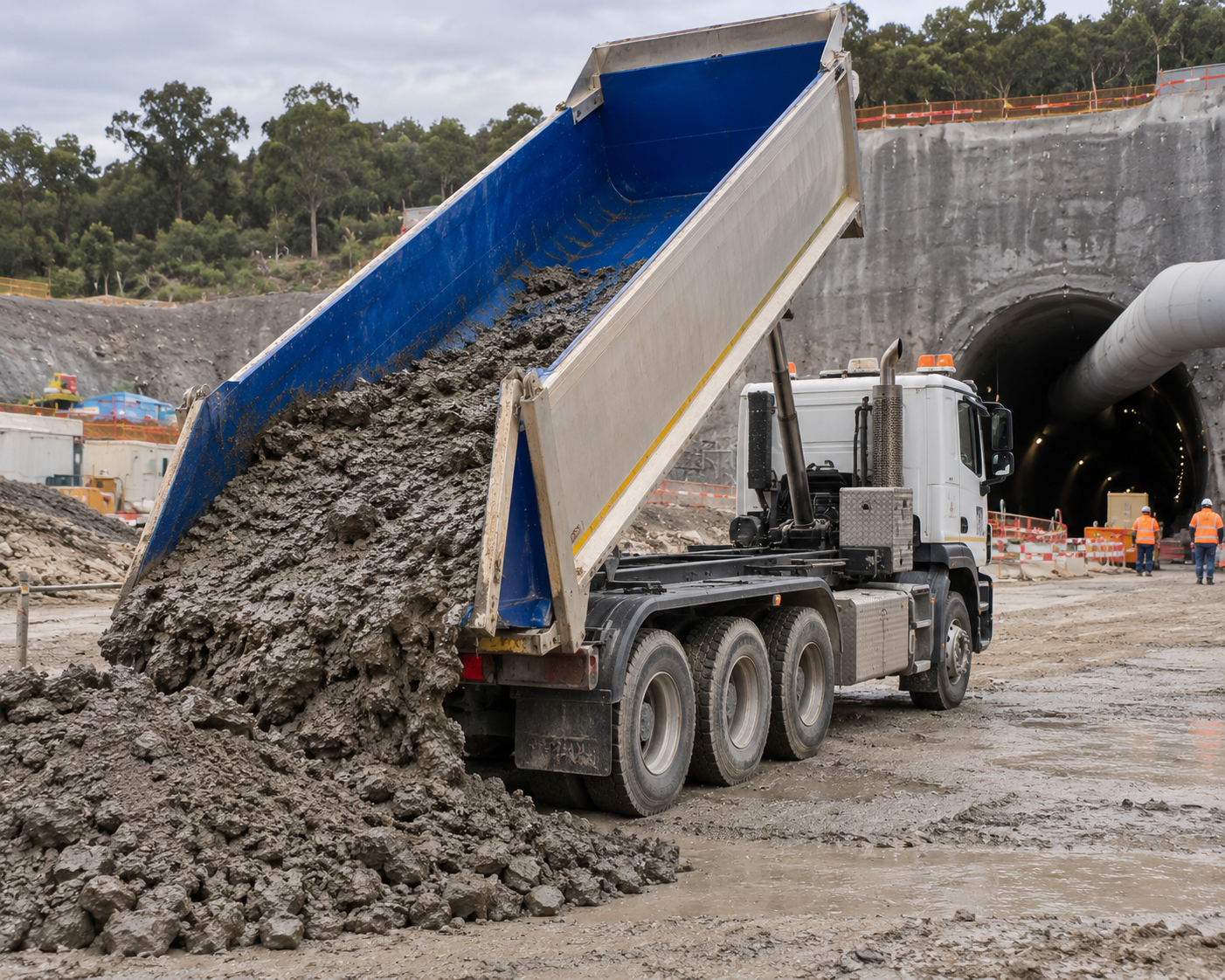
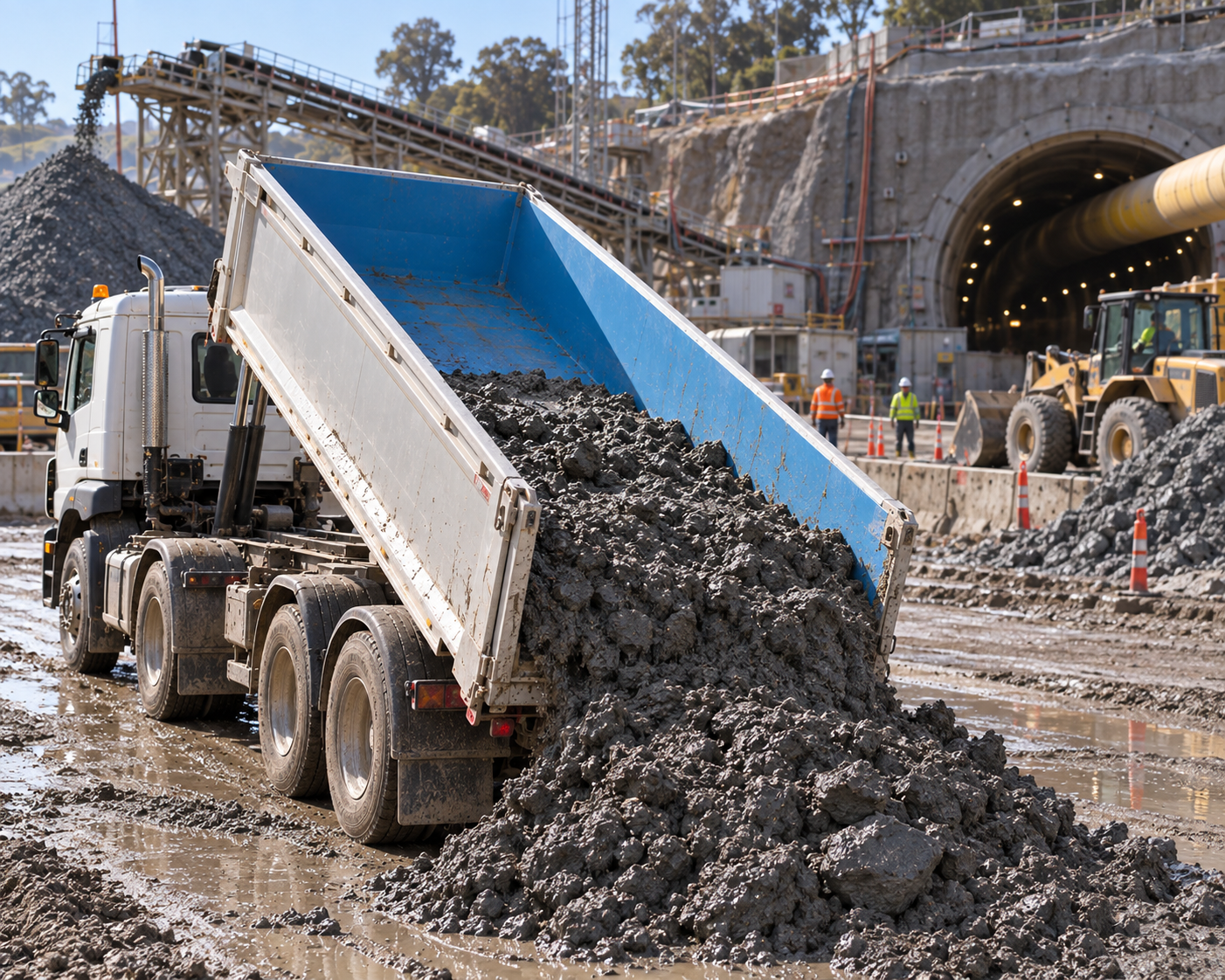
Instead of sliding out as a single mass, the load begins to drag and break apart. Wet or cohesive materials, such as soil, clay or asphalt, adhere to worn or gouged areas rather than releasing cleanly. This leads to carry-back and incomplete discharge, reducing usable payload on subsequent trips.
To clear the remaining material, operators often need to increase tipping angles or manually clear hang-ups to complete unloading. This slows cycle times and adds stress to already worn surfaces, accelerating further degradation and increasing carry-back in subsequent loads.
Higher Maintenance and Repair Costs
As surface wear and structural fatigue progress, maintenance becomes unavoidable. Liners need repairs to remain operational, including patching worn sections, welding damaged areas or replacing panels entirely.
These interventions come with both direct and operational costs. Repair work takes vehicles out of service, disrupting schedules and reducing fleet availability. At the same time, degraded liner performance increases cleaning time, fuel consumption during unloading and hydraulic system wear.
Over time, these combined factors increase the cost per load and reduce overall fleet efficiency, making steel liners expensive to maintain.
How UHMWPE Liners Address the Limitations of Steel Truck Beds
Unlike steel, UHMWPE liners are designed to manage material flow, not just withstand load forces. Their performance comes from surface properties that reduce friction, resist wear and maintain consistency under repeated load cycles.
- Reduces impact stress by absorbing and dispersing load forces: Unlike steel, UHMWPE truck body liners have a degree of flexibility that allows them to absorb and distribute impact energy. This limits the formation of stress points and prevents the internal fatigue and micro-fracturing that develop in steel under repeated heavy loading.
- Superior sliding and abrasion resistance: With steel, abrasive loads gradually cut into the surface, creating grooves and uneven wear. UHMWPE liners behave differently. Its molecular structure absorbs and dissipates repeated contact energy. This allows abrasive material to move across the surface instead of digging in, reducing surface damage over time.
- Minimises friction to eliminate material sticking and carry-back: UHMWPE liners maintain a consistently low-friction surface, allowing materials to release more efficiently at lower tipping angles. Instead of materials hanging up, discharge remains more uniform across the body. This becomes particularly important with wet or cohesive materials, where surface condition directly influences whether the load releases cleanly or leaves residual.
- Lower maintenance and longer service life: By reducing wear, friction and material build-up, UHMWPE liners require less intervention over time. Fewer repairs, less downtime and more consistent performance contribute to a longer operational lifespan compared to steel liners.
Read More: How OKUSLIDE® Liners Improve Unloading Efficiency and Reduce Tipping Angle
Steel liners fail not because they lack strength, but because they are not designed for continuous impact, abrasion and material flow under heavy-load conditions. As wear develops, friction increases, materials begin to stick and performance declines with each load cycle.
This creates a compounding effect: reduced discharge efficiency, increased carry-back, higher maintenance demands and rising operating costs. Over time, these issues extend beyond the liner, impacting overall fleet productivity and cost per load.
Addressing this requires moving beyond structural strength alone to engineered liner systems that control wear, reduce friction and maintain consistent load flow.
OKUSLIDE® UHMWPE liners apply this approach, overcoming impact, abrasion and material flow challenges that limit steel performance. Their low-friction, wear-resistant surface supports cleaner discharge, reduced carry-back and lower maintenance in demanding operations.
Contact us today to discuss a liner configuration that improves load efficiency, reduces downtime and delivers reliable long-term performance across your fleet.
FAQs
How do you know when a steel truck bed liner needs to be replaced?
Signs include frequent material carry-back, visible surface wear (pitting or thinning), increased manual clean-outs and slower unloading times. If these issues recur, it typically indicates that the liner is no longer performing efficiently under load.
Are OKUSLIDE® UHMWPE liners suitable for both wet and dry material transport?
OKUSLIDE® is engineered to handle both wet and dry material transport. Their low-friction surface improves the flow of wet, sticky loads. At the same time, their abrasion and impact resistance enable them to withstand dry, abrasive materials such as aggregates, sand and crushed rock without rapid surface wear.
Can OKUSLIDE® UHMWPE liners be installed on existing truck bodies?
UHMWPE liners can be retrofitted onto existing truck bodies. This allows operators to upgrade performance without replacing the entire body, reducing both cost and downtime. OKUSLIDE®’s network of expert installers across Australia helps ensure liners are custom-fitted, improving discharge behaviour without requiring structural modifications or changes to tipping angles.