At a glance
- Material hang-up leaves retained load inside elevated tipper bodies, creating stability concerns during discharge.
- As retained material rises with the body, the higher centre of gravity can increase rollover risk.
- Uneven weight distribution and sloping ground can further compromise tipper stability during unloading.
- Non-stick UHMWPE liners are one engineering control that may help material release earlier and reduce the body elevation needed.
When a tipper load fails to discharge, material remains inside a body that is already raised. The plant is carrying mass it was meant to release, and each further increase in body elevation reduces its stability.
In mining, wet coal, sticky clay and fragmented ore make this a recurring condition, not a rare event. Material hang-up is often associated with unloading delays and additional cleaning requirements. Retained load also creates mobile-plant stability hazards, while attempts to clear stuck material can expose workers to additional risks.
Understanding the hazard first makes it easier to judge each control on its merits. The sections below cover why loads stop releasing, how retained load and body elevation affect stability and where non-stick body liners fit among the available controls.
Understanding Material Hang-Up in Tipper Bodies
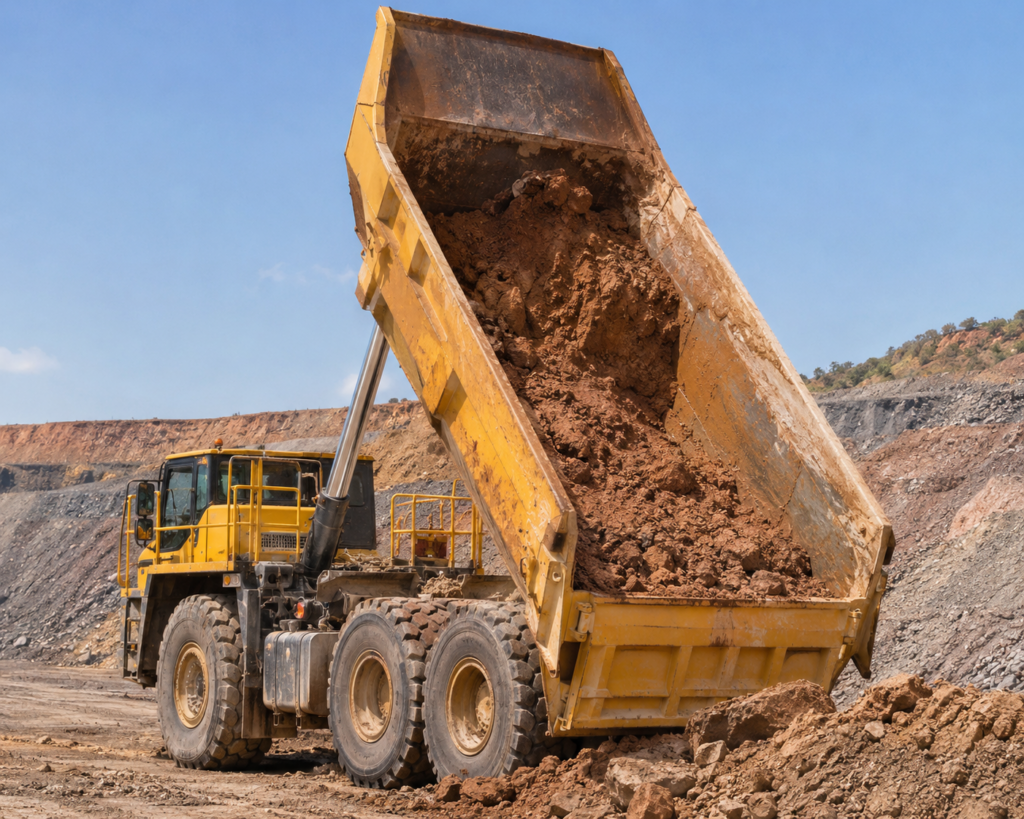
Material hang-up in tipper bodies occurs when material does not empty during tipping. Retained load is what remains in the body as a result. The terms are related but distinct: hang-up is the event, and retained load is the mass still carried after it.
Mining tippers handle materials with varying moisture levels, particle sizes and flow characteristics. Cohesive loads, particularly those containing wet clay or fine particles, can adhere to body surfaces and remain after tipping.
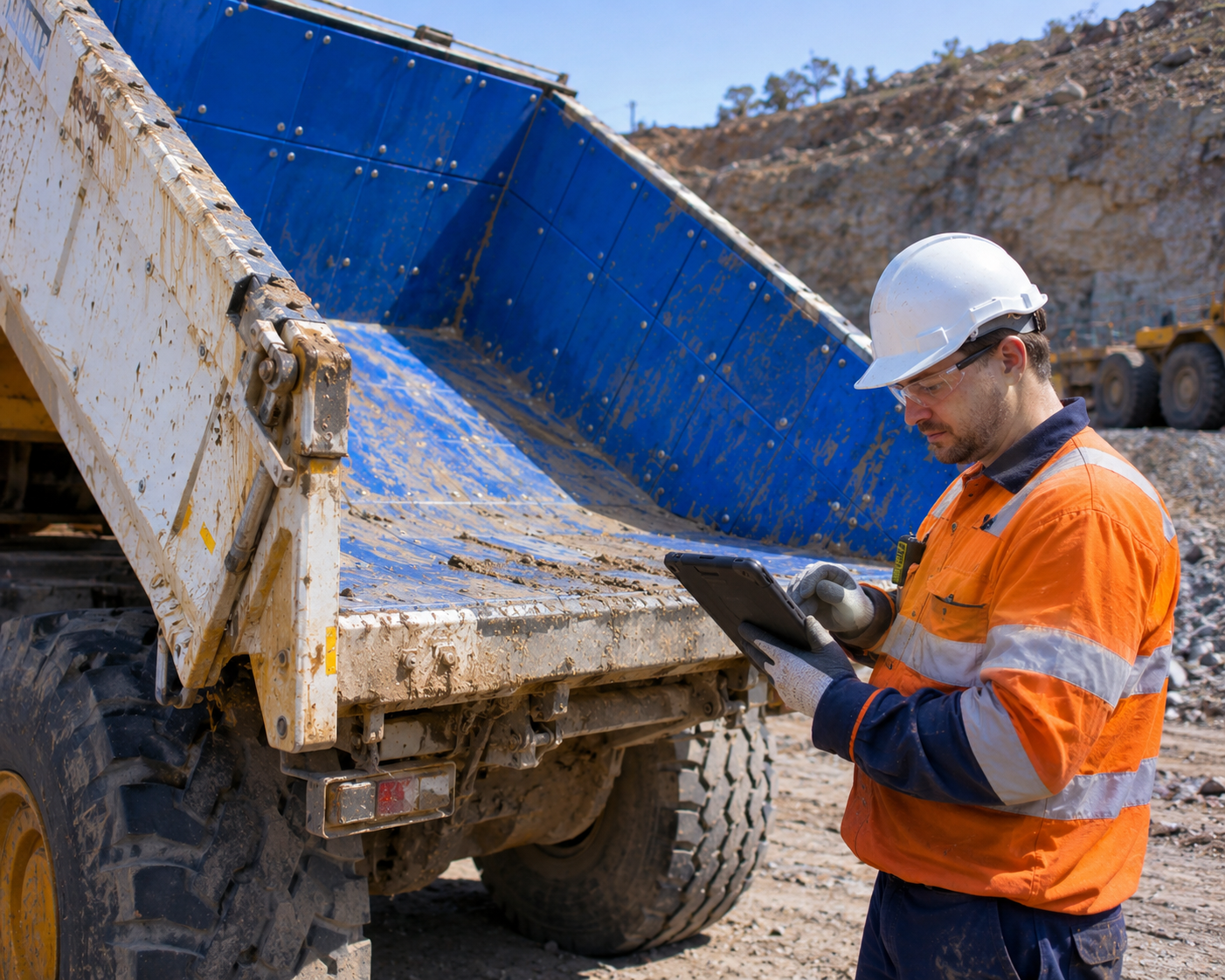
Material that stays in a raised body is mass held at height. That makes hang-up a stability question for the plant before it is a productivity question. Incomplete discharge may require additional clearing procedures, potentially exposing workers to hazardous areas around raised tipper bodies.
Other consequences include corrosion from residual material, which accelerates equipment deterioration. Delays and added labour costs also follow, but both are secondary to safety considerations. Because hang-up recurs with material and conditions, the next question is what retained load does while the body is raised.
How Tipper Discharge Behaviour Affects Stability
Tipper stability during discharge depends on body elevation and centre of gravity: the higher the body is raised and the more material it still holds, the less stable the plant becomes.
Body Elevation and the Rising Centre of Gravity
Raising the body lifts both the body and its load, so the combined centre of gravity moves upward as discharge begins. WorkSafe Victoria’s tipper truck and trailer rollover alert, issued after a non-mining incident, notes that rollover risk increases the higher the body is elevated, and that longer and larger trailers often need to be raised higher, which reduces stability.
The body elevation required for discharge depends on how readily the load releases, so a free-flowing load may clear at a lower body elevation than a sticking one. The higher the body must go to move stuck material, the further the plant moves from its most stable condition.
Retained Load and Mass Held High in the Body
During normal discharge, the remaining load decreases as material exits the body. When material hangs up, additional mass remains elevated as tipping continues. Retained material can keep the combined centre of gravity higher than it would be if the load discharged as intended. Operators may then raise the body further or tip again to clear it, which adds elevation on top of the retained mass. Retained load can also be difficult to assess during unloading:
- The load sits inside the body and can be difficult to see from the cab, so retained mass can be hard to judge by sight.
- Stability reduces progressively as the body rises, so the change from a stable to an unstable condition may not be obvious to the operator.
- The amount of material that sticks can vary from load to load, so a safe discharge on one cycle does not guarantee the next.
Uneven Weight Distribution and Lateral Instability
Material rarely sticks evenly. It tends to hold in one area of the body, such as along one side, so the retained weight sits off-centre. Off-centre mass adds sideways loading as the body rises, and lateral instability becomes a concern, particularly where the surface is not level.
The issue is where the mass sits and how long it stays, not only how much is carried. That separates this hazard from a simple overload, because a body within its intended payload can still become unbalanced if it fails to release.
Ground Conditions and Time in the Body as Compounding Factors
Ground slope and surface stability can influence how a tipper behaves during discharge. A tipper unloading on a decline with the cabin at the downhill end is more likely to retain material while the centre of gravity rises.
Time in the body adds a second factor. Material left for an extended period can consolidate and stick, and consolidated material on uneven ground may unbalance the plant. Both effects can be more likely with wet, fine and clay-rich loads, so the combination of material, time in the body, slope and body elevation is the key assessment question.
The Role of Non-Stick Liners in Reducing Material Hang-Up and Retained Load
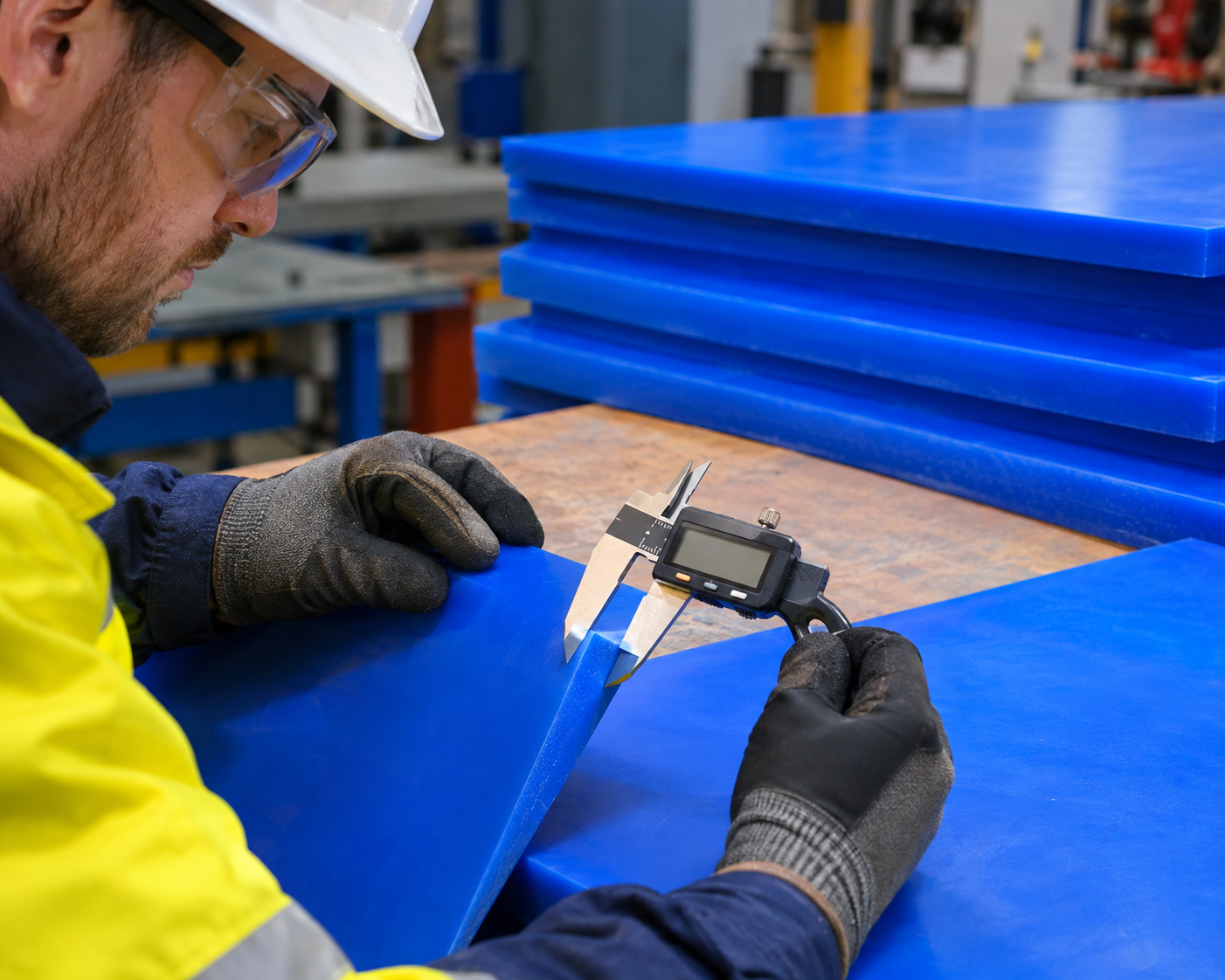
Non-stick liners for tipper bodies are designed to address the condition that creates retained load. OKUSLIDE® is a UHMWPE (ultra-high-molecular-weight polyethylene) liner system. Fitted as tipper body liners, it is one engineering control to consider alongside ground preparation, equipment selection and systems of work. The areas below show where it applies.
Low-Friction Surfaces and Material Flow
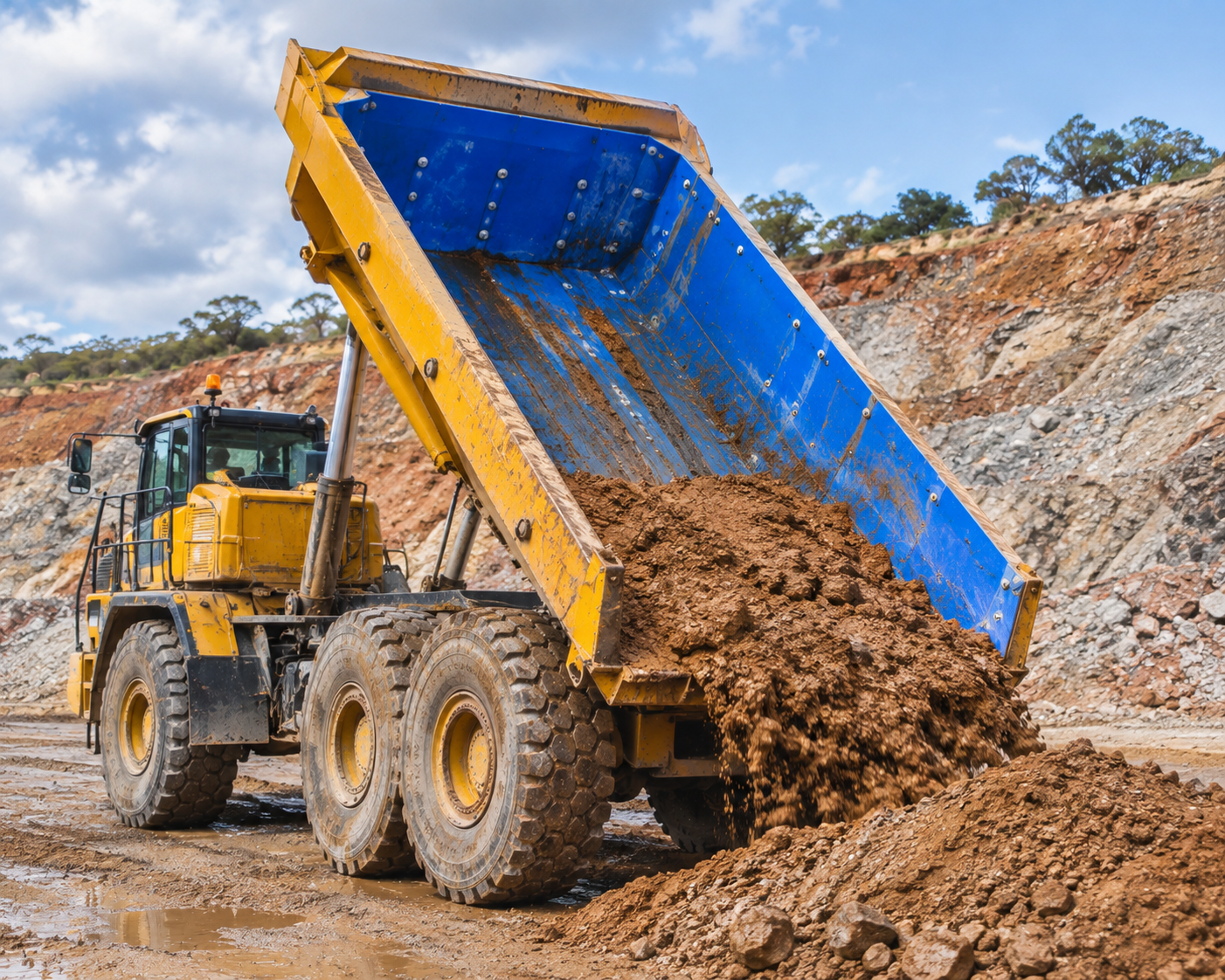
OKUSLIDE® has a low friction coefficient, achieved through selected additives, which reduces the possibility of materials sticking to the truck bed. The liner’s non-stick properties help material flow out smoothly during tipping, so cohesive or sticky material may release more readily.
Earlier release can reduce the body elevation needed and the need for secondary tipping, which links directly to the stability effects above. Results still depend on material, moisture, body shape and ground. Further detail is available in the article on reducing tipping angles during unloading.
Impact-Resistant Design Prevents Dents That Trap Material
In a mining environment, truck bodies endure intense physical stress. Loads made of rock, gravel or mineral ore are heavy and often abrasive. When dropped into a truck bed, these materials can cause dents and gouges in traditional steel and aluminium liners. These deformations may seem minor at first, but quickly become trap points where residual build-up occurs and causes hang-ups.
UHMWPE truck liners have exceptional impact resistance, so they don’t dent or crack under pressure. Instead, they absorb the impact and return to their original form, maintaining a smooth and even surface. This impact resilience helps eliminate the uneven surfaces and ridges that cause material sticking.
Reducing Build-Up in Corners, Welds and Surface Irregularities
Material hang-ups often begin in overlooked areas such as corners, weld lines and surface irregularities. These spots act as catch points where wet clay, coal or ore can easily lodge, particularly during tipping. Over time, even small build-ups in these areas can escalate into full-scale unloading issues.
Non-stick truck body liners help address these problem zones by providing a continuous, low-friction surface. Made from UHMWPE, they are installed to cover weld seams, smooth corners and reduce the impact of surface irregularities that typically trap material.
This consistent surface can allow for faster, more complete discharge, reducing the need for secondary tipping or manual clearing and supporting lower exposure for people near the body. Fitting is planned with engineers and the distributor and installer network.
Material hang-up leaves mass at height, and that retained load affects tipper stability during discharge. Body elevation, uneven weight distribution, slope and time in the body all shape the outcome. A non-stick liner is one control among several. When a load does not release, the material and its moisture, the condition of the body and liner surface, the body elevation needed and what is observed during unloading all warrant examination.
Material that stays in a raised body is a hazard to assess, not only an inconvenience. Explore OKUSLIDE®’s non-stick truck body liners to reduce hang-up at the source, or get in touch with us to discuss assessment and installation considerations for your equipment.
Each mine operator decides, with its engineers, what to observe during discharge, how to record body elevation and when a retained load warrants review. Inspection criteria of that kind are among the topics OKUSLIDE® is open to discussing with the industry while it builds a technical evidence framework for slick-surface body-liner systems on mobile equipment. Operators and engineers who have been witnessing hang-ups on their own tippers are free to open that discussion.
FAQs
What stability considerations apply during discharge?
Body elevation, ground conditions and retained load are the main considerations. Level, stable ground and space to align the tipper support stability, while material that stays in the body keeps the centre of gravity high.
What signs indicate that a mining tipper’s existing body liner may need inspection or replacement?
Rising carryback (material remaining in the body after tipping), slower or uneven discharge, more build-up, visible wear and thinning in high-impact areas signal that inspection is due. Replacement criteria are set by the mine operator with the engineer and supplier, not by a fixed interval.
Can retained material affect a mining truck’s payload compliance on its next trip?
Yes. Material left in the body adds to the next load, so the combined mass can exceed the intended payload and sit unevenly. Carryback, load distribution and the added mass of a liner are best considered together, as covered in the article on payload compliance and load distribution.
Can non-stick liners be retrofitted to older mining tipper bodies?
Often, yes. Suitability depends on the condition of the parent body, the equipment and the material handled, so retrofitting liners to older truck bodies is planned with engineers and the distributor and installer network.