At a glance
- Installing a body liner is only the first step. Its effectiveness should be verified under normal unloading conditions.
- Tipping-angle measurements and carryback records help assess whether material is releasing more consistently.
- Changes in discharge behaviour or liner condition can signal the need for further inspection and review.
- A traceable audit trail connects verification findings with corrective actions, supporting ongoing WHS reviews and safety audits.
A body liner installed in a mining tipper can serve as an engineering control, but its installation alone does not show that it is effective under normal unloading conditions. Without documented verification, an operator has no recorded basis for stating that the liner is performing as intended.
Retained material and uneven discharge can raise the effective centre of gravity as the tipper body rises, increasing the stability hazard, particularly on sloped or uneven ground. Verification shows whether the liner continues to perform its intended control function as materials, conditions and wear change.
Body liner control effectiveness can be assessed through practical before-and-after measurements, routine inspections and discharge observations. The sections below explain each method, then show how the resulting records form an audit trail that supports ongoing safety reviews and WHS audits.
How to Verify Body-Liner Control Effectiveness
Verifying body liner control effectiveness requires comparing discharge behaviour and operational metrics before and after installation under similar conditions. The safety measures are reviewed first, followed by the operational metrics. Routine inspection of the liner for visible wear, damage, movement and fixing issues, carried out through authorised site procedures, supports each comparison.
Tipping Angle
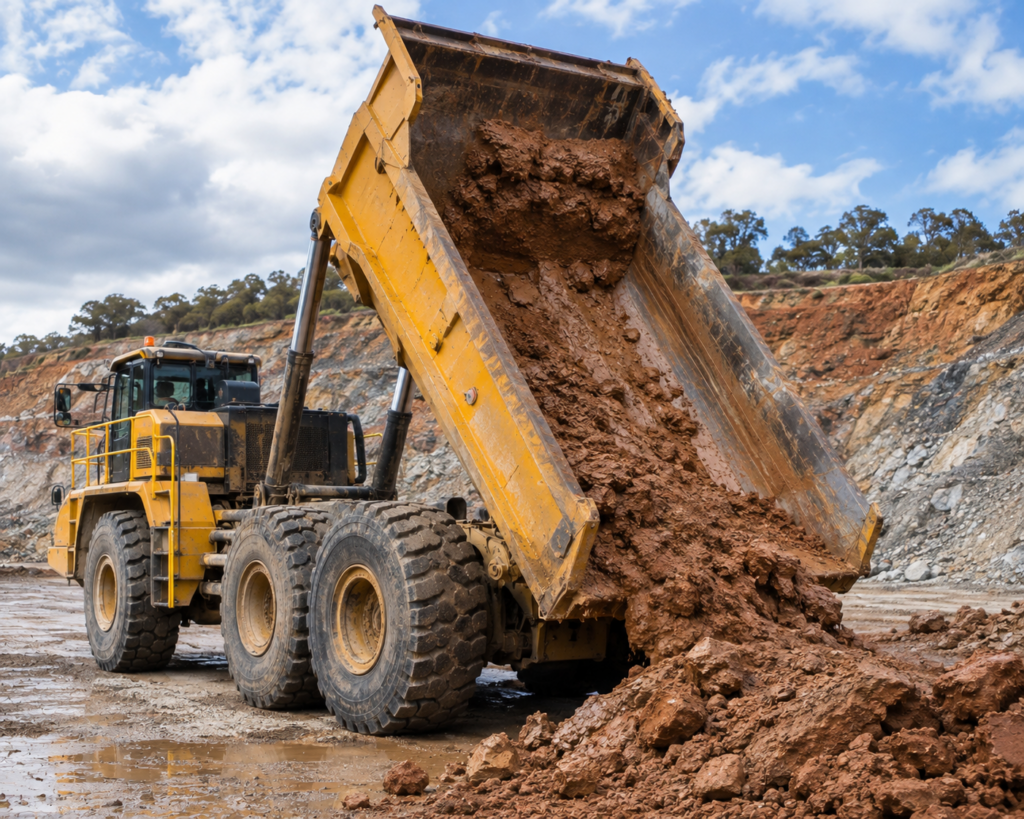
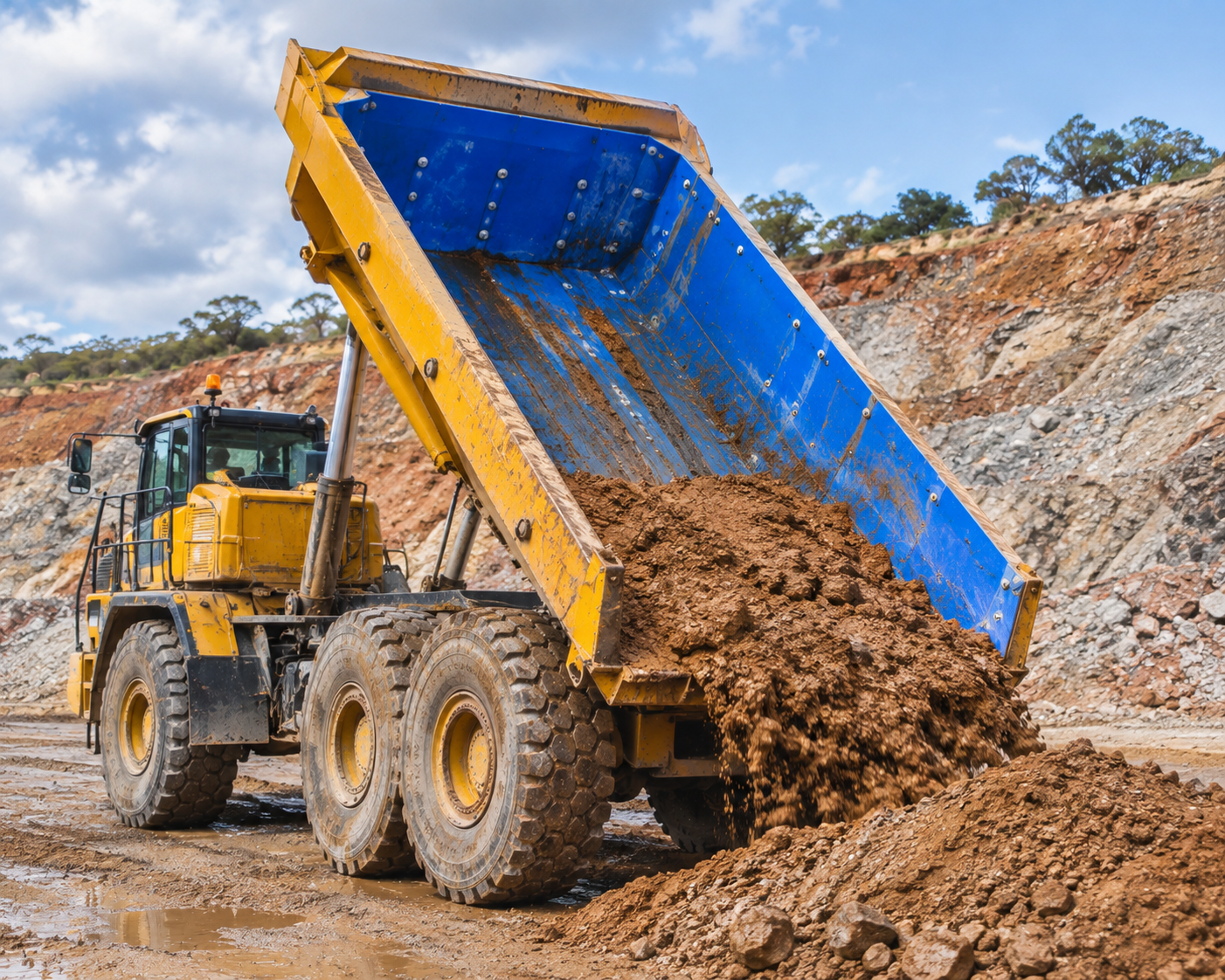
Tipping angle is a useful safety and performance metric because it shows how far the body must lift before the material starts moving and fully discharges. Earlier material release may reduce the tipping angle required, which is why the angle is recorded before and after fitting.
In your current setup, record the approximate angle at which material begins to move and the angle needed for a complete unload. Sticky or cohesive materials may require greater body elevation before releasing, increasing stability concerns as the load remains elevated, particularly on uneven ground.
If the material starts moving earlier and clears at a lower angle, this is consistent with the liner reducing the tipping angle required. The truck then spends less time at full height, which supports safer unloading conditions and is a measurable sign of improved discharge behaviour.
Carryback and Material Retention
Carryback refers to material that remains inside the truck body after unloading and is carried back rather than discharged at the intended location. It reduces delivered payload, adds cleaning time and can affect the next load if different materials are being carried.
To set your baseline, record carryback using a consistent visual rating system, retained-load estimates or weighing where practical. Also note where material builds up, such as the floor, corners, tailgate area or chute.
With the liner in place, run the same checks under the same conditions. Reduced carryback under comparable conditions can indicate improved material release. For example, damp clay may leave a compacted layer on the body floor, making changes in retained material particularly useful for assessing liner performance.
Cycle Completion Time
Cycle completion time covers the full round trip: loading, hauling to the discharge point, tipping and returning for the next load. Establish a baseline by recording the average cycle time across a representative sample of loads before liner installation. Use consistent material types, routes and discharge points so the baseline reflects normal operating conditions.
After liner installation, time the same cycle again under comparable conditions. A shorter average cycle time may indicate improved discharge efficiency, provided other operating conditions remain consistent.
Where practical, unloading duration is also recorded separately to identify delays caused by incomplete discharge. Even modest reductions in cycle time can contribute to higher fleet throughput when consistently achieved across repeated haulage operations. Cycle time is therefore read as a supporting indicator alongside the discharge and tipping-angle findings.
Downtime and Maintenance Costs
Wear and maintenance trends usually need a longer tracking period than discharge metrics because they develop over repeated use. Using your current fleet data, record downtime hours, body or chute repairs, clean-out stoppages, replacement parts and maintenance labour costs linked to material hang-up, abrasion or impact damage.
Also track how downtime affects output. If a truck is unavailable for body repairs or repeated clean-out, record the missed loads, delayed deliveries or reduced shift output connected to that downtime.
After the liner has been running for a comparable period, compare the same figures. Fewer maintenance events, shorter stoppages, lower repair costs and more available truck hours may indicate that the liner is reducing wear-related disruption, provided duty and operating conditions are comparable. Any cost change extends beyond repair spend to the uptime, completed deliveries and shift output otherwise lost to stoppages.
Payload Efficiency
Without a liner, slow discharge and carryback can reduce actual shift output. Loads take longer to clear, and carryback reduces the weight that actually reaches the destination. The result is fewer completed runs and lighter effective deliveries across a shift.
Record loads completed and average delivered weight over a full shift to establish your reference point. This helps capture fleet performance instead of focusing on a single tip.
Run the same measurement post-installation and compare. Rising numbers may point to liner performance, provided conditions are comparable. More loads in the same window may indicate faster turnaround, while more delivered tonnes per shift, without exceeding the rated payload, may reflect cleaner discharge. Together, such changes would indicate improved unloading efficiency across the fleet.
Keep in mind that a liner adds weight to the body. Any efficiency gains come from quicker discharge and reduced carryback, not from a lighter tray.
Creating an Audit Trail for Mobile-Equipment Body Liners
A body liner audit trail turns individual verification results into a connected record that shows how the control was established, monitored and reviewed. The three practices below describe what the record contains, who acts on it and how it is kept.
Document Inspection Findings and Performance Records
The trail starts with the records that establish the control: liner specifications, installation details and the results of the initial verification. These form the reference point against which every later observation is judged.
Inspection reports, discharge observations, tipping-angle records and carryback measurements are then retained as dated entries. Each entry states the operating conditions it was taken under, such as the material, moisture and ground, so that later results can be compared like for like.
Establish Responsibilities and Review Triggers
The mine operator assigns responsibility for recording observations, reviewing findings and authorising corrective actions, with support from its engineers and the supplier where appropriate. Site-specific review triggers set the point at which an observation prompts a formal review, commonly:
- Increasing carryback
- Unusual discharge behaviour
- Visible liner damage
Once a trigger is reached, the investigation, the corrective action and the follow-up verification are documented in the same record. This shows whether the action restored the expected performance.
Maintain Traceable Records for WHS Audits
Records are organised by equipment ID, inspection date and verification history, so a reviewer can follow one tipper body from its baseline to its current condition without searching across separate files.
Version control, review sign-offs and retention arrangements keep those records consistent and defensible. Authorised inspectors and WHS personnel can then trace findings, decisions and corrective actions over time.
What a Body-Liner Audit Trail Could Look Like in Mining
For instance, a mine operator monitoring a lined tipper body could maintain a record similar to the following to document routine verification and subsequent reviews.
| Record | Example Entry |
| Equipment | Tipper T-014 |
| Liner | OKUSLIDE® slick-surface body-liner system |
| Material | Damp clay-rich overburden |
| Baseline | Pre-installation observations retained |
| Discharge observation | Delayed release noted on a routine haul |
| Inspection finding | No visible liner movement identified |
| Follow-up | Discharge pattern referred for engineering review |
| Status | Review pending, subject to site procedures |
Disclaimer: This is a hypothetical example for illustration only. It is not an actual mine-site record, a prescribed audit format or evidence of acceptable control performance. Documentation requirements, review frequency and acceptance criteria must be established by the mine operator.
Body liner control effectiveness is established through evidence, not assumption. Verification compares tipper body liner performance against a baseline using inspections, discharge observations and comparable measurements, and an audit trail keeps those findings traceable for engineering reviews and WHS audits.
OKUSLIDE® liners are manufactured from ultra-high-molecular-weight polyethylene (UHMWPE) by OKULEN in Germany, with technical support available through Australian engineering and distribution networks. Their low-friction surface is designed to help material release more cleanly and to help reduce wear in suitable mining and bulk-material handling applications, subject to material characteristics and operating conditions.
Verification depends on a recorded baseline, comparable conditions and dated entries, and the mine operator sets the criteria for each. A technical evidence framework for slick-surface body-liner systems used on mobile equipment is in development at OKUSLIDE®. Operators, engineers and safety regulators who work with verification records can contact OKUSLIDE® to discuss the criteria involved.
FAQs
Can liner performance vary depending on the material being hauled?
Yes. Abrasive, sticky or wet materials interact differently with the liner surface, which can affect wear rate, discharge behaviour and carryback. Verification results therefore apply to the material and conditions recorded at the time.
What signs indicate that a body liner needs review?
Slower or uneven discharge, longer cycle times, increased build-up, thinning in high-impact areas and unexpected maintenance warrant a review against the baseline, in addition to the site’s own triggers. These signs prompt investigation and do not by themselves confirm that the liner is no longer effective.
Does a body-liner audit trail need a separate record system?
Not necessarily. The records can sit within the mine’s existing plant maintenance or document management system, provided they remain linked to the equipment and can be retrieved for review. The mine operator decides the format, whether electronic or paper.
Do OKUSLIDE® liners deliver different benefits across different industries?
Yes. OKUSLIDE® liners can deliver different industry-specific benefits depending on the application. In mining, the key benefit is reduced wear and improved handling of highly abrasive materials. For construction fleets, the focus shifts to improved material flow and less downtime from blockages and body clean-outs.
Can verification results from one lined truck be applied across an entire fleet?
Not automatically. Results apply only to bodies with comparable design, liner configuration, materials and operating conditions. Each different truck or duty is checked against its own baseline before conclusions are extended.