At a glance
- Water-based conditioning agents can expose truck body liners to repeated chemical contact during spoil transport.
- Saturated carbon chains leave few reactive sites, which is why UHMWPE resists many chemical attacks.
- UHMWPE’s low water absorption helps minimise moisture-related swelling and dimensional changes in wet conditions.
- Each conditioning product’s specification needs to be checked against the liner grade before a liner is chosen.
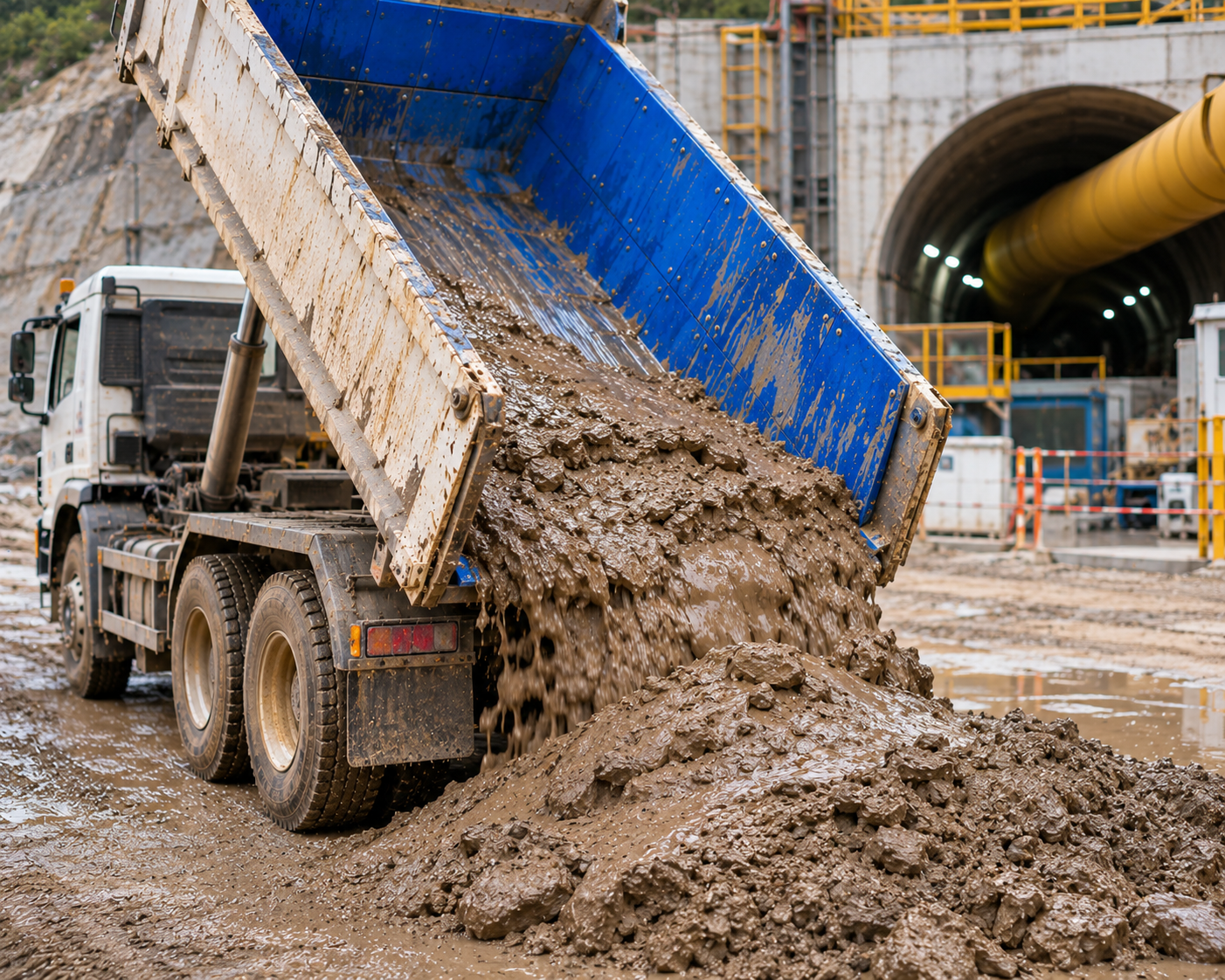
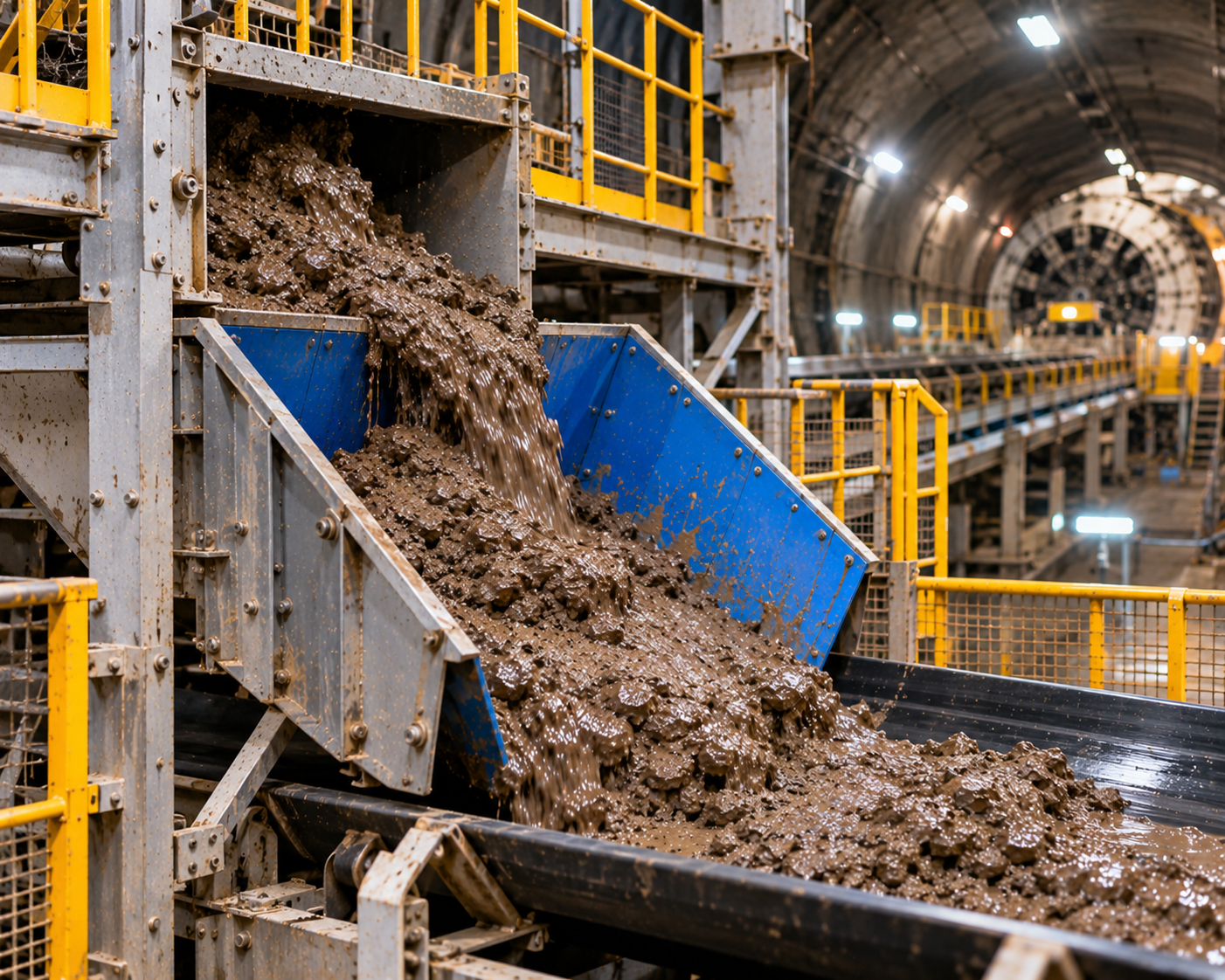
When you manage tunnel boring machine (TBM) operations, you handle large volumes of chemically conditioned spoil. Foams, polymers and other conditioning agents change the consistency of excavated material, which affects how it behaves during transport and unloading.
Repeated exposure to conditioned spoil also raises questions about liner compatibility and long-term performance. For a truck body liner, the surface in contact with the load needs to stay stable across many haul cycles.
Ultra-high-molecular-weight polyethylene (UHMWPE) is an engineering material known for its resistance to many chemicals, very low moisture absorption and a low-friction surface. These properties come from the polymer’s molecular structure, and they shape how a liner performs when it handles conditioned tunnelling spoil.
Below, we will explain what gives UHMWPE these properties and what they mean for liners handling conditioned tunnelling spoil.
What Soil-Conditioning Compounds Are Used in Tunnelling?
Tunnelling soil-conditioning compounds are additives injected at the cutterhead, excavation chamber or screw conveyor so the ground flows more consistently through the TBM and spoil-handling system. The main groups are:
- Foaming agents and surfactants: Reduce soil friction and help create a workable consistency during excavation.
- Water-soluble polymers: Modify spoil viscosity, moisture retention and permeability to suit changing ground conditions.
- Bentonite slurries: Use a clay-mineral suspension to improve soil plasticity and help control permeability.
- Anti-clay agents: Limit the build-up of sticky clay on TBM components.
- Dispersing agents: Break up cohesive soil agglomerations so the material is easier to work.
The type and dosage of conditioning agents vary with ground conditions, which changes how the spoil flows, builds up and releases during unloading. That discharge behaviour also sets the tipping angles required to unload sticky TBM spoil. Many of these agents also travel with the spoil in water-based mixtures, so they stay in contact with the liner throughout haulage and their chemistry matters as much as their physical behaviour.
Why Does UHMWPE Resist Many Chemical Substances in Conditioned Tunnelling Spoil?
UHMWPE is the base material of OKUSLIDE® liners, so its chemical resistance is the first factor to consider when you assess compatibility with conditioned spoil. The structural features below explain that resistance.
Non-Polar Molecular Structure Limits Chemical Reactions
UHMWPE consists of long carbon-chain backbones with hydrogen atoms attached through single covalent bonds. This saturated structure contains few reactive functional groups, making UHMWPE relatively unreactive towards many chemical substances. As a result, its non-polar chains resist many aqueous salts, non-oxidising acids and alkalis, although the outcome still depends on the specific formulation.
Your liners can contact water-based soil-conditioning mixtures on every haul. A material that resists reaction with these chemical groups is less likely to degrade across repeated cycles, so the liner surface stays stable as long as the conditioning products and their concentrations suit the grade.
Semi-Crystalline Structure Restricts Chemical Penetration
UHMWPE contains tightly ordered crystalline regions alongside less ordered amorphous regions. Substances diffuse into polyethylene mainly through the amorphous regions, because the densely packed crystalline regions are largely impermeable to penetrating molecules. This crystalline structure slows the diffusion of many substances compared with a polymer that has no ordered regions.
Across repeated spoil-handling cycles, slower diffusion limits the chemical changes that exposure can cause within the liner. Swelling still depends on the chemical involved, the temperature and the contact time, so the structure lowers the risk without removing it.
Low Water Absorption Supports Performance in Moisture-Rich Conditions
UHMWPE absorbs very little water because its non-polar chains attract few water molecules. Moisture alone therefore rarely causes swelling or dimensional change.
Groundwater-rich spoil and water-based conditioning mixtures keep liners wet from loading to discharge. Because UHMWPE takes up so little water, the liner keeps its dimensions under these conditions.
UHMWPE chemical compatibility depends on more than water absorption. Some solvents and strong oxidising substances can reduce resistance, particularly at elevated temperatures, and UHMWPE is generally rated for continuous use up to around 80°C.
UHMWPE’s chemical resistance comes from how the material is built. Its non-polar chains leave few reactive sites, its semi-crystalline structure restricts penetration and its low water absorption limits swelling. Together, these properties give you a solid basis for judging UHMWPE chemical compatibility with the soil-conditioning compounds used in tunnelling operations.
Conditioned tunnelling spoil stays in contact with the liner during each load, so a liner matched to your conditioning products and operating conditions supports more consistent spoil handling.
Made from UHMWPE, the OKUSLIDE® liner system improves material release and reduces wear where its properties suit the application. If you manage a tunnelling project, you can send our team your conditioning-product specifications and operating conditions, and we will help match them to a suitable liner.
FAQs
What factors affect UHMWPE chemical compatibility with tunnelling soil-conditioning compounds?
Compatibility depends on the chemicals involved, their concentration, the exposure time and the temperature. Solvents and strong oxidising substances can reduce UHMWPE chemical resistance, particularly at higher temperatures. Conditioning products also vary between suppliers and projects, so each product’s specification should be compared with the liner grade before you select a liner.
Where can OKUSLIDE® liners support tunnelling spoil handling?
You can use OKUSLIDE® liners in dump truck bodies and, depending on geometry and operating conditions, in chutes, hoppers and bins. They help conditioned tunnelling spoil discharge more cleanly and reduce abrasive wear, though each application needs its own assessment.
How does conditioned tunnelling spoil differ from ordinary fill?
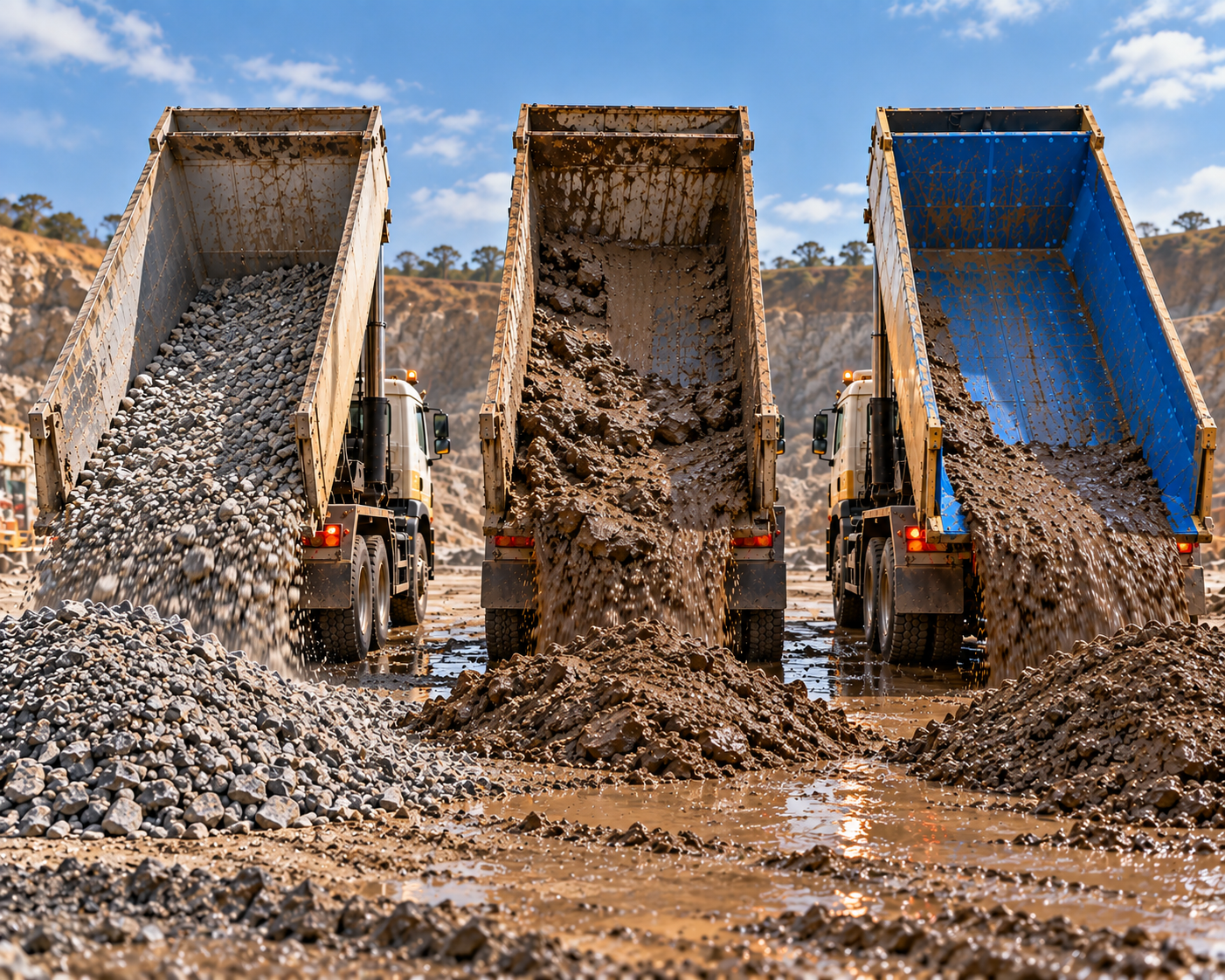
Conditioned tunnelling spoil is more cohesive and moisture-rich than ordinary fill, because foams, polymers and water change its consistency. Instead of separating into loose particles, it holds together as a wet, paste-like mass. As a result, standard dump truck trays can allow conditioned tunnelling spoil to stick during unloading.