At a glance
- Dry aggregate and slurry behave differently, even when they contain much of the same material.
- Moisture and fines can turn a free-flowing load into a cohesive mass, making surface friction far more important.
- Slurry can increase hang-up and carryback and may require higher tipping angles, creating a different unloading challenge from dry aggregate.
- OKUSLIDE® combines abrasion resistance with a low-friction surface to help manage both wear and material release.
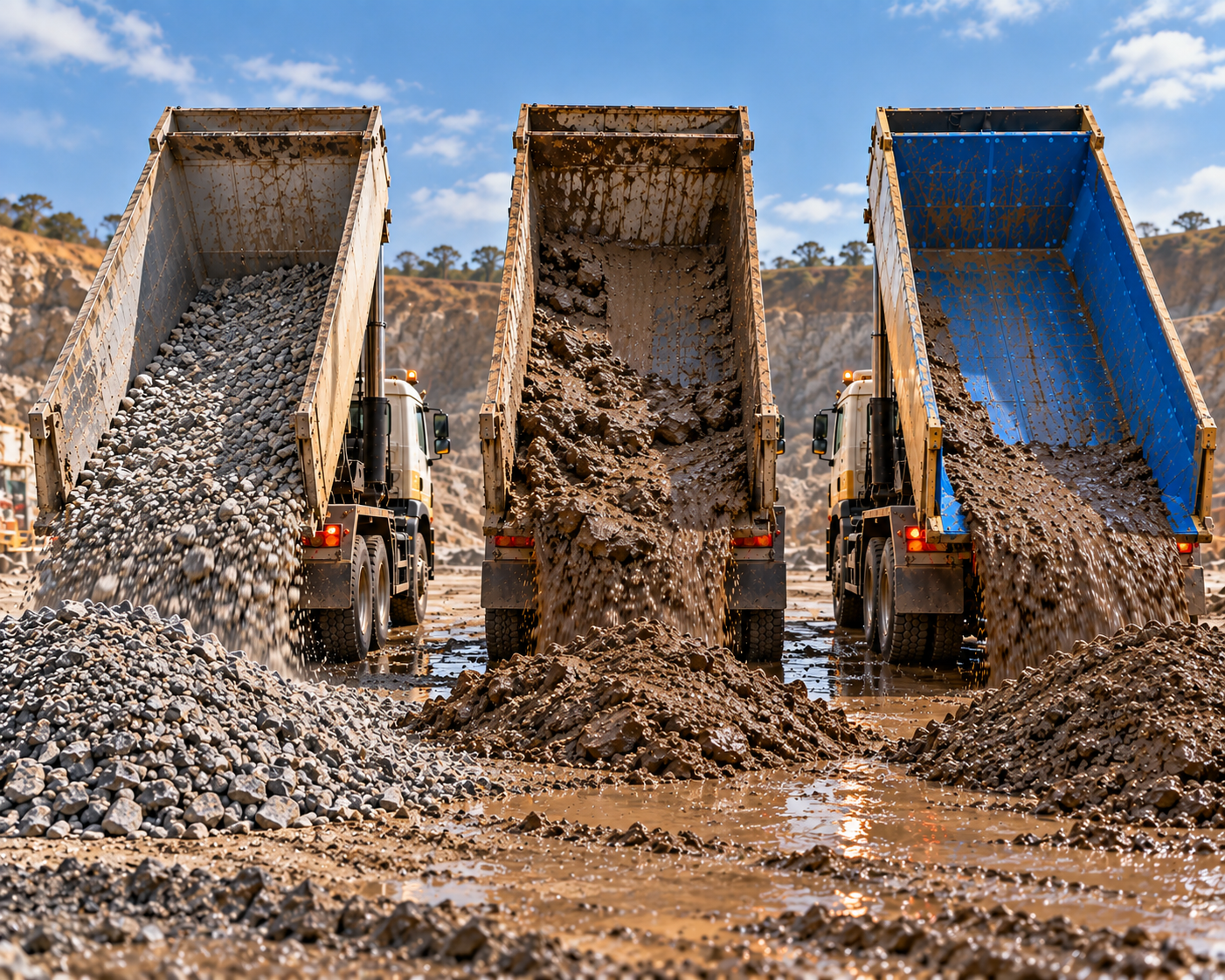
Dry aggregate such as crushed rock or gravel typically moves through a truck body as loose particles. Abrasion and impact are usually the main demands placed on the liner.
Once moisture combines with fines, clay or soil, the load becomes far more cohesive. This slurry-like state changes how material moves across the truck body. A liner suited to dry wear may no longer provide the required release characteristics. The change may appear as increased hang-up, carryback, delayed discharge and higher tipping angles rather than visible liner damage.
This matters if you operate in quarry, construction, excavation, mining and bulk material handling, where rainfall, on-site processing or seasonal conditions can change material behaviour.
Let’s examine how slurry changes liner requirements and why abrasion resistance alone may not be enough.
Dry Aggregate Moves as Loose Particles, While Slurry Behaves More Like a Cohesive Mass
In practice, that same crushed rock and gravel moves across a truck body liner as separate particles, rather than as a bound mass. Gravity and particle movement help the load separate and discharge more readily than a cohesive slurry-like material.
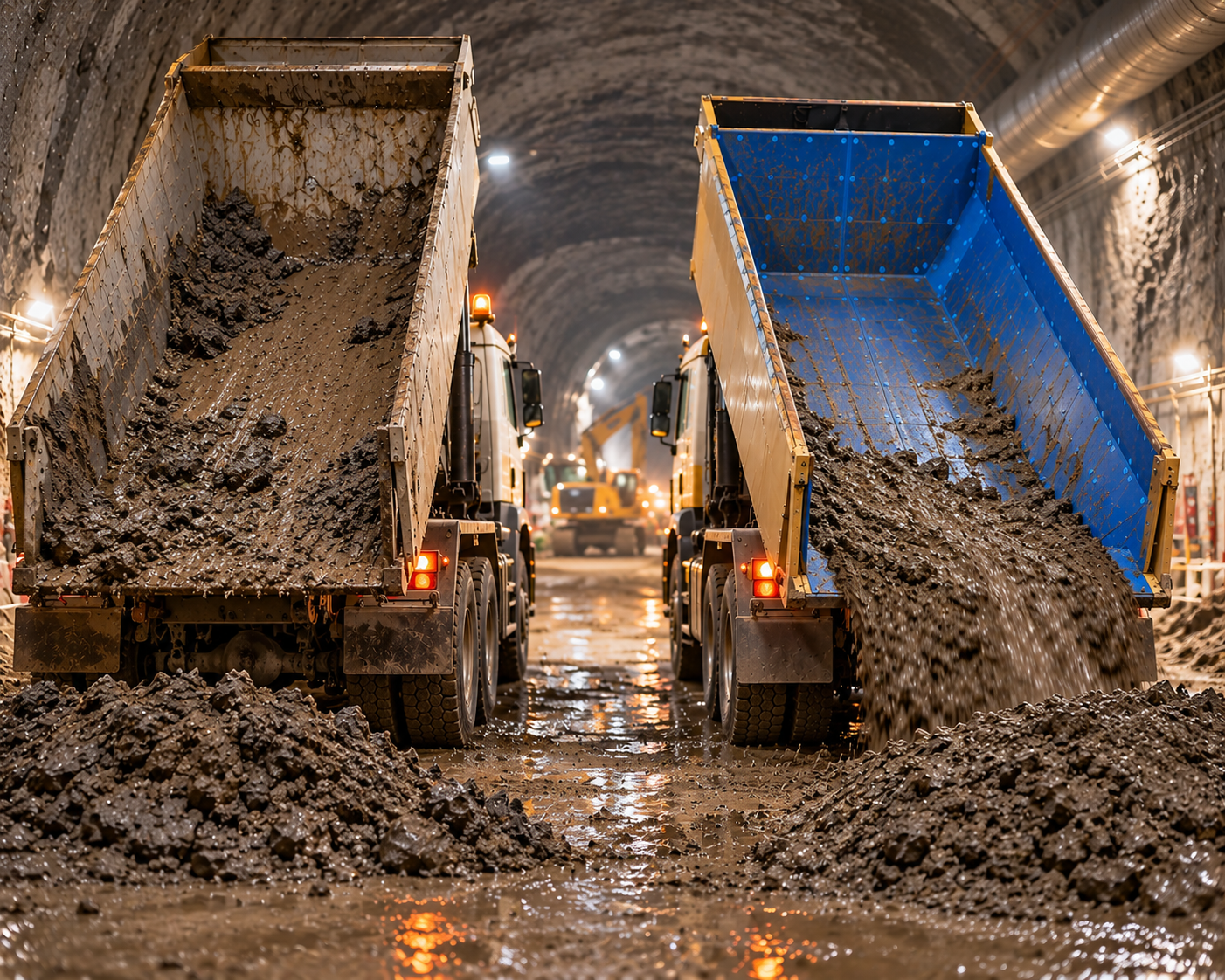
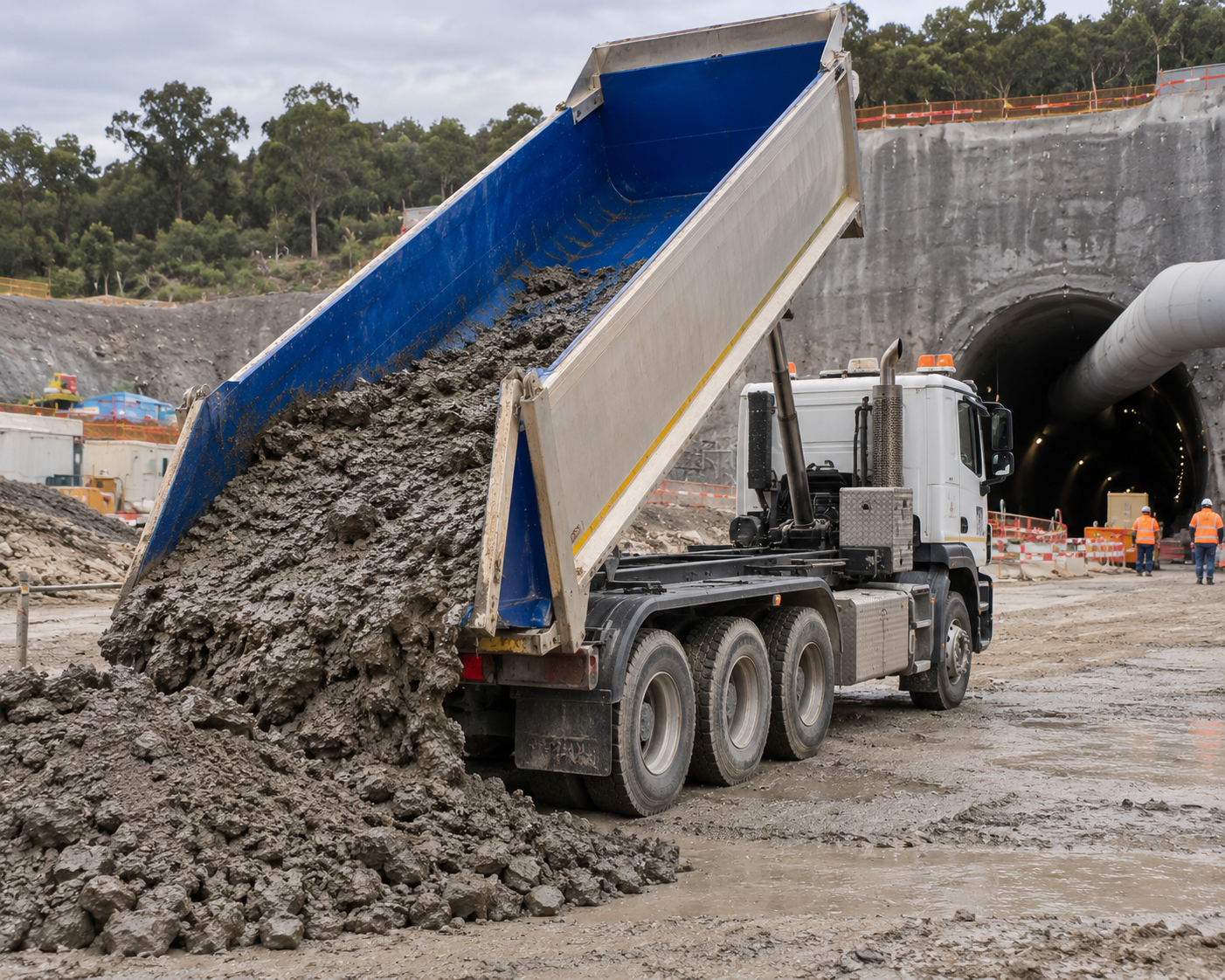
Once moisture combines with fines, clay or soil, the same material can behave very differently. Saturated clay, wet fines and water-rich spoil tend to bind together into a cohesive mass rather than moving as loose particles. A liner that performs well with dry crushed rock and gravel can face a very different flow problem once the load becomes wetter and more cohesive.
Slurry Maintains Greater Contact With the Liner Surface
Loose aggregate generally creates a few discrete points of contact with the liner surface. Slurry-like material can behave differently, spreading across the floor, corners and lower sidewalls of a truck body, excavator bucket or hopper. This can create broader, more continuous contact with the liner surface.
If you select a liner mainly for abrasion resistance, it may still let dry quarry aggregate discharge effectively, because the material stays relatively free-moving. Once moisture-rich soil and fines enter the mix, though, friction between material and liner becomes central to how well it discharges.
A rougher, higher-friction surface can restrict movement, while a low-friction liner reduces resistance and supports more consistent release during unloading.
Slurry Is More Likely to Leave Material Behind After Discharge
Dry, coarse aggregate generally separates cleanly once tipping begins, moving towards the discharge point with comparatively little resistance. Cohesive, slurry-like loads behave differently, often remaining along the floor, corners and other retention areas instead of discharging in a single continuous flow.
Material hang-up becomes carryback once saturated clay-rich spoil stays in the body after tipping. That leftover material reduces usable capacity on the next load, while freely moving crushed aggregate rarely creates the same problem. Over repeated cycles, that difference makes carryback reduction an important part of your specification, not a minor inconvenience.
Slurry Can Remain in the Body Until the Tipping Angle Increases
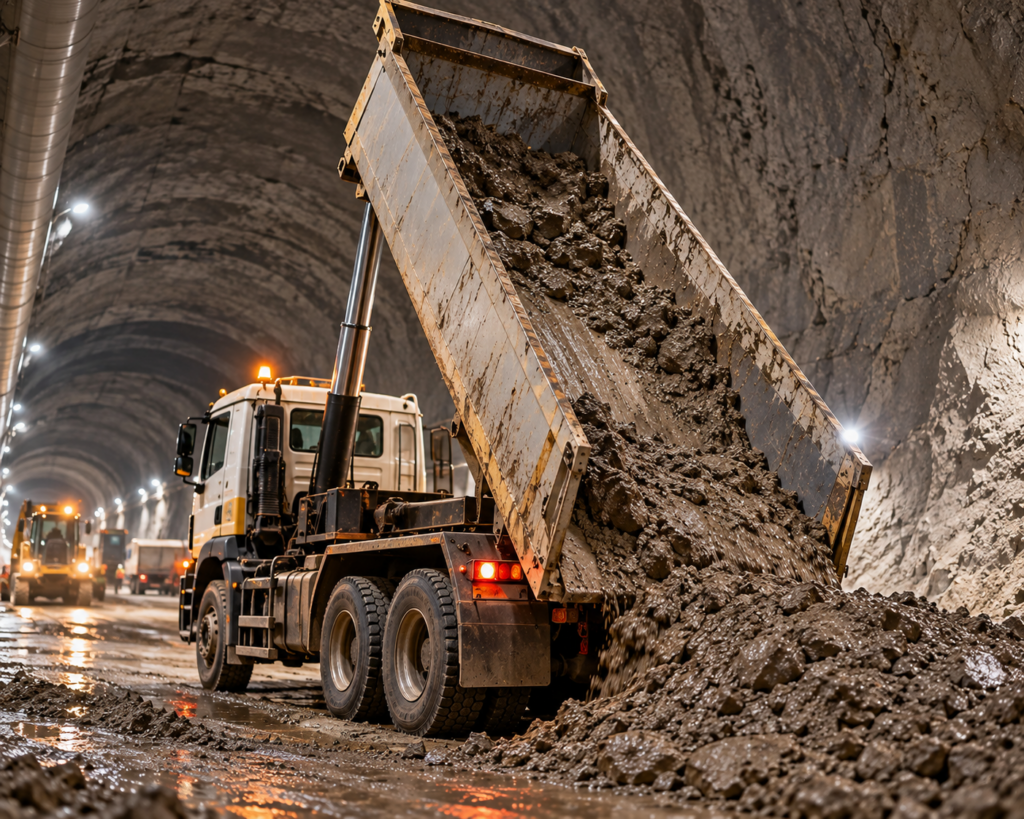
Dry aggregate can begin moving relatively early in the tipping cycle because individual particles respond readily to gravity. A cohesive load may remain together for longer, delaying release as the body continues to rise. As a result, material stops moving progressively and instead stays retained until the body reaches a higher angle.
The main implications are:
- Higher body angle: More elevation may be required before the load begins to release.
- More material held at height: Delayed movement can leave a greater portion of the load elevated during tipping.
- Greater stability consideration: A higher centre of gravity can increase rollover risk while unloading.
- Greater reliance on low friction: A low-friction liner can help material begin moving earlier and support discharge at a lower tipping angle.
Abrasion Resistance Alone Is Not Enough When Load Conditions Change
A liner chosen for dry aggregate may handle repeated abrasion and impact well, yet still fail to release cohesive material effectively once the load changes. Steel and aluminium liners show the same limitation. Both can cope reasonably with dry, abrasive wear, but neither is designed to address the friction and release demands that slurry introduces.
If your operation handles both conditions, you need a specification built around wear resistance and low-friction flow together, not abrasion resistance alone. That doesn’t mean your existing liner has weakened; it means the operating requirements around it have changed.
Read More: Do OKUSLIDE® Liners Work for Both Wet and Dry Material Transport
Dry aggregate and slurry place very different demands on a truck body liner. A liner suited to the abrasion and impact of loose, dry material may struggle once added moisture and fines make the load more cohesive, increasing friction, hang-up and carryback. The liner is still doing its job; what’s shifted is the material behaviour and unloading requirements your operation faces.
To address both demands, OKUSLIDE® combines the abrasion resistance of its UHMWPE base material with selected low-friction additives that help wet, cohesive loads release more readily. You get a product manufactured in Germany, backed by Australian engineers and distributors nationwide. Contact our team to get started with OKUSLIDE® for your application.
FAQs
Does truck body shape still affect slurry discharge with a low-friction liner?
Yes. Body shape and slope still influence slurry discharge even with a low-friction liner. Steeper sidewalls and well-designed corners support release, while flatter sections or tight corners can still retain cohesive material regardless of surface friction.
Can OKUSLIDE® be retrofitted to an older truck body?
Yes, OKUSLIDE® can generally be retrofitted to older truck bodies with consultation from the OKUSLIDE® engineering team. Thin or worn skins may need extra preparation, such as welding, depending on their condition.
How is the right OKUSLIDE® liner thickness selected for different loads?
Material type, particle size, impact profile and your truck body’s condition determine the right OKUSLIDE® liner thickness for your load, rather than a single default.