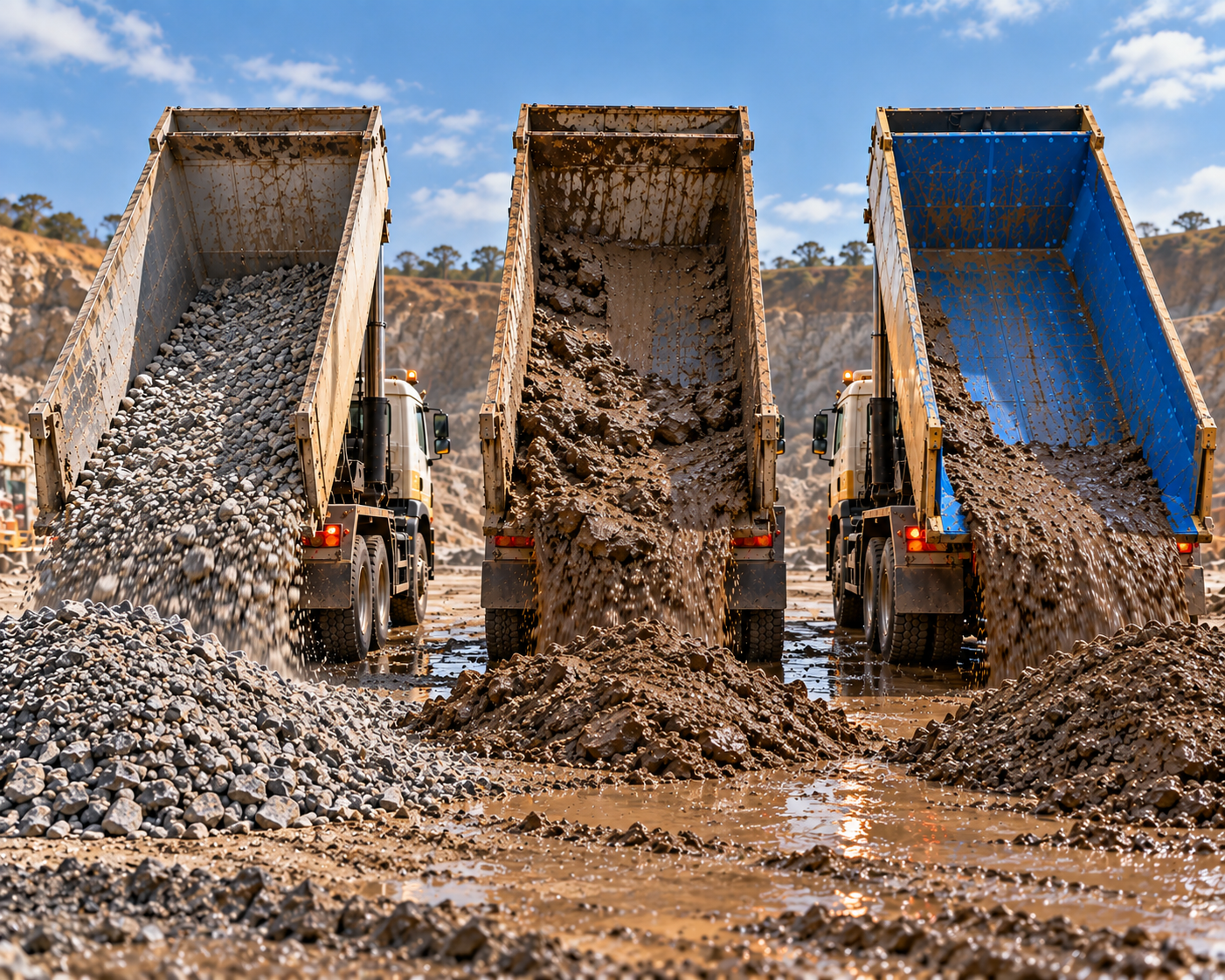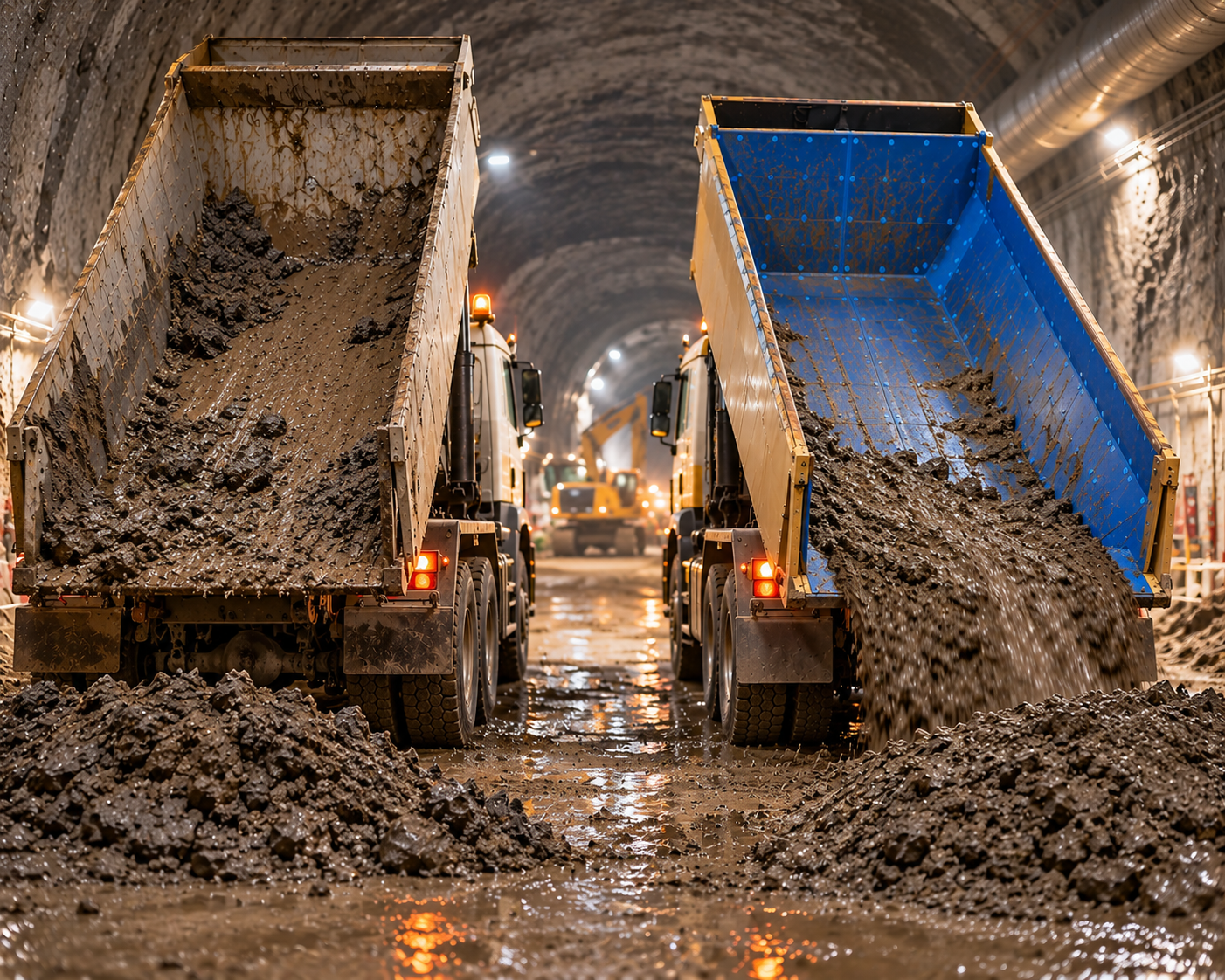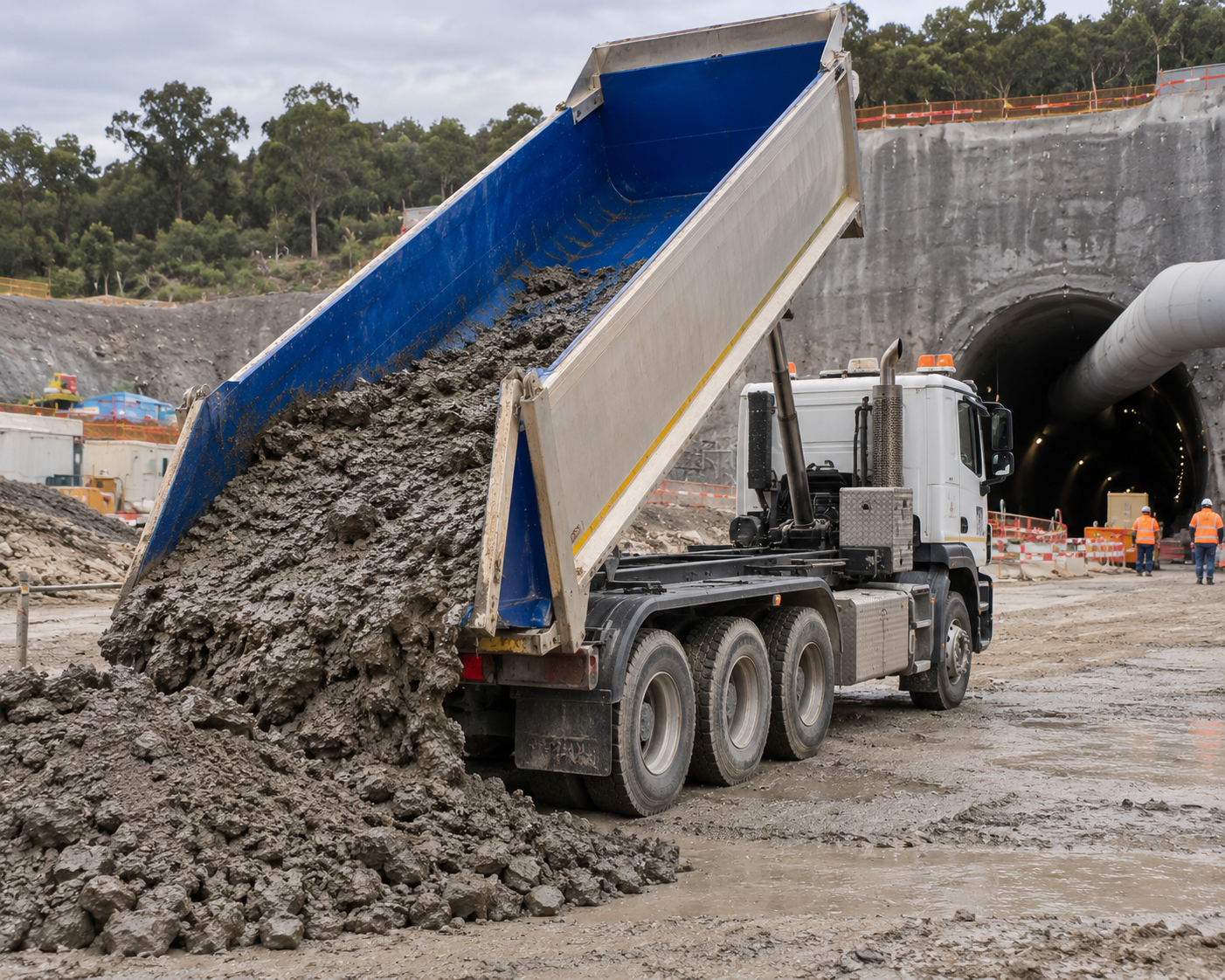
At a glance
- Unlined truck and trailer bodies absorb direct abrasion, impact, moisture and residue from every agricultural load.
- A lined body shifts that wear onto a protective liner surface, helping preserve the steel or aluminium structure underneath.
- UHMWPE liners extend body life by resisting abrasion, reducing impact damage and limiting contact with residue.
- For abrasive, sticky or high-volume farm loads, OKUSLIDE® liners can offer stronger long-term protection than leaving the body unlined.
If you run a farm or operate agricultural equipment, lining a truck or trailer body raises a straightforward question: Is it worth it over the long run, or is it just an upfront expense?
The answer depends on the operating demands placed on the body. Loads such as grain, fertiliser, lime, soil, compost, manure and silage expose the body to constant abrasion, impact, moisture and residue. In an unlined body, the steel or aluminium absorbs all of that abrasion. That makes it the primary driver of structural wear over time. With a UHMWPE liner for agricultural use installed, it becomes the main contact surface, absorbing most of the wear and shielding the underlying structure from direct degradation.
Lifespan is best measured in usable body life rather than years alone. Repair intervals, downtime events, carryback levels, cleaning requirements and structural condition all give you a clearer picture than age in service.
The sections below examine where wear actually occurs in each case and why UHMWPE liners can significantly improve lifespan in agricultural operations.
Lined vs Unlined Bodies: Where the Wear Actually Happens
Wear is not a single process. It occurs through several distinct mechanisms, each affecting lined and unlined bodies differently. The table below sets them side by side:
| Wear Factor | Unlined Body | Lined Body |
| Abrasion | Sliding loads scrape the body surface directly, thinning it over time | The liner takes the abrasion, helping preserve the parent body |
| Impact and loading pressure | Bucket and bulk drops hit the body itself, risking dents and gouges | The liner helps absorb and spread some of the impact force |
| Wet or sticky residue | Damp material sits against the body between loads | The liner limits direct contact between the residue and the body |
| Surface condition over time | The surface grows rougher as wear builds, so loads catch more easily | A smoother working surface is maintained for longer |
| Repair pressure | Wear accumulates on the body, leading to more frequent repairs | Wear is concentrated on the replaceable liner instead |
How a Lined Body Can Last Longer in Agricultural Use
Several liner materials are used to protect agricultural bodies, including HDPE, rubber and UHMWPE. Of these, UHMWPE is among the most widely specified for high-wear applications. In laboratory abrasion testing, OKUSLIDE® UHMWPE liners have demonstrated up to 2× longer wear life than steel and more than 5× compared to aluminium. This performance gap translates directly into longer body life in the field.
Here is how that protection works in practice across the main forms of wear an agricultural body faces:
High Abrasion Resistance Protects the Parent Body
Agricultural loads place significant wear demands on the body. Grain, lime, fertiliser, soil and sand scrape across the tray surface every time a load is tipped, and during a busy season, that abrasion is relentless. In an unlined body, the steel or aluminium absorbs all of that abrasion, making it the primary driver of structural wear over time.
A UHMWPE liner changes where that abrasion is absorbed. It sits over the parent body as a protective wear layer, so the sliding material works against the liner instead of the structure beneath it.
A body that tips damp lime every day during the sowing season, for example, will experience steady surface wear if left unlined, eventually leading to thinning and patch repairs. With a liner in place, that abrasion concentrates on a replaceable surface instead, reducing repair demands on the original structure.
Impact Resistance Helps Control Loading Damage
Unlike abrasion, which builds gradually, impact damage happens in a single moment during loading. During bucket discharge, auger feed or bulk tipping, the force concentrates at specific contact points on the body. Without a liner, repeated impact at those points causes dents, surface deformation and localised stress.
UHMWPE offers a level of impact tolerance that helps reduce this effect. Rather than allowing force to concentrate on isolated points of the parent body, UHMWPE absorbs and spreads a portion of the loading energy across the liner surface.
By lowering peak stress in high-impact zones, the liner helps preserve structural alignment and surface integrity across longer service cycles, which matters most on agricultural operations where bodies are loaded and tipped repeatedly through the season.
Read More: How Impact Resistance Protects Your Truck Body: Why UHMWPE Liners Are the Best Choice
A Protective Barrier Reduces Residue and Moisture Contact
Not all wear comes from movement. Materials like wet grain, green chop, poultry litter and moist soil often leave residue behind after unloading. That residue can sit against the bare metal between loads, and prolonged contact with moisture gradually degrades the parent body surface.
A UHMWPE liner acts as a physical barrier, sitting between the load and the parent body, so the structure has less direct contact with wet or sticky residue.
Consider a body carrying damp grain through harvest and left uncleaned overnight. On a bare surface, that moist residue sits in direct contact with the metal for hours.
With a liner fitted, the residue stays on the protective surface instead, reducing prolonged contact with the parent body and keeping it in better condition across the season.
Consistent Surface Condition Maintains Cleaner Discharge Over Time
An unlined body gradually becomes rougher with wear, as small pits and scoring develop and create areas that catch material. Loads that once slid out cleanly begin to cling, leading to unreliable discharge as wear progresses.
A UHMWPE liner keeps a smoother, more consistent working surface over repeated loading cycles. When discharge stays clean, less material is left behind to be scraped or cleared between loads, reducing the cycle of sticking and clean-out. A consistently smooth contact face also means less secondary abrasion, which contributes to longer body life over time.
The difference between lined and unlined bodies comes down to where the wear is absorbed. An unlined body takes the full force of every load, so the steel or aluminium thins, dents and roughens over time. A lined body transfers that wear to a replaceable surface, preserving the parent structure across more loading cycles. Repair intervals, downtime, carryback and structural condition give you a truer picture of what the liner delivers than years in service alone.
OKUSLIDE® UHMWPE liners are designed for agricultural operating conditions, supporting longer body life through abrasion resistance, impact tolerance and reduced material build-up across repeated cycles. For abrasive, sticky, wet or high-volume loads, a lined body is the stronger long-term choice.
Want a liner that protects your body through every load and season? Contact OKUSLIDE® now to match the right liner setup to your agricultural operation.
FAQs
Can an agricultural body be lined after it has already started wearing?
Yes. OKUSLIDE® can be installed over an existing worn body to help extend its working life, provided the surface is structurally sound and the application is suitable.
Does liner thickness affect how long the body protection lasts?
Yes. Thickness is selected based on the application, load type, impact profile and parent material. In more demanding conditions, a thicker liner provides more wear material and longer protection.
How can OKUSLIDE® help farmers move bulk loads?
OKUSLIDE® lines truck and trailer bodies with a non-stick UHMWPE surface that supports bulk transport needs by helping agricultural loads release more cleanly during unloading. This improves discharge consistency, reduces material hang-up and helps protect the body from abrasion across repeated cycles.
Is lining with OKUSLIDE® more cost-effective than keeping a bare steel truck body?
In most cases, yes. A bare steel body takes the wear of every load directly, which tends to mean more repairs, downtime and rougher discharge over time. An OKUSLIDE® liner adds upfront cost but shifts that wear onto a replaceable surface. Our blog on five-year cost comparison shows where the savings come from.