At a glance:
- Aggregates and sand damage truck bodies through repeated abrasion, impact during loading, discharge friction and exposure to moisture.
- As the internal surface wears, material is more likely to catch, drag or remain behind, increasing carryback and maintenance pressure.
- UHMWPE liners help protect truck bodies by absorbing impact, resisting abrasion and reducing friction during discharge.
- Their low-friction, low-moisture surface supports cleaner material release, reduced build-up and longer-term truck body protection.
Construction trucks are designed to handle demanding materials, but repeated exposure to aggregates and sand can still degrade the internal surfaces over time. Their weight, abrasive texture and movement during loading and unloading can place constant stress on the truck body.
Truck body damage builds gradually through repeated abrasion, impact, friction and material build-up. As the internal surface becomes rougher or more uneven, the body becomes less effective at releasing material cleanly, increasing carryback, maintenance requirements and operating inefficiencies.
For construction, quarrying and haulage operators, understanding why this damage occurs helps identify where protection is needed before wear becomes a larger operational issue.
What Causes Construction Truck Bodies to Wear Down?
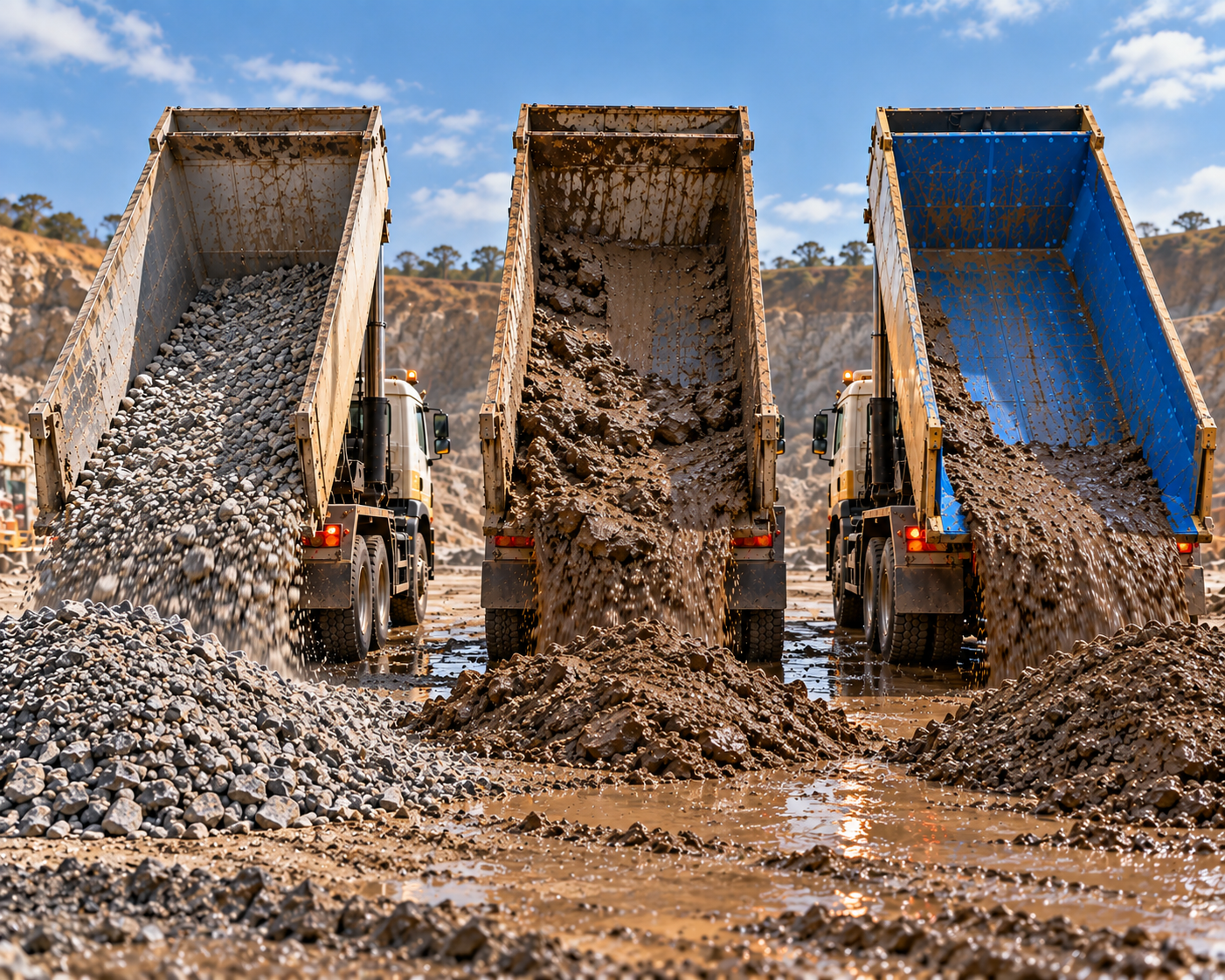
Truck body wear is driven by how sand and aggregates move through each haulage cycle. Each haulage cycle exposes the truck body to impact during loading, shifting material in transit and friction during discharge across the floor, lower sidewalls and corners. Across repeated haulage cycles, these stresses can lead to abrasion, dents, corrosion, carryback and rough internal surfaces.
Repeated Abrasion from Sharp and Coarse Particles
Crushed rock, gravel, stone, sand and recycled concrete often contain hard, abrasive particles. Each time a load is added, shifted during transit or discharged, it moves across the floor and sidewalls of the truck body. Those particles scrape against the steel surface and gradually wear it down.
This abrasion may remove only a small amount of surface material each time, but the effect becomes more serious with repeated loads. Over time, repeated scraping can strip protective coatings, thin the steel and create surface grooves that trap moisture and debris. The truck body then becomes rougher and more vulnerable to further wear.
Read More: Extend Truck Body Life With Abrasion-Resistant Liners
Impact Damage During Loading
Loading can put heavy stress on the truck body, particularly when aggregates are dropped from loaders, excavators or conveyors. When the load is released from height, it can hit the floor and lower sidewalls with considerable force. Across repeated loading cycles, this force can cause dents, deformation and localised surface damage in high-contact areas.
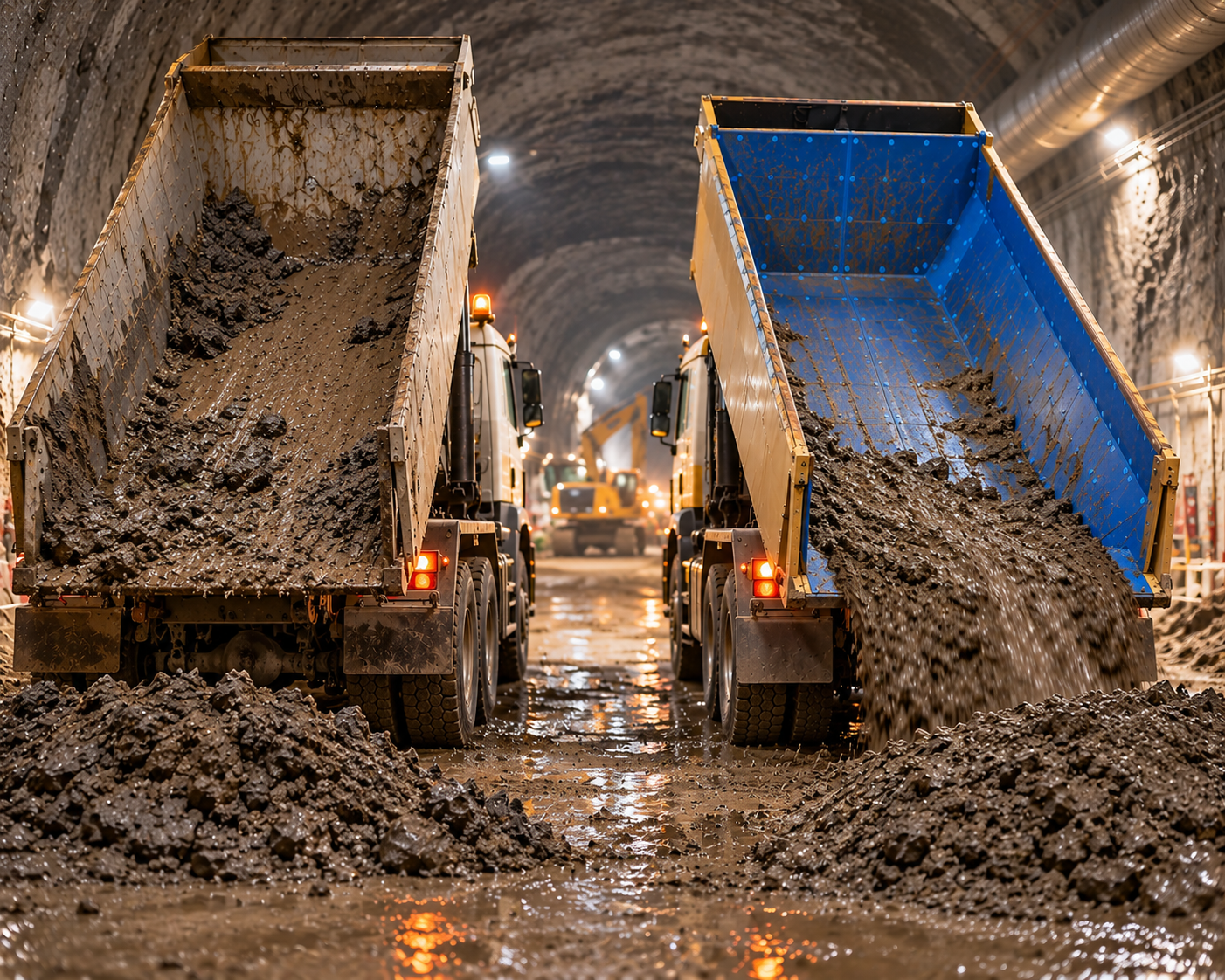
Once the internal surface becomes uneven, material is less likely to move through the body cleanly. Sand, fines and crushed material may catch on dents or worn sections during discharge, increasing drag and causing concentrated wear. As a result, material may not discharge cleanly, leaving residue behind in the truck body and increasing the risk of further build-up over repeated loads.
Friction During Material Discharge
When aggregates and sand are unloaded, they slide across the truck body floor under significant weight. The combination of weight and sliding movement creates friction, especially when the material is heavy, coarse or angular.
Crushed rock, sharp sand and other abrasive materials can drag across the steel surface as they move out of the body. Over repeated discharge cycles, multiple drag can erode the floor, rear section and lower sidewalls. Unlike loading impact, which may damage specific high-contact zones, discharge friction can affect broader internal surfaces over time, making it a major contributor to long-term truck body wear.
Corrosion Driven by Moisture
Sand and aggregates can carry moisture, clay, dust or fine particles. When residue remains inside the truck body after unloading, it can hold moisture against the steel surface, particularly in corners, seams and worn areas.
If left sitting, trapped moisture can contribute to corrosion. As the steel begins to corrode, the internal surface can become pitted, weaker and more difficult to clean. Fine material may also settle into those damaged areas, making residue harder to remove through normal discharge.
For truck bodies carrying damp sand, washed aggregates or quarry materials, trapped moisture and residue can accelerate surface deterioration and increase long-term maintenance requirements.
Wear That Compounds Over Repeated Load Cycles
Truck body wear often becomes self-reinforcing. Once abrasion, impact or corrosion roughens the internal surface, later loads encounter more points where material can catch, scrape or build up.
A smooth body surface helps material move out with less resistance. When that surface becomes rough, dented or worn, sand and aggregates are more likely to drag during discharge or remain behind after unloading. This can create a cycle in which early surface damage leads to more carryback, friction and further wear.
This deterioration can be easy to overlook because it happens gradually. However, in operations that move multiple loads each day, small surface defects can quickly turn into recurring cleaning, maintenance and productivity problems.
How UHMWPE Liners Help Protect Truck Bodies
UHMWPE liners help protect truck bodies by addressing the main causes of wear: abrasion, impact, discharge friction, moisture exposure and the compounding damage cycle. Their value comes from the material properties of UHMWPE, including high impact strength, low friction, strong wear resistance and low moisture absorption.
- Reduces abrasion from sharp and coarse particles: UHMWPE is highly resistant to abrasion because it consists of long, tightly bound polymer chains that create a tough, slick wear surface. When sharp, coarse or granular materials move through the truck body, this surface takes the repeated contact instead of the steel, helping slow direct surface wear over repeated loads. Its low-friction properties also reduce the scraping force created as material moves across the liner.
- Protects high-impact loading areas: UHMWPE liners cushion heavy load drops, limiting the transfer of impact stress into the parent structure. The liner deforms locally, absorbs impact energy and reduces peak stress concentrations in high-impact contact zones. This helps limit denting, deformation and accelerated wear, which are important considerations when selecting the right truck bed liner for your application.
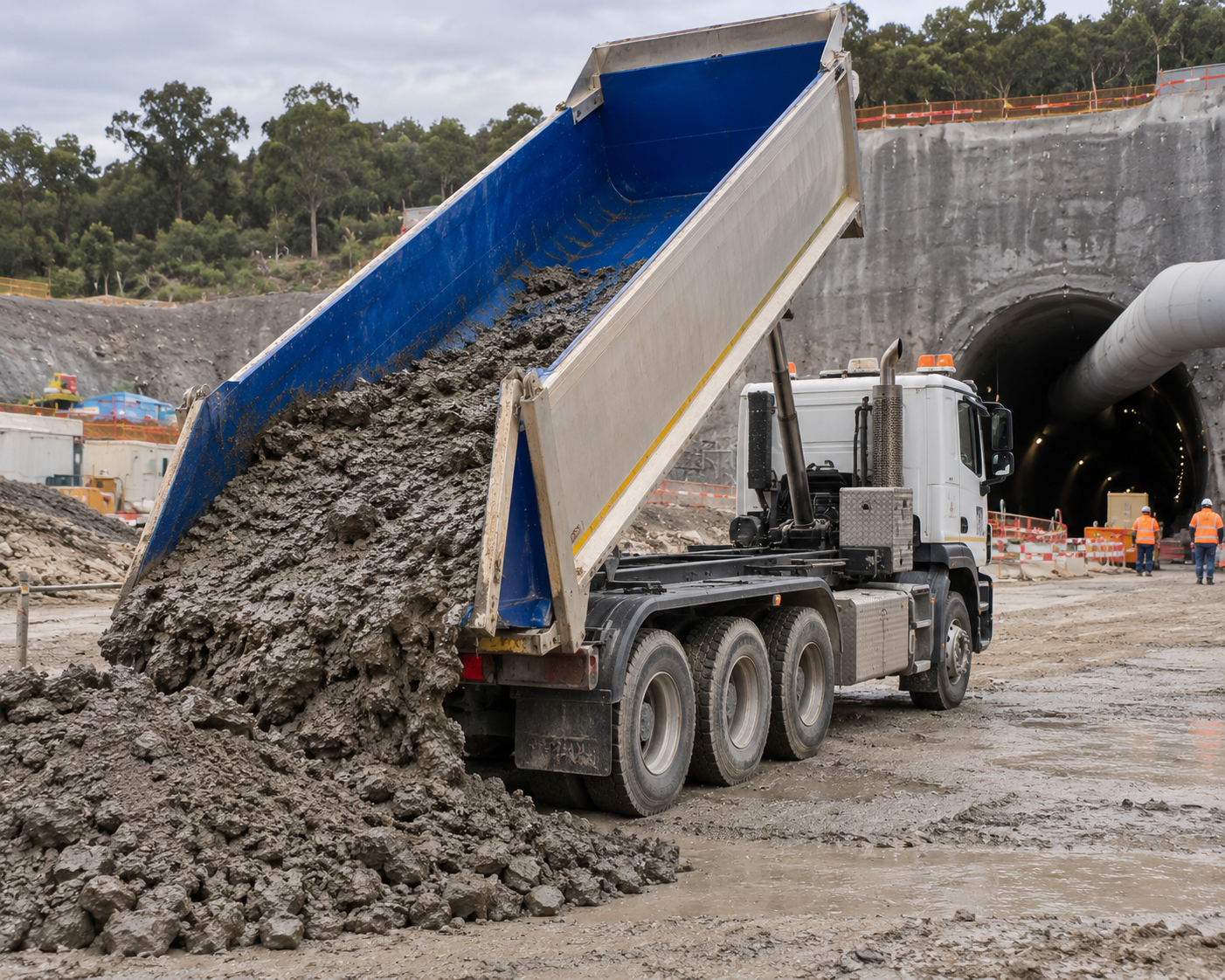
- Lowers friction during discharge: UHMWPE has a naturally low coefficient of friction, allowing sand, aggregates and crushed materials to move across the liner with less resistance. During unloading, this reduces drag between the load and the truck body floor, which can help material discharge at lower tipping angles. Instead of grinding across rough or exposed steel, material can move more freely, helping reduce hang-up, carryback and friction-related wear. Read our comprehensive blog to understand how OKUSLIDE® liners improve unloading efficiency.
- Reduces moisture-related corrosion risk: UHMWPE has low moisture absorption and does not corrode, helping separate wet material from the steel body surface. This reduces direct moisture exposure and reduces the likelihood that residue will settle into pitted or corroded areas.
- Slows the wear cycle over repeated loads: Once steel becomes rough, dented or corroded, material has more points to catch, scrape against and build up around. UHMWPE helps interrupt this cycle by maintaining a smoother, lower-friction surface inside the body. With fewer rough points for material to grip, loads can clear more cleanly, reducing carryback, further surface damage and maintenance pressure.
Aggregates and sand damage construction truck bodies because they are heavy, abrasive and repeatedly moved across the same internal surfaces. Over time, loading impact, discharge friction, moisture, fines and material build-up can wear down steel, create rough internal surfaces and make unloading less efficient.
The practical solution is to protect the truck body with UHMWPE liners designed for abrasive, high-contact applications. Premium-grade liners such as OKUSLIDE® provide a durable, low-friction surface that reduces direct steel contact, limits wear from repeated abrasion and impact and supports cleaner, more efficient discharge across every haul.
Contact us today to discuss UHMWPE liner solutions designed to reduce wear, improve material flow and protect truck bodies carrying sand, aggregates and crushed rock.
FAQs
When should truck operators consider installing liners?
Truck operators should consider liners when regularly carrying abrasive or sticky materials, such as aggregates, sand, clay, gravel or crushed rock. Liners are especially useful when trucks experience carryback, slow discharge, surface wear or frequent cleaning and maintenance requirements.
Can truck body liners help reduce cleaning requirements?
Yes. By creating a smoother internal surface, liners can help reduce the amount of material that sticks inside the truck body after discharge. This can reduce the need for manual cleaning, especially when handling damp sand, fines or sticky materials.
Do liners only protect the truck body floor?
No. Liners can be used to protect different high-wear areas of the truck body, including the floor, lower sidewalls, corners and other surfaces exposed to repeated impact, abrasion or material build-up.