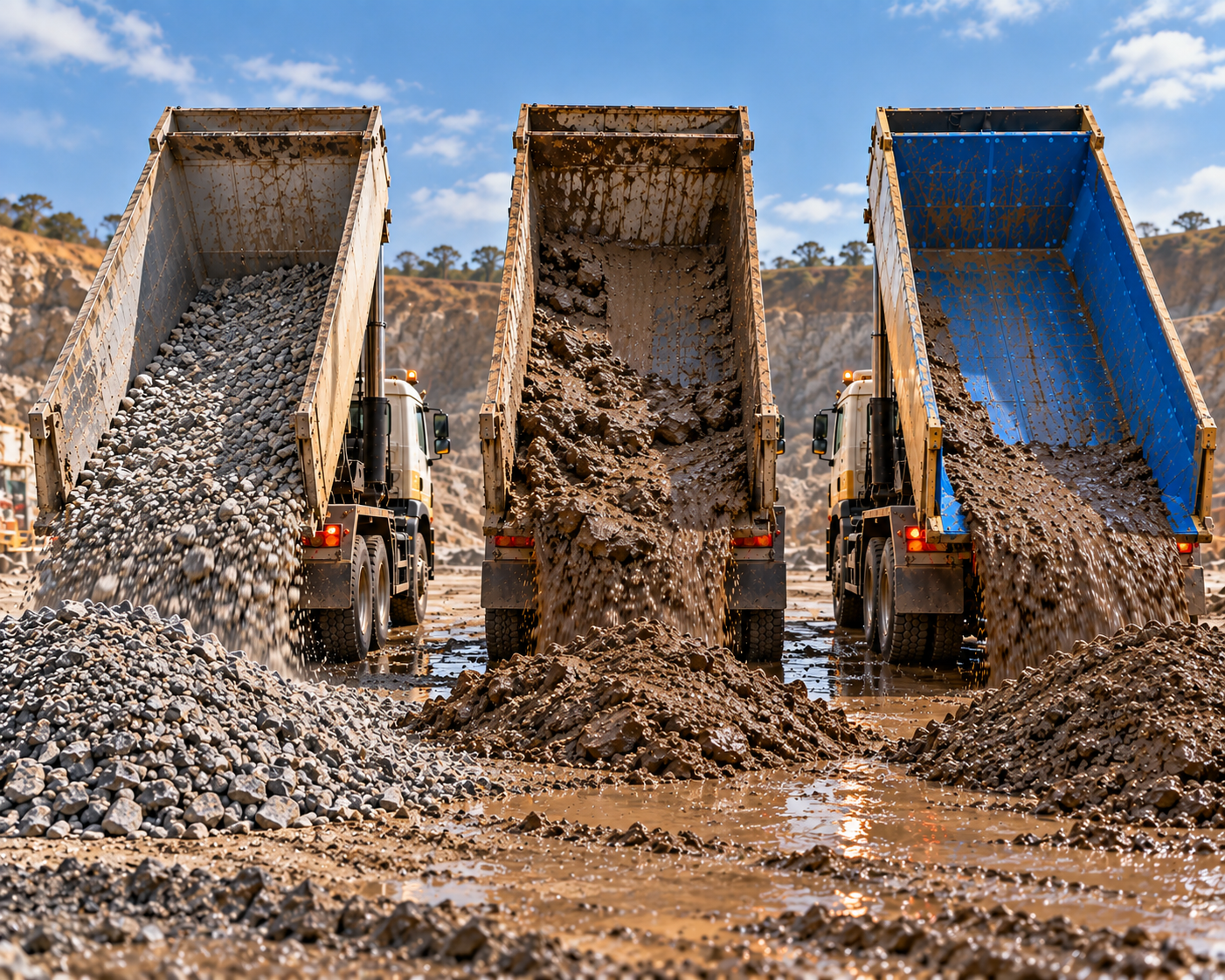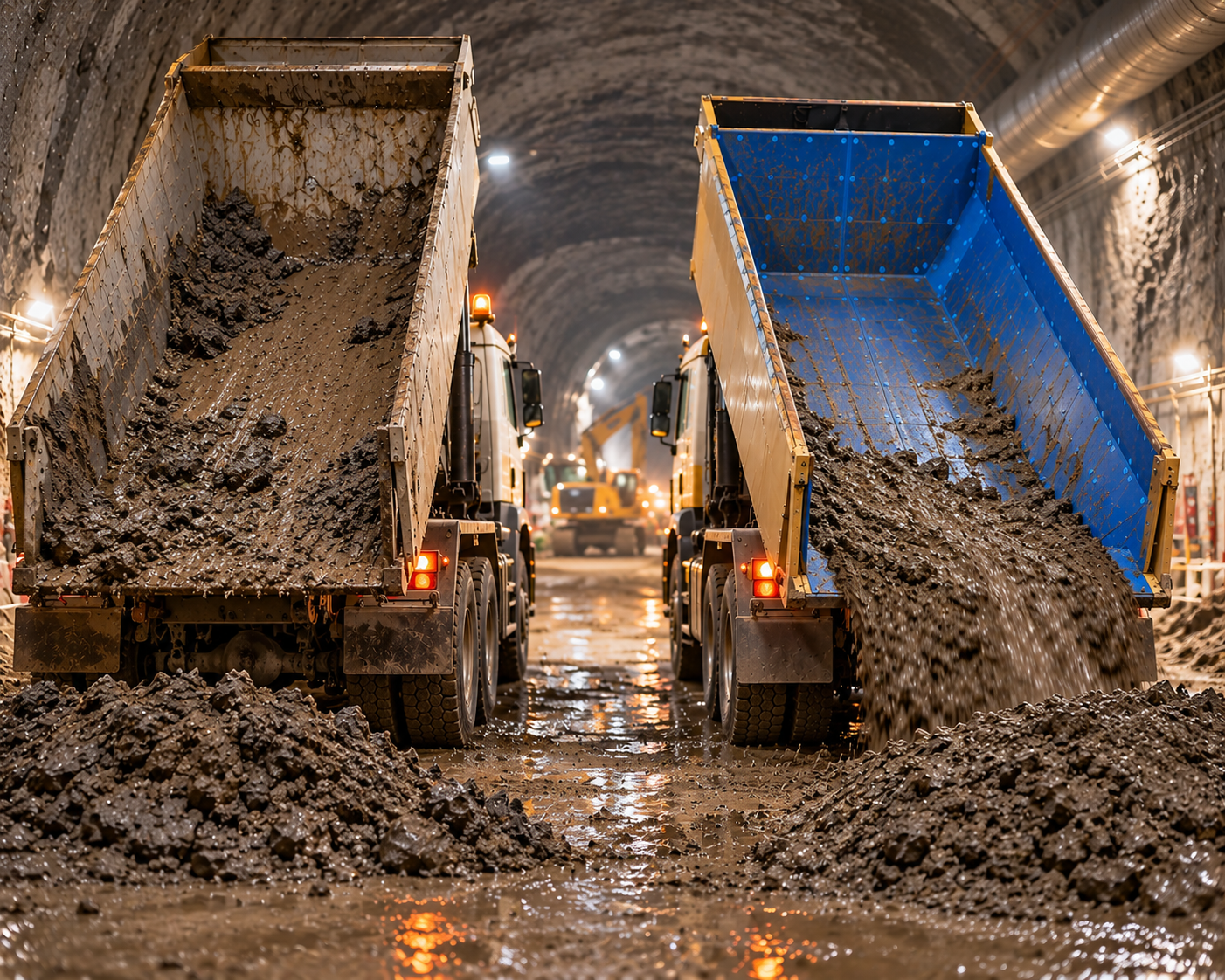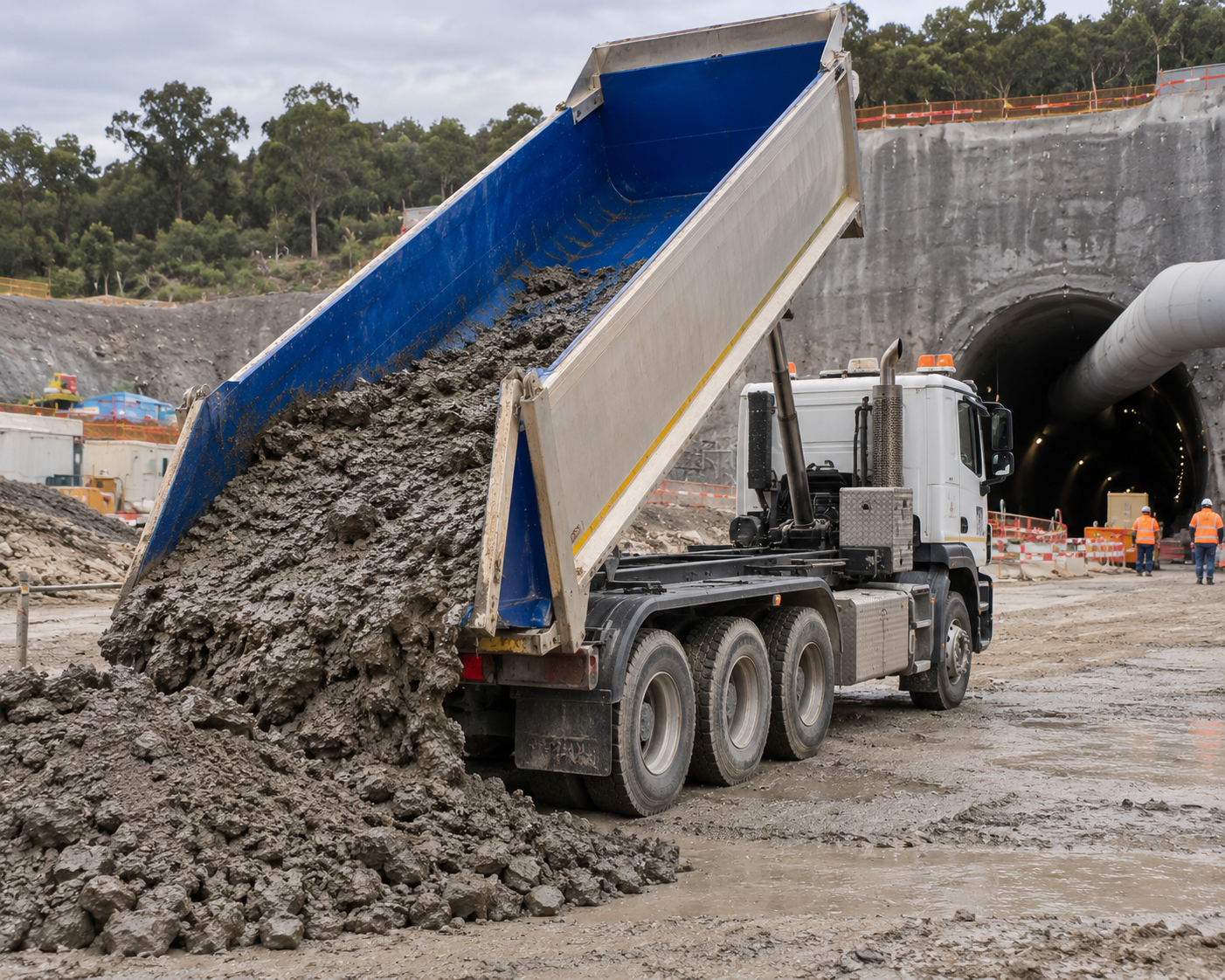
At a glance
- Truck liners in Australia can spend long hours in strong sunlight while vehicles operate, travel or sit outdoors between shifts.
- UV-stable UHMWPE is formulated to resist sunlight-related deterioration while also providing abrasion resistance, impact tolerance and low-friction material release.
- UV radiation does not directly degrade steel, but its exposure to moisture and oxygen can promote corrosion.
- UV radiation does not directly degrade aluminium, but moisture can affect its oxide layer, causing pitting corrosion and surface wear.
- A high-quality truck liner must provide reliable UV performance while meeting requirements for wear resistance, moisture exposure and material discharge.
Truck bodies across Australia can spend much of the working day exposed to direct sunlight, whether travelling between sites, waiting to load or parked outdoors between shifts. This makes UV performance an important consideration when selecting a liner material.
Steel, aluminium and UV-stable UHMWPE (Ultra-High-Molecular-Weight Polyethylene) can all be used in outdoor truck body applications, but they respond to sunlight differently. Steel and aluminium are not directly degraded by UV radiation the way a polymer is, though UV exposure can still influence their corrosion behaviour when moisture is present, while UHMWPE must be formulated for prolonged outdoor exposure.
For fleet operators, UV suitability is only one part of the decision. The liner must also withstand impact and abrasion, manage moisture exposure and support reliable material discharge.
How UV-Stable UHMWPE Performs Under Prolonged Outdoor Exposure
Prolonged UV exposure can trigger photo-oxidative degradation in UHMWPE that is not adequately stabilised. Over time, this may cause fading, surface chalking, brittleness and cracking, reducing the material’s ability to withstand flexing, loading impact and abrasive contact.
UV-stable UHMWPE is formulated to limit this process and help preserve its surface condition and mechanical properties during outdoor use. A truck body liner exposed to strong sunlight depends on this UV stability to perform reliably.
UHMWPE truck body liners, such as OKUSLIDE®, are engineered with stabilising additives to protect the liner from UV degradation, ensuring longer-lasting performance in high-UV and exposed operating environments. They also contain low-friction additives that reduce resistance between the load and the liner surface, helping wet, sticky and cohesive materials release more cleanly during unloading.
Their abrasion-resistant surface forms a protective barrier between the load and the truck body, helping reduce wear. UHMWPE also does not rust when exposed to rain, humid conditions or moisture-rich loads.
Read More: Why is UV Stability Important for Truck Bed Liner?
Comparing UV Performance Across Truck Liner Materials
UV-stable UHMWPE, steel and aluminium can all tolerate prolonged sunlight exposure. Their differences become clearer when you weigh UV performance against abrasion, impact, moisture and material release.
| Liner material | UV performance | Abrasion and impact performance | Material release | Other considerations |
| UV-stable UHMWPE | Formulated for prolonged outdoor exposure | Strong abrasion and impact resistance | Low-friction surface supports cleaner discharge | Does not rust when exposed to moisture |
| Steel | UV rays combined with moisture and oxygen can cause corrosion | Strong under severe impact and abrasion | Higher surface friction may contribute to hang-up | Heavy and vulnerable to corrosion |
| Aluminium | UV combined with moisture can affect the oxide layer | May dent, gouge or wear under demanding loads | Higher surface friction than UHMWPE | Lighter than steel and naturally corrosion resistant |
UV radiation does not degrade steel directly. Its strength and impact resistance make it suitable where large, coarse or angular materials create severe wear.
Its limitations arise from other parts of the operating environment. Unprotected steel can corrode when exposed to moisture and oxygen, while abrasive loads can gradually roughen and wear the surface. These changes may increase friction and give wet fines or cohesive materials more places to catch. Steel liners also add considerable weight to the truck body, so you need to factor this into the vehicle’s tare and payload calculations.
Unlike a polymer, aluminium does not break down under UV exposure the way UHMWPE can. Its natural oxide layer offers strong corrosion resistance, though UV exposure combined with moisture can affect this layer over time and contribute to pitting corrosion. Its lower density also makes it lighter than steel.
However, repeated contact with hard rock, angular ore and abrasive loads can dent, gouge or wear the surface. As the liner becomes uneven, its ability to protect the body and support consistent discharge may decline. Aluminium’s surface also does not release material as cleanly as engineered UHMWPE, so sticky or moisture-rich loads may be more likely to remain after tipping.
Because all three materials can tolerate prolonged sunlight, the practical choice depends on how each performs under working conditions.
Steel offers strong protection under severe impact but introduces weight, corrosion risk and higher surface friction. Aluminium reduces weight and resists corrosion but may be more vulnerable to deformation and abrasive wear. UV-stable UHMWPE combines outdoor stability with abrasion resistance, impact tolerance and low-friction material release.
This combination can make UHMWPE particularly suitable where trucks are exposed to intense sunlight while also carrying abrasive, wet or cohesive materials.
While choosing a liner material, you should consider its UV performance alongside the conditions inside the truck body. A liner must also suit the load, wear profile, moisture exposure and discharge behaviour rather than simply withstand prolonged sunlight.
For trucks operating in strong sunlight while carrying abrasive, wet or cohesive materials, OKUSLIDE® UHMWPE liners are UV stable with an abrasion-resistant, low-friction surface that supports body protection and cleaner unloading.
Contact our team to discuss a truck body liner suited to your load type, truck body and operating conditions.
FAQs
Can a UV-stable UHMWPE liner be fitted to an existing truck body?
In many cases, yes. You should first assess the existing body condition, parent material, wear profile and geometry to determine the appropriate liner format, thickness and fastening method. Heavily worn or damaged sections may need repair before the liner is fitted.
What signs indicate that an outdoor truck liner needs closer inspection?
Look for cracking, brittleness, warping, deep gouging, uneven wear, damaged joints or loose fasteners. Colour change alone does not necessarily indicate a loss of performance, but if you notice visible deterioration alongside poorer material release, it’s worth assessing the liner.
How often should truck body liners used outdoors be inspected?
Inspection frequency should reflect the material being carried, the number of haul cycles, impact severity and operating conditions. Trucks handling abrasive rock or working continuously may require more frequent inspections than vehicles used for lighter-duty materials. You can incorporate liner checks into the truck’s regular body and maintenance inspections.