At a glance
- Non-weldable liners create weak points, resulting in material buildup, increased maintenance, and costly downtime.
- Weldable liners provide seamless, strong joints that improve durability, unloading speed, and safety.
- OKUSLIDE® offers full weldability in both sheet and coil formats, giving fleets flexibility and durability.
- Alternatives like Quicksilver, Tivar, and Matrox have limitations in weldability, availability, or format options.
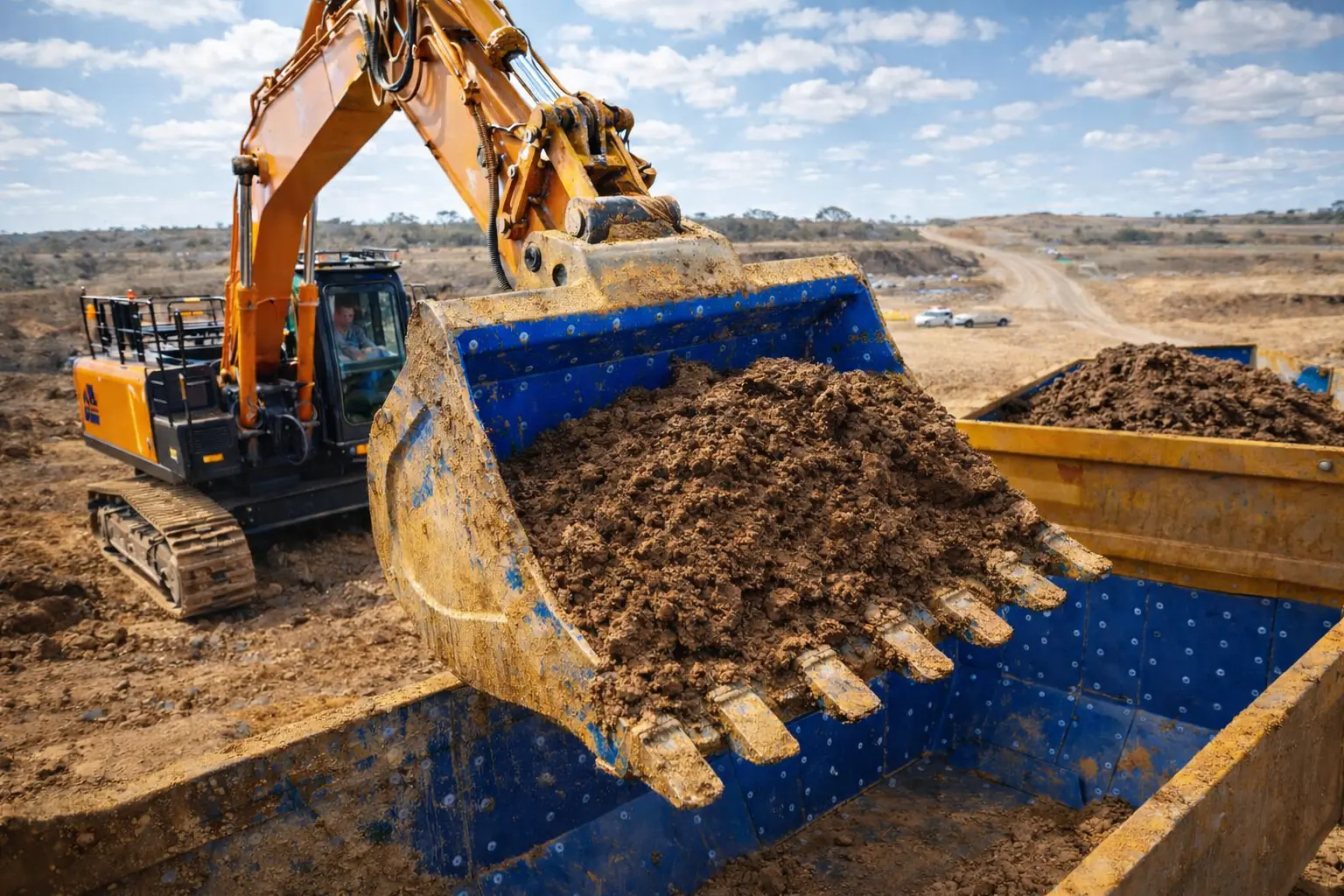
Equipment liners reduce wear, promote material flow, and prevent abrasion, making them an essential addition to dump trucks, excavators, and multiple applications. However, it is important to install the right liner to reap these benefits and avoid costly maintenance and downtime.
Weldability is a crucial factor to consider when selecting liners. A weldable liner can be welded and fitted into vehicle beds and equipment of different shapes and sizes, making it applicable for multiple industries. Moreover, using a weldable liner enables seamless, secure installation, enhanced durability, and reduced maintenance.
In this article, we will examine the challenges associated with non-weldable liners and highlight the advantages of a reliable, weldable liner, OKUSLIDE®. We will also compare OKUSLIDE® to alternatives like Quicksilver, Tivar, and Matrox. By the end, you will understand why choosing a weldable liner can save your fleet time and money.
The Problem with Non-Weldable Liners
Non-weldable liners are typically fixed with bolts, mechanical fasteners, or adhesives. Although this may seem straightforward, it can create weak spots in joints, leading to gaps that restrict proper unloading.
In addition, fasteners loosen with regular use, making the liner less stable and reliable. This also results in frequent downtime for repairs and wear on equipment surfaces. All these issues lead to higher maintenance costs.
In some cases, loose or poorly secured liners can pose safety risks. Unloading can be unpredictable during shifting loads, creating hazards for operators. Over time, these issues can disrupt schedules and erode profits.
OKUSLIDE®’s Weldability Advantages
OKUSLIDE®’s weldable design enhances operational efficiency, ensuring smoother and more reliable fleet operations. Here’s more on how OKUSLIDE®’s weldable design provides clear advantages:
- Seamless and Strong Joints: OKUSLIDE® can be used to create a continuous, secure surface that can handle heavy and abrasive loads. Without gaps or weak spots, they prevent cracking and movement during use.
- Custom Fit Across Multiple Equipment Types: Welding enables liners to be tailored to fit a wide range of equipment, including trucks, hoppers, bins, and plant machinery. This guarantees a perfect fit for any equipment.
- Lower Maintenance and Repair Costs: A welded liner stays securely in place, minimising issues such as loosening or shifting. This reduces the frequency of repairs, fleet downtime, and maintenance costs.
- Enhanced Material Flow: Welded seams create a smooth surface without gaps that enables the entire load to slide out easily without resistance. It results in improved efficiency due to faster unload times and reduced cleaning time.
Comparing OKUSLIDE®’s Weldability to Alternative Liners
Weldability is a crucial factor that impacts the ease of liner installation, equipment longevity, and overall fleet efficiency. Let’s take a look at how OKUSLIDE® stacks up against other liner brands in terms of weldability.
OKUSLIDE®: Fully Weldable
OKUSLIDE® offers a fully weldable solution that provides consistent performance. Using compatible weld wire creates durable, seamless joins that withstand heavy loads and regular use. The OKUSLIDE® liners have undergone rigorous laboratory tests to ensure they deliver stable results after welding. This gives confidence that the liner will remain secure and reliable in the long run.
Both of OKUSLIDE®’s formats, sheet and coil, are weldable, offering greater flexibility. Therefore, it’s ideal for use on trucks, hoppers, bins, and a wide range of equipment in the mining, agriculture, construction, and excavation sectors.
Quicksilver: Limited Weldability with Wires
QuickSilver liners offer weld wires that can be used to fill spaces and connect joints. However, they are generally not weldable. So, welding in QuickSilver is more of a supplemental technique rather than customising the liners as per the equipment.
While welding with wires can help fill gaps, QuickSilver™ liners may still develop weak points over time. These gaps can lead to material hold-up, restrict flow efficiency, and accelerate wear.
Tivar 88 & Tivar 88-2: Limited Weldability
Tivar 88 is non-weldable, which limits its use to standard applications and restricts its flexibility for custom installations.
Tivar 88-2, however, is weldable. However, it is often sold as a premium upgrade at a higher price. Its availability can also vary, making it difficult to obtain quickly when needed.
Comparison Table of Liner’s Weldability
To make the differences easier to understand, here’s a clear comparison table that shows how OKUSLIDE® stacks up against other liner options in terms of weldability.
| Liner Brand | Weldability | Key Notes |
| OKUSLIDE® | Fully weldable with compatible weld wire | Lab-tested seams provide proven strength and durability, allowing for seamless and secure installation across multiple equipment |
| Quicksilver | Limited weldability with wires | Weld wires that can be used to fill spaces and connect joints |
| Tivar 88 & Tivar 88-2 | Tivar 88 is not weldable, while Tivar 88-2 is weldable | Tivar 88-2 offers weldability, but is harder to source consistently in Australia and comes at a higher price point |
Weldability directly impacts the strength, fit, and long-term performance of a liner. Non-weldable liners can result in gaps, weak points, and higher maintenance costs. In addition, customising them to your specific equipment could be challenging. Choosing a fully weldable liner gives your fleet a secure, long-lasting solution you can rely on daily.
In essence, OKUSLIDE® is the ideal liner solution if you are looking for a reliable, weldable liner for your operation. Its weldability and availability in both sheet and coil formats ensure a practical solution for varied operational needs.
Contact us today to discover our durable, weldable liner solutions. We provide a dependable supply across Australia to ensure your operations run smoothly.
FAQs
What does weldability mean in truck liners, and why is it important?
In truck liners, weldability means the ability to install the liners to fit the surface precisely and fuse them into a seamless, secure layer. This prevents gaps and weak spots that reduce the need for repairs, maintenance costs, and downtime.
How do non-weldable liners affect fleet performance?
Non-weldable liners rely on bolts or fasteners, which can become loose over time, leading to gaps in joints and overall liner instability. These issues result in material buildup and reduced unloading efficiency, ultimately increasing maintenance costs.
What makes OKUSLIDE® different from other liner brands like Quicksilver, Tivar, or Matrox?
OKUSLIDE® stand out by being fully weldable, available in both sheet and coil formats, and supported by lab-tested strength. It provides a consistent and reliable fit for any surface, making it suitable for diverse applications. Other brands struggle with issues in weldability, availability, or format options.
When should I choose a weldable liner over a non-weldable option?
You should opt for a weldable liner when you require a strong, seamless fit that can withstand heavy loads. It is the best choice for demanding applications where durability and reliable performance are essential.