At a glance
- Impact resistance determines how well a truck body withstands repeated forces from heavy loads without cracking or deforming.
- Without proper protection, even high-strength steel bodies can wear and corrode, requiring costly repairs.
- UHMWPE liners absorb and disperse impact energy, reducing wear, extending body life, and providing superior abrasion resistance compared to steel, aluminium, and rubber alternatives.
Every load that hits a truck body delivers a sudden shock. From heavy rocks and coarse aggregates to moist soil, these impacts strike the floor and sidewalls with force that, over time, causes dents, cracks, and structural fatigue.
Without proper truck body protection, even high-strength steel bodies show stress. Coatings wear off, corrosion spreads, and minor dents turn into costly repairs. Over time, this leads to frequent downtime, reduced service life, and higher maintenance costs.
Therefore, for fleets operating in mining, construction, and bulk haulage, impact resistance isn’t optional; it’s essential. More operators are now investing in truck body liners made from impact-resistant materials like UHMWPE, engineered to handle the toughest loads.
To understand how these liners make a difference, it’s worth understanding how they protect truck bodies from impact in everyday operations.
How Truck Body Liners Protect Against Impact
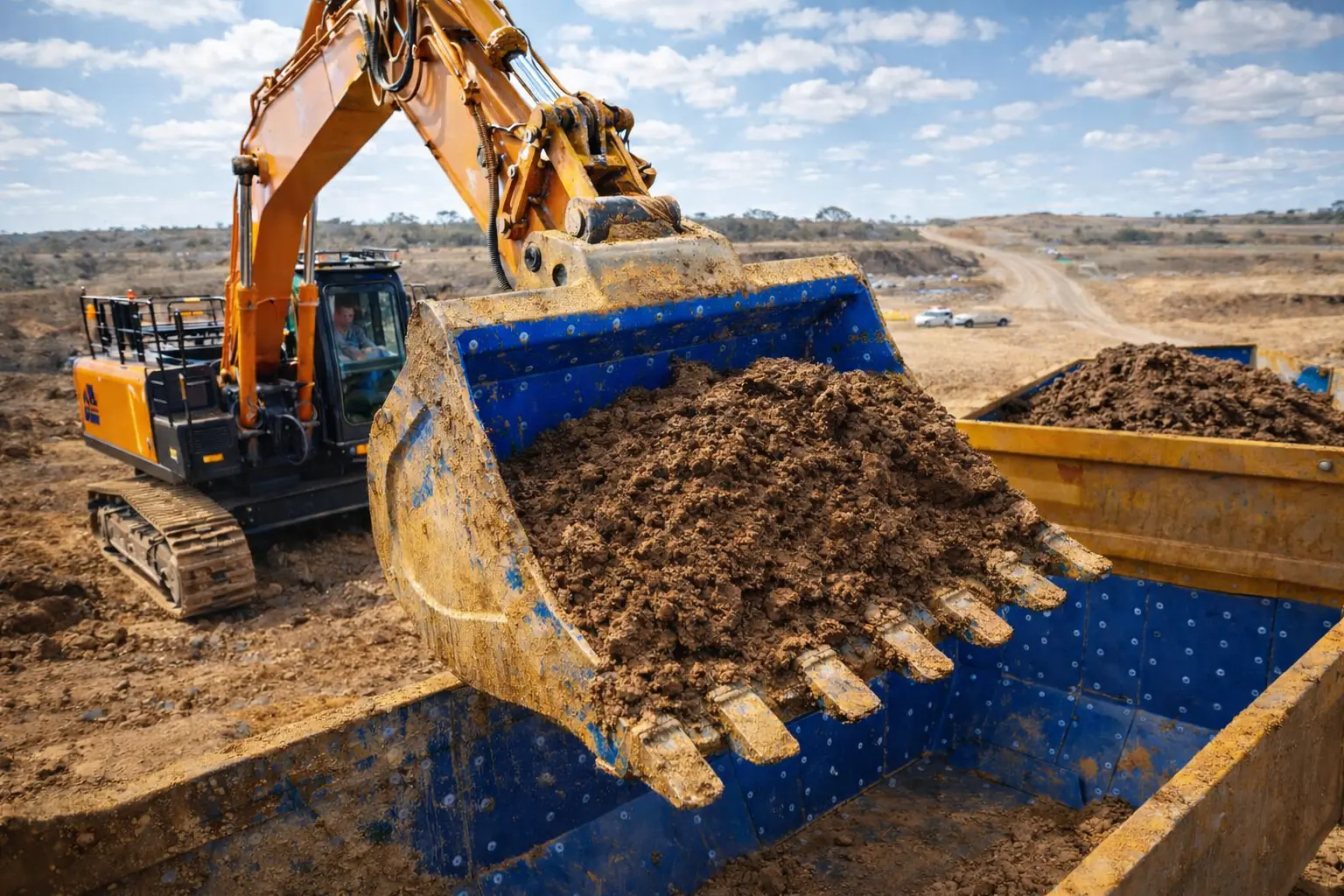
Truck body liners act as protective barriers that shield the truck bed from direct contact with the material being hauled. When impact-resistant truck body liners are installed, the energy from falling materials is absorbed and spread across the liner’s surface instead of being concentrated on one point of the metal floor.
In practice, this protection works through three key mechanisms. First, energy absorption: the liner slightly compresses under impact, cushioning each load strike and preventing the force from transferring directly into the steel body. This helps preserve the truck’s structural integrity and reduces visible damage over time.
Second, stress distribution: rather than concentrating pressure in one area, the liner disperses it evenly across a wider surface. This minimises localised dents, cracks, and fatigue points, which is an important consideration when selecting the right truck bed liner for your application.
Finally, vibration damping: the liner’s polymer composition absorbs residual shock and vibration during transport and unloading. This reduces mechanical strain, lowers noise, and creates smoother, quieter operation in demanding environments such as mining and quarry haulage.
The benefits of these mechanisms are immediate and measurable.
- Prevents dents and cracks: Protects metal surfaces from deformation, even under heavy or repeated loads
- Extends body life: Minimises structural fatigue and delays corrosion, extending the vehicle’s service life
- Reduces repair downtime: Less welding, fewer replacements, and lower maintenance frequency
However, not all liners offer the same level of protection. Basic plastic or rubber liners can harden, crack, or deform over time, especially when exposed to temperature fluctuations or sharp aggregates. For operations that demand both durability and impact absorption, UHMWPE liners have become the preferred lining material.
Why UHMWPE Liners Are the Best for Impact Resistance
Ultra-High Molecular Weight Polyethylene (UHMWPE) is a high-performance polymer engineered for exceptional toughness and wear resistance. Its molecular structure gives it the toughness and flexibility to absorb and disperse high-impact forces without cracking or deforming.
In demanding haulage applications, repeated loading of coarse aggregates and heavy materials subjects truck bodies to continuous shock and stress. UHMWPE’s inherent flexibility allows it to flex under impact and return to its original shape instantly, distributing energy across its surface rather than concentrating it at a single point. This property minimises wear on the steel structure beneath and maintains the body’s integrity over time.
Its consistent performance under repeated impact loads makes OKUSLIDE® UHMWPE liners the preferred solution across industries where heavy impact and abrasive materials are part of daily operations.
To better understand UHMWPE’s advantages, it’s worth comparing its real-world performance with other common liner materials:
- UHMWPE vs Steel: Steel is strong, but transmits impact rather than absorbing it. Repeated shocks cause surface fatigue and cracks around weld seams, leading to dents and structural wear. UHMWPE absorbs and disperses this energy, keeping the underlying metal protected and intact.
- UHMWPE vs Aluminium: Aluminium is lightweight but easily deforms under heavy or repeated loads. It can bend or warp easily, reducing durability. UHMWPE retains its shape and flexibility even under constant impact from dense, abrasive materials.
- UHMWPE vs Rubber Liners: While rubber liners provide initial cushioning, they deteriorate quickly when exposed to sharp aggregates. Their textured surface often traps material, increasing friction and wear. In contrast, UHMWPE’s smooth, low-friction finish prevents buildup and abrasion, ensuring cleaner operation and a longer service life.
These advantages make OKUSLIDE® the benchmark for liner performance. Engineered in Germany and supported by Australian engineers and distributors nationwide, OKUSLIDE® delivers proven impact protection and smooth material flow.
To understand what truly sets OKUSLIDE® apart, read our blog: Are All UHMWPE Liners the Same? Know the OKUSLIDE® Difference.
Choosing the Right UHMWPE Liner for Your Truck
While UHMWPE provides unmatched impact protection, achieving optimal performance depends on selecting the right liner setup.
Here’s what to consider:
- Liner Thickness: Lighter materials like sand or grain may only need a standard thickness, such as 6mm. Heavy or abrasive loads, such as ore or crushed rock, require thicker sheets, like 20mm or more, for maximum impact absorption.
- Material Grade: Standard UHMWPE provides excellent performance for general transport. Premium grades like OKUSLIDE® Premium Blue offer enhanced performance and UV stability, making them ideal for heavy-duty or outdoor applications.
- Installation: Poorly fastened liners can trap material or create stress points that reduce lifespan. OKUSLIDE®’s network of expert installers across Australia ensures precise installation for lasting protection and performance.
- Operating Environment: Consider exposure to moisture, load type, and material density. In wet or sticky conditions, UHMWPE’s non-stick and low-temperature impact strength offer clear advantages.
With the right configuration and professional installation, operators can achieve maximum impact resistance, smoother material flow, and longer truck body life.
In demanding haulage environments, every load takes a toll on your equipment. Impact resistance isn’t just a nice-to-have feature; it’s a critical factor that determines how long your truck body will perform at its best.
A liner that absorbs impact rather than transmitting it helps reduce wear on the truck body during continuous loading and unloading cycles. Among available materials, UHMWPE liners stand out for their ability to efficiently distribute impact energy while offering superior abrasion resistance and low-friction performance in a single engineered solution.
By installing OKUSLIDE® UHMWPE liners, operators can safeguard their trucks, maintain consistent performance, and reduce costs, all while ensuring safer, faster, and more reliable operations on every haul.
Contact us today to find out how OKUSLIDE® delivers the superior impact resistance your truck body needs for lasting protection and performance.
FAQs
Can OKUSLIDE® UHMWPE liners handle extreme temperatures or wet conditions?
Yes. OKUSLIDE® liners perform reliably in both cold (up to -40°C) and humid environments, but cannot withstand very high temperatures above 80°C.
How are UHMWPE liners installed?
Professional installation is recommended to ensure precise fitting and long-term performance; however, self-installation is possible after consulting with the installers. Liners are mechanically fastened and thermally fused at joints to follow the truck body’s contours, preventing trapped material and uneven stress points.
Can UHMWPE liners be customised for different truck bodies?
Yes. OKUSLIDE® UHMWPE liners can be cut and shaped to fit various body types and their load applications, ensuring optimal impact protection and unloading performance.