At a glance:
- Abrasive loads such as aggregates, ore, rubble and waste cause progressive wear, surface roughness and tray damage in truck bodies.
- Abrasion-resistant liners protect the steel tray, maintain a smoother flow surface and support more consistent performance under heavy wear.
- Selecting the right liner depends on abrasion resistance rating, friction behaviour, impact strength, thickness and material grade.
- OKUSLIDE® provides durable UHMWPE liners engineered for abrasive conditions, supporting reliable haulage and longer fleet service life.
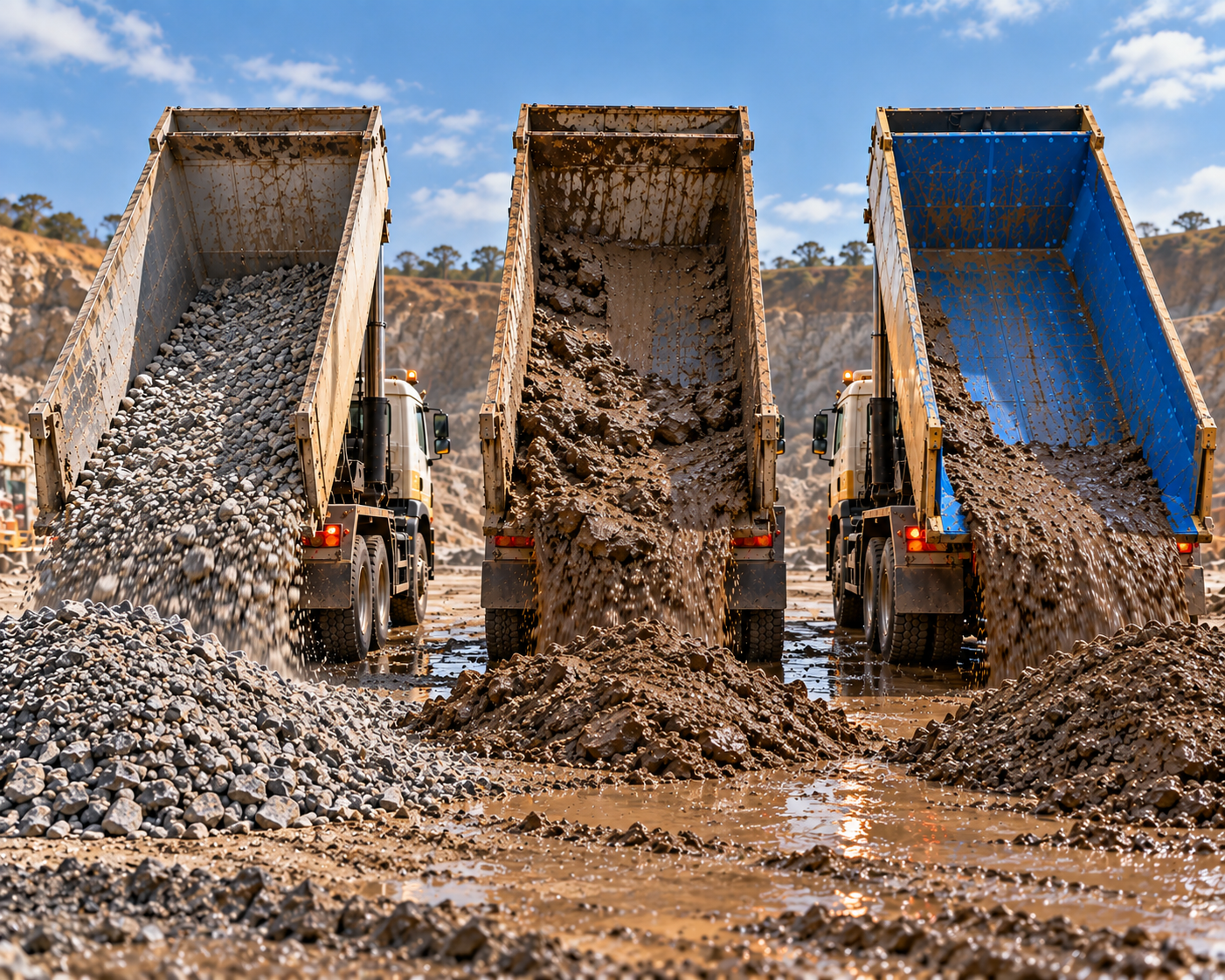
Abrasion is a mechanical wear process that occurs when materials rub, scrape, or grind across a truck tray. In Australian haulage environments, where aggregates, soil, ore, rubble and mixed waste are often dry, coarse and angular, this wear becomes more severe.
Abrasion occurs in two main ways: sliding abrasion from constant surface contact and impact abrasion from heavy or sharp loads striking the truck bed. Over time, this roughens the tray, thins the steel and increases maintenance demands.
Abrasion-resistant liners are designed to slow this wear, protect the steel surface, and maintain a smoother, more predictable flow path during loading and unloading. UHMWPE liners such as OKUSLIDE® are widely used in these conditions for their high wear resistance, impact strength and durability across repeated load cycles.
In this article, we’ll discuss why abrasion resistance is critical in truck bed liners and the key factors operators should consider when choosing a liner for abrasive applications.
Why Abrasion Resistance Is Essential In Truck Bed Liners
Abrasion resistance plays a central role in how well a truck bed liner performs over repeated load cycles. In abrasive haulage environments, the right liner slows surface wear, protects the steel tray, and maintains more consistent performance across ongoing load and discharge cycles.
Protects the Steel Tray From Progressive Wear
A truck tray constantly comes in contact with abrasive load materials. Without adequate protection, the steel surface can thin, pit, or deform as material repeatedly moves across it. High-abrasion-resistant liners act as a barrier, absorbing mechanical wear that would otherwise affect the tray.
By preventing premature steel loss, these liners help maintain structural integrity over repeated load cycles and reduce the likelihood of corrosion, surface cracking, or tray failures that require expensive repairs. This protection is essential for fleets operating in mining, excavation, construction, and agriculture, where abrasive loads are common.
Minimises Wear From Sliding and Impact Abrasion
Two types of abrasion affect truck bodies in bulk haulage. Sliding abrasion occurs when aggregates, crushed rock, sand or soil move across the truck tray during loading, transport and tipping. This constant surface contact gradually increases the wear rate.
Impact abrasion occurs when coarse or heavy materials, such as ore, overburden, rubble or scrap metal, strike or bounce against the surface. This can cause cuts, gouges, and scoring.
Abrasion-resistant truck body liners made from UHMWPE handle both forms effectively. Their low friction coefficient reduces frictional wear from sliding loads, while their high impact strength helps resist deep surface damage. Together, these properties slow total wear accumulation and extend service life in abrasive operations.
Maintains a Smooth, Predictable Flow Surface
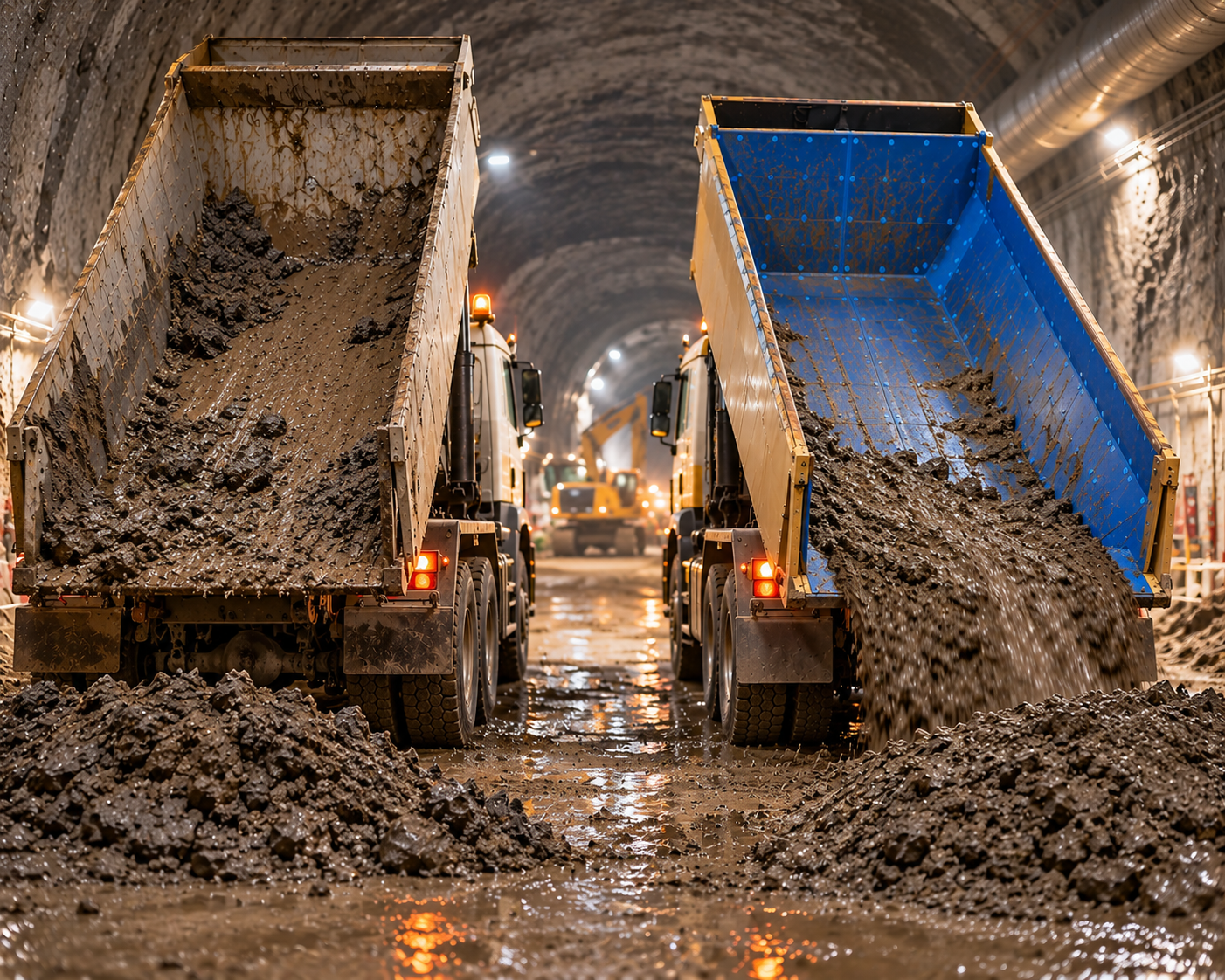
A worn truck tray surface can create unpredictable unloading behaviour. Abrasion damage, such as scoring, rough patches, and thinning, raises surface friction and disrupts how material moves during discharge. This inconsistency leads to hang-up, bridging, sudden release, and uneven discharge, all of which can compromise operational safety and efficiency.
An abrasion-resistant liner maintains a smooth flow surface, enabling materials to slide in a controlled, repeatable manner. Operators benefit from safer tipping, reduced carryback, and more reliable flow performance across a range of abrasive loads.
Extends Service Life and Reduces Downtime
Excessive truck body wear is one of the biggest contributors to avoidable downtime in bulk haulage operations. Every replacement or repair cycle requires trucks to be pulled from operation, which extends idle time and adds to the maintenance workload. A liner with strong abrasion resistance slows wear, retains thickness for longer, and reduces the frequency of relines across the fleet.
This helps maintenance teams plan more effectively and maintain improved equipment availability. For sectors handling abrasive materials, including mining haulage, quarry transport, civil construction, and waste management, extending liner service life directly contributes to better fleet utilisation and more predictable scheduling.
Read more: How Impact Resistance Protects Your Truck Body: Why UHMWPE are the Best Choice
What to Look for When Choosing an Abrasion-Resistant Truck Bed Liner
Choosing the right abrasion-resistant liner starts with understanding how the material performs under constant wear. Here are the key factors operators should assess when selecting a liner for abrasive loads and heavy-duty applications.
- High Abrasion Resistance Rating (Verified Wear Data): When selecting a liner, look for proven UHMWPE grades with a track record in abrasive environments. Field performance and material characteristics provide clearer guidance than general product descriptions. This indicates how long the liner will last under abrasive load.
- Low-Friction Surface for Smooth Material Flow: Low-friction liners allow materials to move freely, reducing the grinding and scraping that occur on high-friction surfaces. This property is essential for minimising sliding abrasion, especially when transporting coarse, sticky, or mixed loads.
- Strong Impact Resistance for Coarse, Heavy Loads: A suitable liner must withstand repeated impacts from heavy materials striking the tray without deforming or gouging. UHMWPE has excellent impact strength, allowing it to absorb and disperse energy that would otherwise create deep surface damage. Impact resistance directly contributes to slower wear in high-contact zones.
- Liner Thickness: Lighter materials, such as sand or grain, generally require thinner liners, while heavy or highly abrasive loads, such as ore or crushed rock, benefit from thicker sheets to maximise wear life. Selecting the correct thickness ensures a balance between performance, weight, and cost.
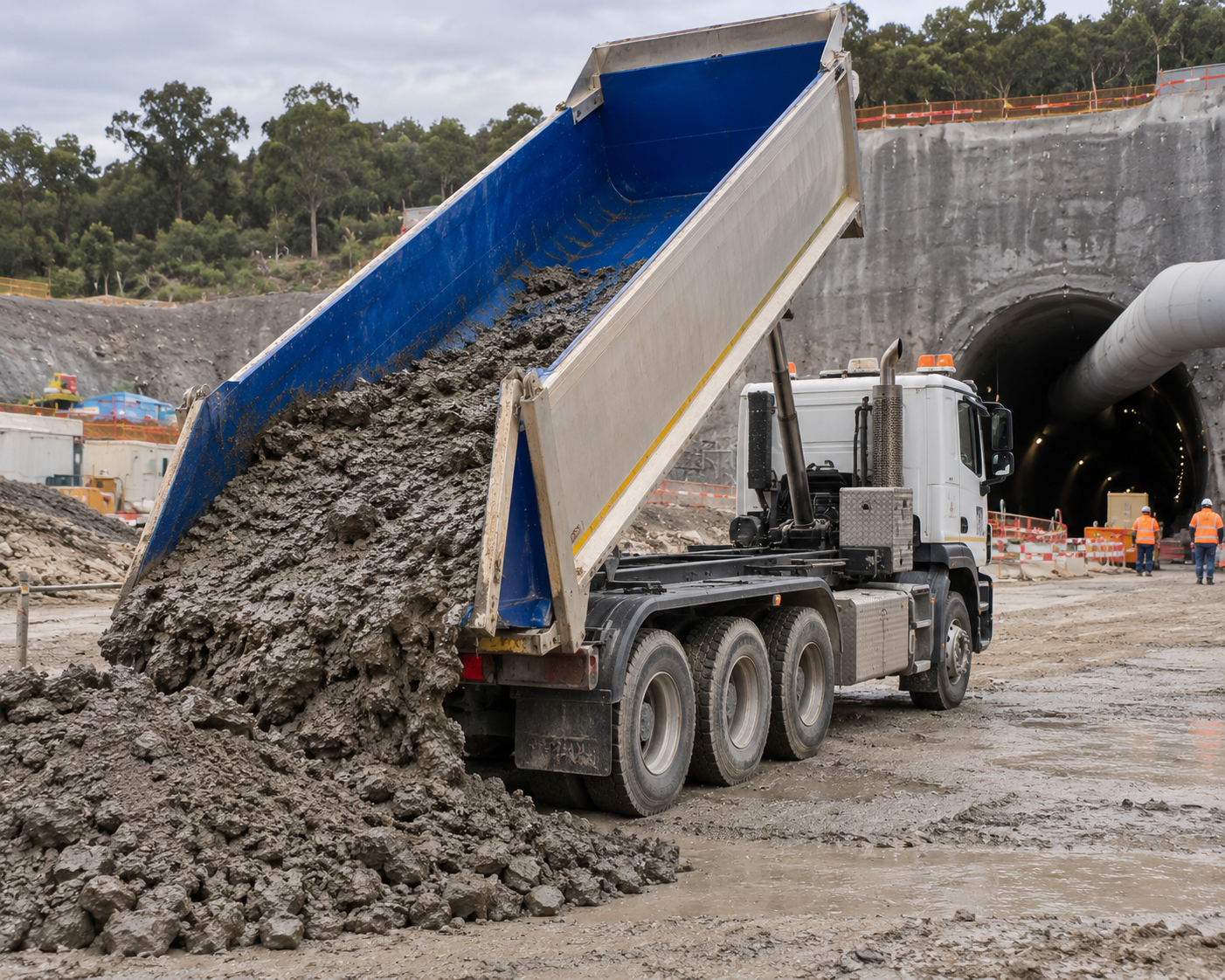
- Material Grade: Not all UHMWPE grades perform the same under abrasive loads. Standard UHMWPE offers strong baseline abrasion resistance for general transport applications, whereas premium grades like OKUSLIDE® Premium Blue offer enhanced wear performance for high-abrasion or continuous-duty environments.
With the right liner configuration, fleets can achieve lower wear rates, smoother material flow and significantly longer tray life in abrasive applications.
Abrasion resistance determines how well a truck bed liner performs under continuous wear. A high-quality liner protects the steel tray, supports a smoother, more consistent material flow, and reduces downtime caused by surface damage and premature degradation.
These outcomes depend on selecting a liner built for abrasive loads. Material grade, friction behaviour, impact performance and thickness selection all shape how a liner behaves over repeated cycles. When these elements are correctly matched to the application, operators gain more consistent performance, steadier wear rates, and longer replacement intervals across demanding haulage environments.
OKUSLIDE® UHMWPE liners are engineered for these requirements. Their abrasion resistance, low-friction surface, and ability to handle coarse, angular materials make them well-suited to Australian mining, civil construction, quarrying, waste, and bulk transport operations.
Contact us today to discuss a liner configuration that delivers proven abrasion resistance and long-term reliability for your fleet.
FAQs
How does abrasion affect maintenance costs?
Abrasion is a leading cause of premature liner replacement. As the liner thins, protection decreases, and maintenance needs increase. High abrasion resistance reduces relining frequency and lowers wear-related maintenance costs by reducing abrasive wear.
Does abrasion resistance matter for lighter materials like grain or mulch?
Even lighter materials can cause sliding abrasion over repeated cycles. While the wear rate is lower, abrasion resistance still extends liner life and maintains a smoother flow when transporting lighter materials.
How does liner abrasion resistance affect downtime and scheduling?
Higher abrasion resistance extends the interval between relines and major repairs. That means fewer unplanned stoppages, more predictable maintenance windows, and less disruption to haulage schedules, which is especially important for fleets tied to project timelines or contract milestones.
How do I know if my current liner doesn’t have enough abrasion resistance?
Warning signs include rapid wear-through in high-impact zones, visible steel exposure, deep gouges near the tailgate, increasing carryback, and more frequent manual clean-outs. If relining or patching becomes part of routine maintenance rather than an occasional task, abrasion resistance is likely insufficient.
Does a thicker liner always mean better abrasion resistance?
Not necessarily. Thickness helps, but material quality and composition have a greater influence on wear performance. A thinner UHMWPE liner with high abrasion resistance can often outlast a thicker liner made from lower-grade plastic or rubber that wears quickly under abrasive loads.