At a glance:
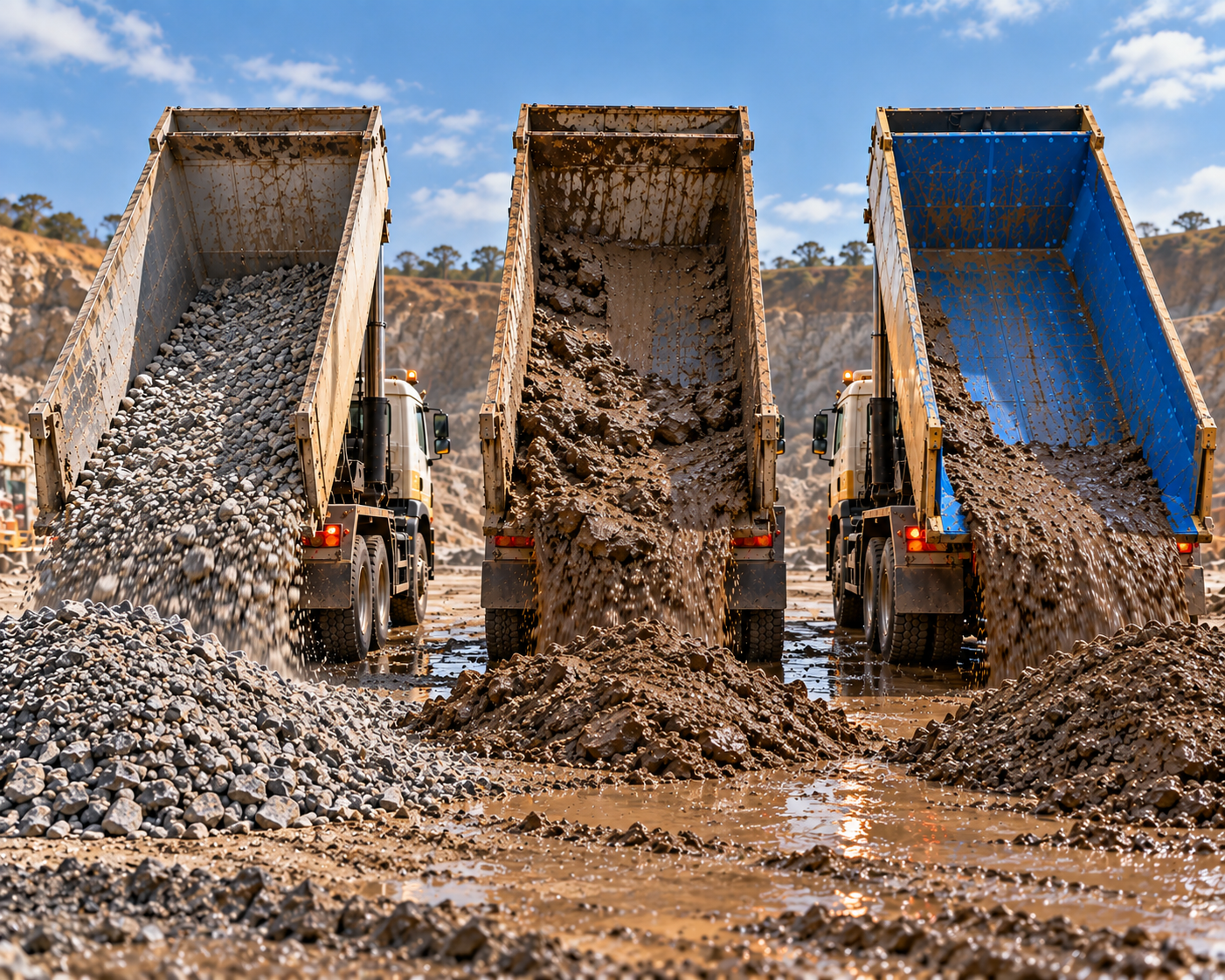
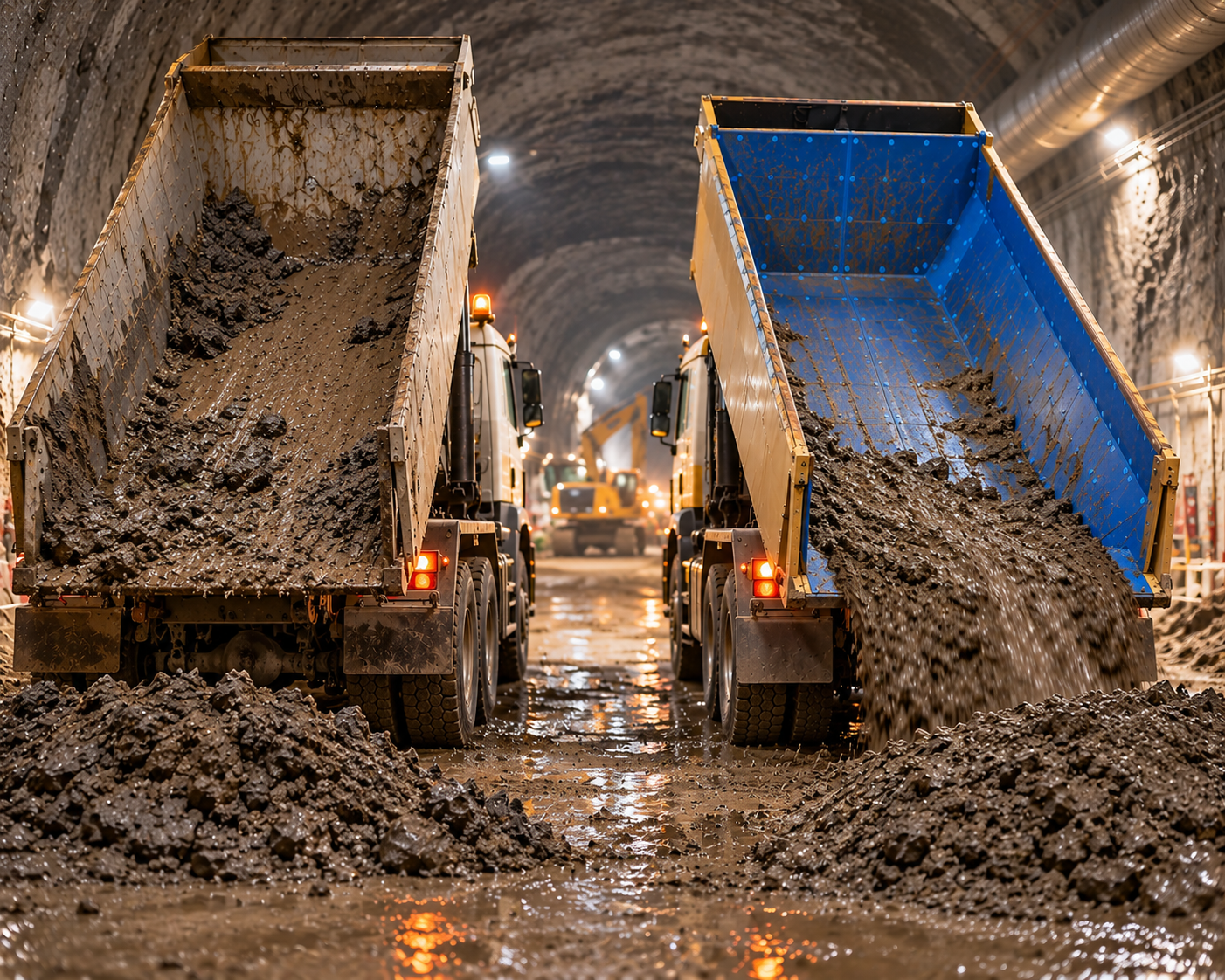
- OKUSLIDE® liners support both wet and dry load handling by maintaining consistent flow in varying conditions.
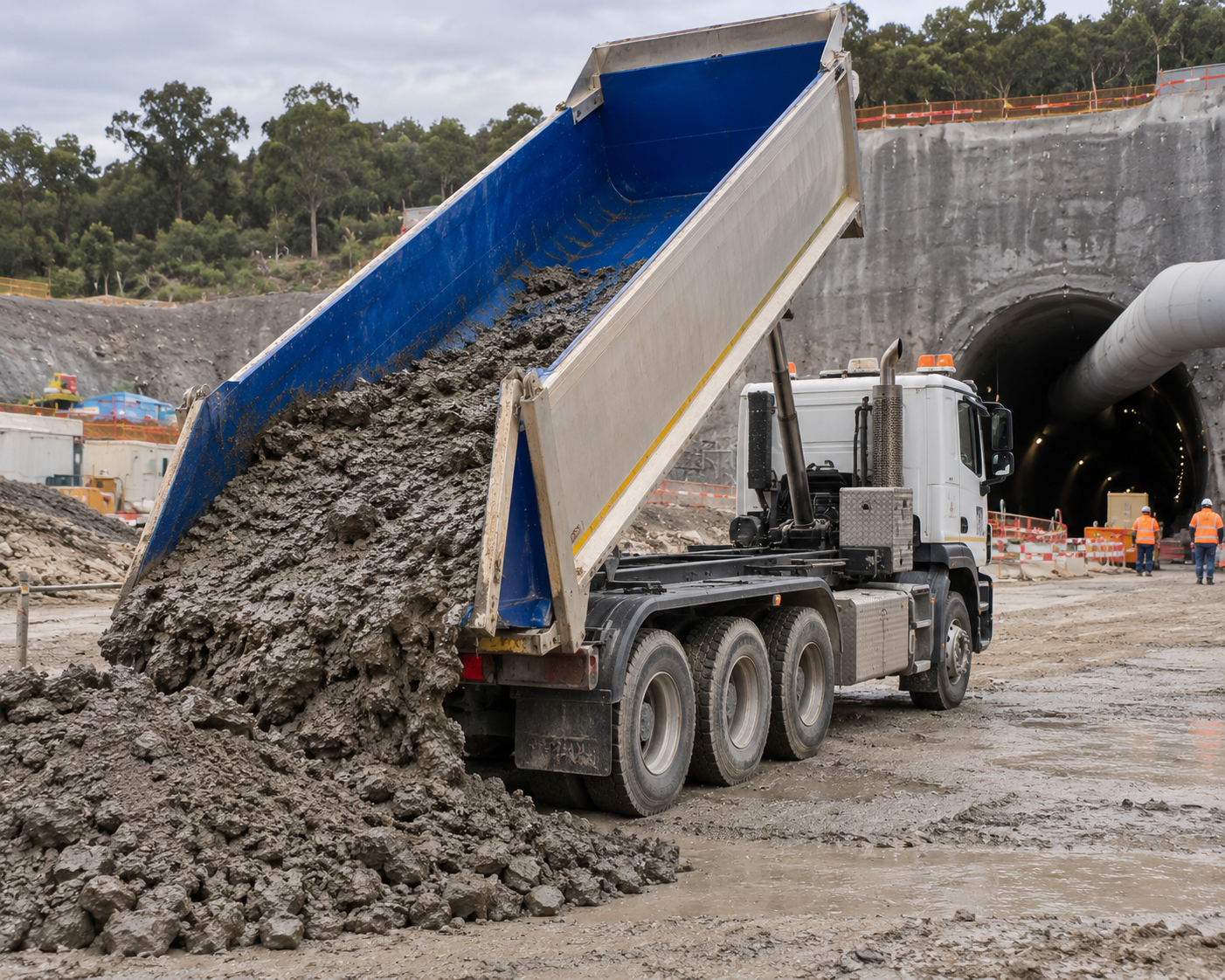
- Wet loads move cleanly because the liner stays slick even when exposed to moisture and does not absorb water or deform under wet conditions.
- Dry, abrasive materials slide reliably due to the liner’s smooth, wear-resistant surface that limits bridging and reduces stoppages.
OKUSLIDE® liners are widely used across mining, construction, agriculture, quarrying, waste handling, and bulk transport because they improve material flow and protect truck bodies from wear.
A common question operators raise is whether a single OKUSLIDE® liner can perform equally well under saturated, sticky or slurry-based loads as well as dry, abrasive or high-impact conditions.
The short answer is yes. OKUSLIDE® liners are engineered to handle both wet and dry material transport by combining low friction, abrasion resistance, and dimensional stability to maintain predictable material flow and discharge.
This article explains why OKUSLIDE® performs reliably in both wet and dry conditions and how this versatility supports a wide range of industrial applications.
How OKUSLIDE® Liners Improve Wet Material Transport
Wet material transport often slows down because moisture increases adhesion and disrupts flow on a steel tray. Sticky loads cling to rough surfaces, residual pockets remain after tipping, and operators are forced to tip the tray higher or clear the residue manually.
OKUSLIDE® UHMWPE liners made from Ultra High Molecular Weight Polyethylene prevent these issues by keeping the surface slick, resisting moisture absorption, and maintaining steady flow even when materials are saturated.
Here’s how OKUSLIDE® supports cleaner, more predictable wet material flow.
Low-Friction UHMWPE Surface Stays Slick in Wet Conditions
UHMWPE maintains its low-friction properties regardless of moisture. Water does not alter its surface characteristics, so the liner stays slick even when dealing with saturated clay, wet soil, compost, or slurry-coated loads.
Steel is prone to sticking when wet because moisture increases surface tension, which allows the material to cling to the tray. OKUSLIDE® eliminates this issue entirely. The liner does not react to water, does not form a film that slows flow, and continues to allow the load to slide as a single mass.
This consistent surface behaviour keeps unloading predictable even in rain, after washdowns, or when handling material with naturally high moisture content.
Zero Moisture Absorption or Dimensional Change
Many materials swell, soften, or distort when exposed to prolonged moisture. UHMWPE does not absorb moisture, even when operating in rain, mud, slurry, or high-humidity environments. Its dimensional stability is a major reason it performs consistently across wet applications.
OKUSLIDE® does not change thickness, buckle, or develop internal stress after repeated exposure to water. This structural integrity prevents movement around fasteners, reduces the likelihood of misalignment, and maintains a smooth, even surface for the next load.
Cleaner Discharge With Minimal Carryback
Carryback is a common problem in wet operations. Even a small amount of leftover material can cause contamination, increase load weight, and extend cycle times. OKUSLIDE®’s low-friction surface reduces adhesion so effectively that wet loads release with minimal hang-ups.
Sticky clay, wet overburden, manure, and saturated aggregates slide out cleanly, even at lower tipping angles. Reducing carryback also prevents unnecessary manual cleaning between loads, improving safety and saving time during busy haul cycles.
Read more: Why Operators Prefer an “All-Rounder” Liner For Plant and Transport Equipment
How OKUSLIDE® Supports Dry, Abrasive Material Transport
Dry materials challenge truck bodies in different ways. Abrasion, repeated impact, and friction cause wear on steel surfaces, leading to gouging, pitting, corrosion, and higher maintenance requirements.
Dry aggregates also tend to wedge, bridge, or hang up in equipment if the surface becomes rough or uneven. OKUSLIDE® is designed to manage these stresses, and here’s how:
Abrasion Resistance for Continuous Dry Material Wear
Dry aggregates such as gravel, overburden, crushed rock, sand, ore, and grain generate significant abrasive force. UHMWPE has a high molecular weight with inherently high wear resistance. Its long polymer chains absorb and dissipate the energy of repeated contact without scratching or gouging the surface.
Unlike a bare steel body, which becomes rougher over time as surface wear increases, OKUSLIDE® maintains its smooth finish throughout its service life. This consistency keeps unloading predictable and reduces tray wear in high-throughput operations.
Smooth Surface To Reduce Bridging and Hang-Ups
Dry materials can lock together when the surface friction slows their movement, creating a blockage that stops flow. This occurs when particles wedge against a rough tray wall and form a stable arch that blocks material flow.
OKUSLIDE® limits these issues by providing a smooth, low-friction path that keeps the load moving rather than locking into a fixed shape. Operators handling grain, fertiliser, crushed rock, lime, or sand see fewer stoppages and a more reliable discharge pattern without relying on vibration or manual clearing.
Impact Resistance For High-Throughput Loading Cycles
Dry materials often hit the body with significant force during loading. High-impact drops cause dents, micro-cracks, and fatigue in unprotected steel trays.
UHMWPE absorbs this impact and spreads it across the liner surface. The material flexes slightly under load and returns to its original shape, protecting the parent steel and maintaining the liner’s surface quality. This impact resistance of OKUSLIDE® liners supports operation in demanding environments such as quarrying, excavation, mining, and construction.
Read more: How Impact Resistance Protects Your Truck Body
The ability to handle both wet and dry materials is a major advantage for fleets working across mixed load types or seasonal moisture conditions. OKUSLIDE® liners provide reliable performance across clay, soil, manure, aggregates, crushed rock, grain, fertiliser, and recycled material. Their low-friction surface improves flow in sticky environments while their abrasion and impact resistance support high-wear, high-throughput work.
This versatility makes OKUSLIDE® liners the preferred solution across industries. Operators gain cleaner unloading, less carryback, reduced wear, and more predictable material flow.
For operators seeking a single liner material that supports both wet and dry material transport, OKUSLIDE® offers a proven, adaptable solution. Get in contact with us to discuss configuration options for trucks, hoppers, chutes, and other material-handling systems.
FAQs
Do OKUSLIDE® liners change performance between seasons?
No. Seasonal weather often causes dry material to become dusty in dry weather and saturated in wet conditions, leading to inconsistent discharge from steel bodies. OKUSLIDE® maintains the same low-friction performance regardless of humidity, so materials continue to move smoothly across the liner surface. This consistency helps operators avoid unexpected sticking, dragging, or uneven release patterns, which often occur when moisture levels shift throughout the year.
How long does an OKUSLIDE® liner last in mixed wet and dry operations?
Service life depends on load type, haulage frequency, and installation quality, but OKUSLIDE® liners typically last several years even in fleets that shift daily between wet spoil, aggregates, compost, crushed rock, and grain. Their wear pattern is gradual and predictable, allowing maintenance teams to schedule replacement during routine service intervals.
Does OKUSLIDE® help reduce contamination between different load types?
Yes. Wet and fine materials often cling to steel and contaminate the next load. OKUSLIDE® liners minimise this by allowing clay, saturated spoil, and slurry-coated material to release more cleanly and reducing carryback. With less residue left behind, the next load enters a clearer tray, reducing product contamination, which is a key consideration when selecting the right truck bed liner.
Does OKUSLIDE® affect how quickly operators can complete each haul cycle?
Yes. Faster release of both wet and dry material reduces idle time at the tip site and speeds up the body’s return to loading position. Over repeated cycles, this can shorten overall haul times and help fleets maintain steadier production rates, especially in operations where loads vary throughout the day.