At a glance
- Small inefficiencies during loading and unloading can throw haulage cycles off rhythm, increasing idle time, fuel usage, and operating costs.
- Engineered truck body liners provide a smooth, low-friction surface that prevents material sticking and ensures consistent flow.
- By reducing friction, lowering tipping angles, and eliminating carryback, liners streamline loading and unloading, improving overall fleet turnaround.
- These benefits, however, depend on selecting quality liners like OKUSLIDE® that can optimise haulage cycles.
Every haulage operation relies on the speed and consistency of its loading and unloading phases. Minor delays during loading or unloading can throw an entire haulage cycle off schedule.
Unprotected steel trays develop rough spots, weld seams, and corrosion over time that cause materials such as clay, soil, or fertiliser to cling rather than slide out. Operators are then forced to over-tip or manually clear residues, which adds minutes to every unload and places additional strain on hydraulic systems.
These small inefficiencies compound across the fleet. Extra time spent idling or re-tipping increases fuel consumption, extends turnaround between jobs, and reduces the total number of loads moved per shift. The combined effect limits productivity, accelerates component wear, and increases operating costs, especially for high-frequency haulage operations.
These challenges, however, are not inevitable. Engineered truck body liners provide a proven solution with their smooth, low-friction surfaces, which allow materials to flow cleanly and predictably.
The following sections explore how truck body liners optimise loading and unloading to keep fleets operating at peak efficiency.
Consistent Material Flow Starts with a Quality Liner
Truck body liners, when installed over the metal trays of tippers, trailers, or hoppers, reduce friction, wear, and material buildup. They can be made from metals, rubber, or advanced polymers, and used depending on the load type and operating environment.
Among these, UHMWPE (Ultra-High Molecular Weight Polyethylene) liners stand out for their extremely low-friction surface, abrasion resistance, and durability, allowing materials to slide freely without sticking or scuffing against the tray surface. Their smooth finish maintains consistent material flow and prevents the surface from roughening over time. Unlike coatings or sprays, liners form a durable mechanical barrier that resists abrasion and impact through years of heavy use.
This is the principle behind OKUSLIDE®, a liner system built for reliability in Australian haulage conditions. Precision-manufactured in Germany and backed by Australian engineering expertise, it delivers proven durability and performance across demanding applications.
It’s used across industries, from construction and waste to agriculture and quarrying, and is designed for unmatched versatility. It can be custom-fitted for tippers, semi-trailers, and agricultural hauliers to ensure smooth, consistent discharge across all bulk material applications, which ultimately reduces loading and unloading time.
Read More: What Makes OKUSLIDE® the Industry Leader in Truck Body Liners
How Body Liners Optimise Loading and Unloading Time
Loading and unloading are the most time-sensitive stages of any haulage cycle. Even small inefficiencies, such as sticking loads or repeated tipping, can slow fleet movement and raise operating costs.
Truck body liners are engineered to overcome these bottlenecks by improving the flow of materials through the tray.
The sections below outline how truck bed liners achieve faster, smoother, and more consistent loading and unloading performance.
Reduced Material Resistance
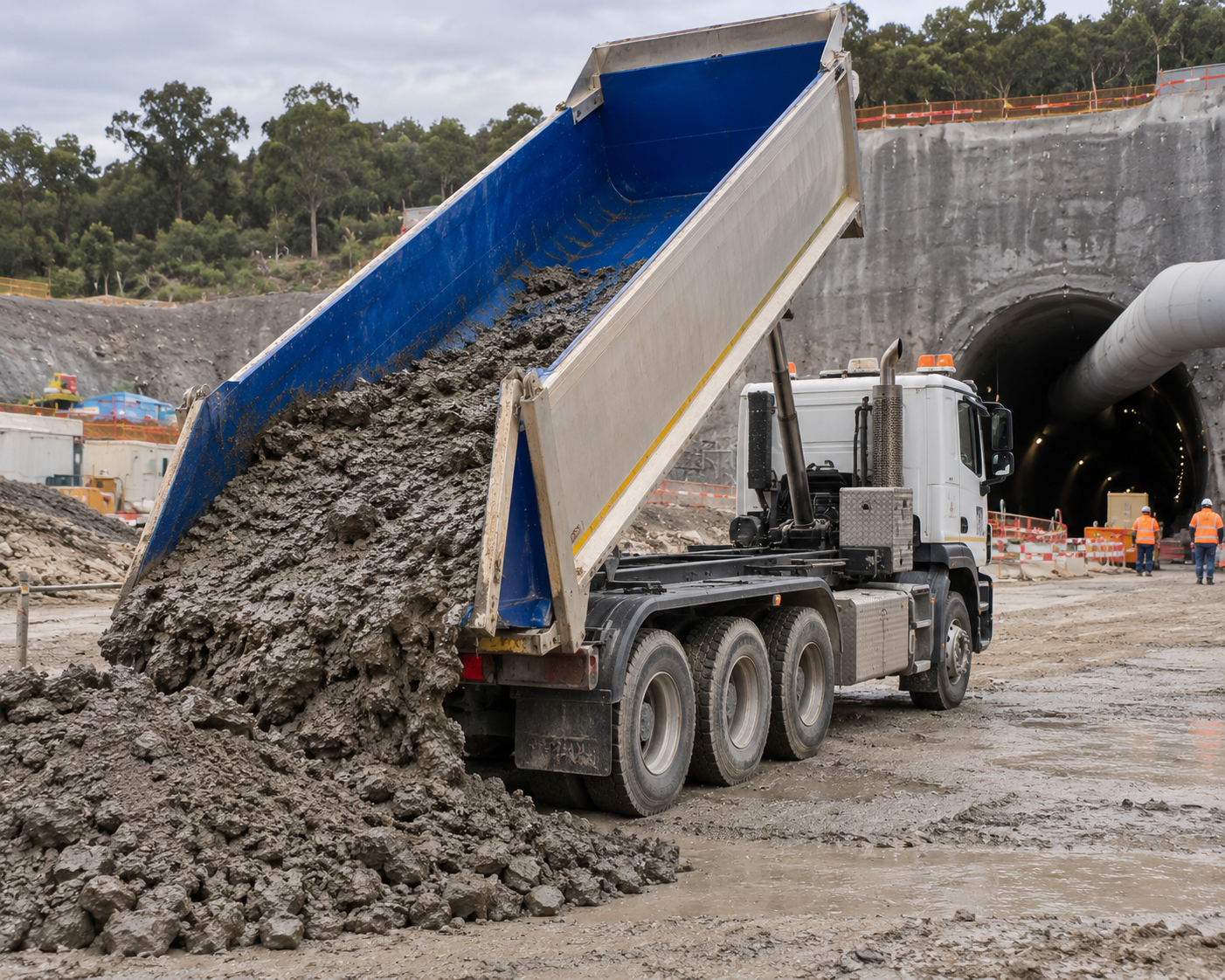
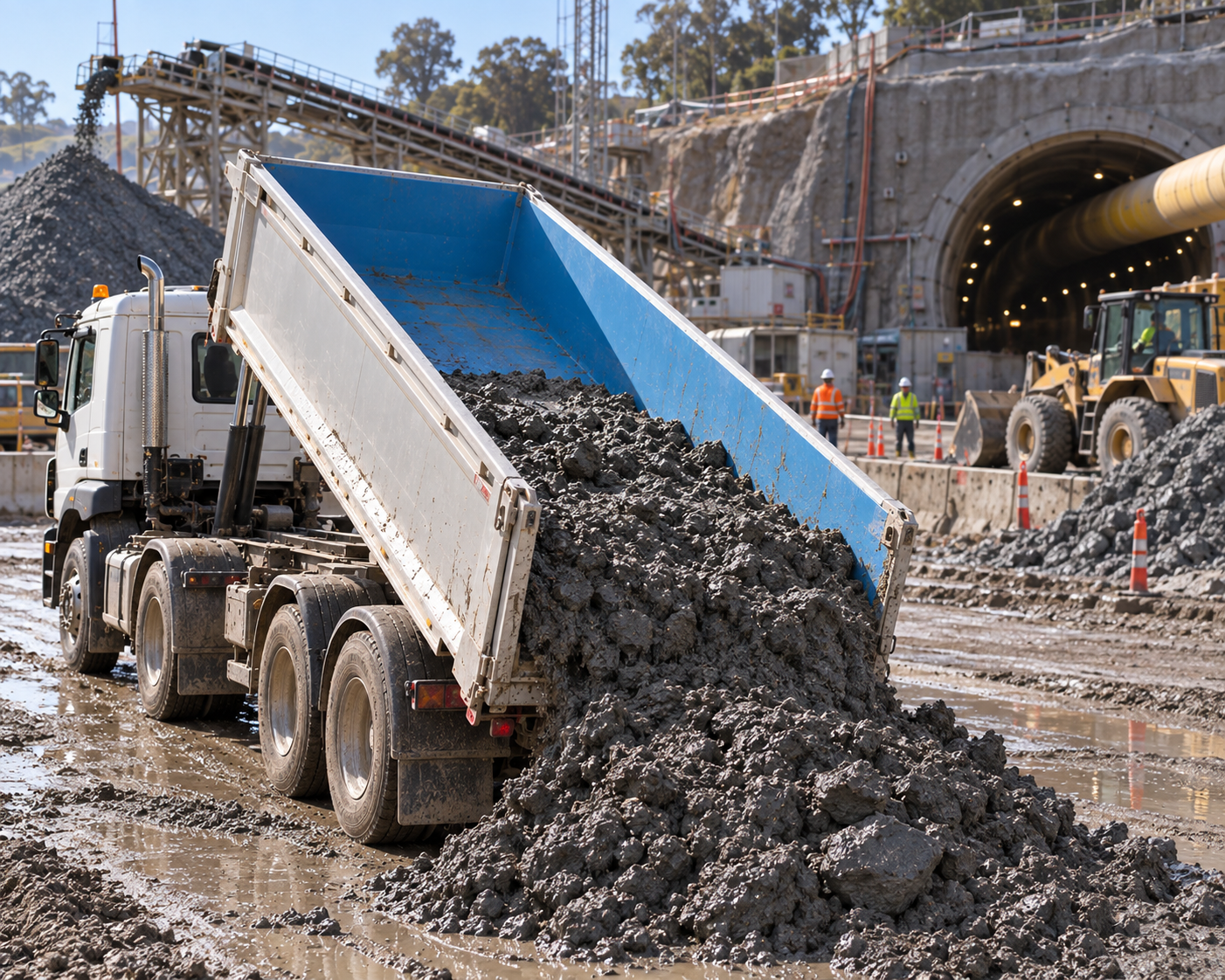
Every second lost in unloading often comes from materials sticking to the tray. On bare steel trays, friction builds quickly, making cohesive or wet loads stick and slow down discharge. The low-friction surface of a UHMWPE liner reduces this resistance, allowing materials to slide smoothly rather than clumping or binding to tray walls.
This reduction in contact friction ensures that unloading starts promptly and flows evenly, saving time without the need for vibration, shaking, or manual clearing.
Shorter Tipping Duration
Because the liner reduces friction across the entire tray, less hydraulic lift is needed to achieve complete discharge. Loads that previously required high tipping angles can now be released cleanly at a lower angle, reducing the time spent lifting the tray up and down.
The shorter lift-and-return window reduces unloading time per trip while lowering wear on the hydraulics and pivot systems. For operators, it means a smoother, faster cycle with less downtime between dispatches.
Cleaner Discharge Between Loads
Carryback or residual material left in the tray not only slows reloading but also causes contamination between load types. Truck body liners prevent this by promoting full release during every tip, ensuring the tray is immediately ready for the next load.
This clean discharge reduces the need for manual cleaning and eliminates the idle gaps that typically occur between unloading and reloading. In high-frequency operations, this directly translates to higher load counts per shift and improved fleet utilisation.
Maintained Flow Efficiency Over Time
Unlike unlined metal trays that wear and roughen with use, liners preserve their smooth surface and friction-reducing properties throughout their service life. This stability ensures that the unloading speed achieved on day one remains consistent over the years of operation.
The result is a predictable, long-term unloading performance that prevents gradual slowdowns caused by surface degradation, keeping the fleet efficient, reliable, and on schedule across thousands of trips.
Truck body liners have proven to be one of the most effective ways to streamline haulage cycles by minimising friction, promoting smooth discharge, and reducing unloading time. But the degree of improvement depends on selecting a liner that matches the specific demands of your operation. The liner material, haulage frequency, and load characteristics all influence how efficiently a liner performs over time.
OKUSLIDE®’s engineered UHMWPE liners are designed to handle this variability, maintaining smooth flow across both cohesive and abrasive materials under tough Australian conditions. When properly fitted, they keep unloading times consistent, protect the tray surface, and sustain long-term operational efficiency.
The minutes saved in every load and unload may seem small, but they accumulate across hundreds of trips, translating to fewer idle hours, lower fuel usage, and greater productivity fleet-wide.
Contact OKUSLIDE® today to discuss your haulage requirements and find the ideal liner configuration for faster, safer, and more efficient operations.
FAQs
Can truck body liners handle both cohesive and abrasive materials?
Absolutely. OKUSLIDE®’s engineered UHMWPE composites are formulated to perform equally well with sticky, fine-grained materials and heavy, abrasive loads, maintaining smooth flow and preventing wear across a range of haulage conditions.
How do truck body liners reduce tipping angles during unloading?
Reduced friction allows materials to slide freely, meaning full discharge happens at lower tipping angles. This improves unloading speed and site safety, as explained in How OKUSLIDE® Liners Improve Unloading Efficiency and Reduce Tipping Angles.
Can OKUSLIDE® liners be tailored to specific truck types or haulage applications?
Yes. OKUSLIDE® offers custom-fit solutions for different body types, such as tippers, side tippers, semi-trailers, and agricultural hauliers, ensuring precise installation and optimal flow. Learn more in Customise Your Truck Bed Liner With OKUSLIDE®.